
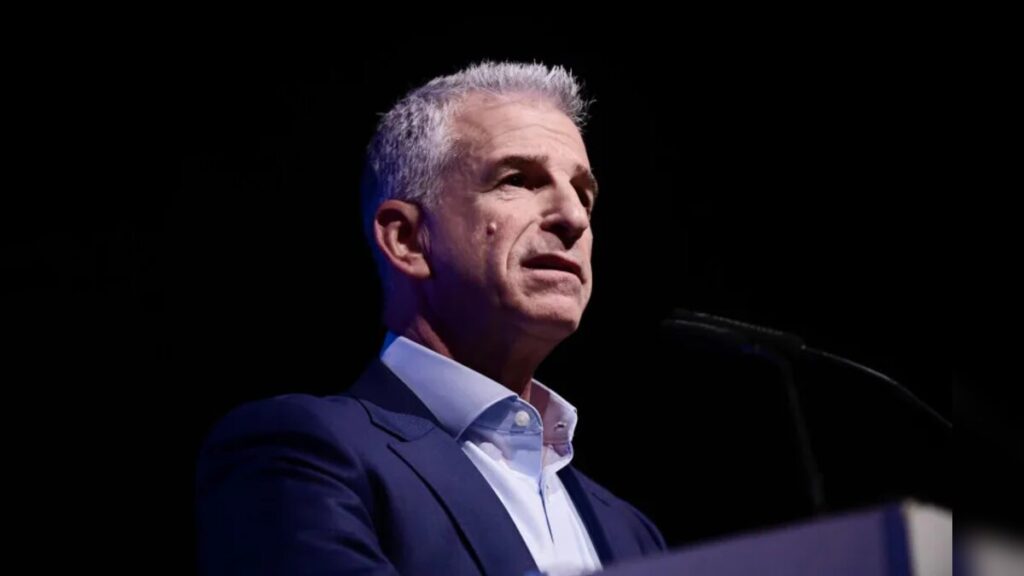
At a recent Holocaust remembrance ceremony, David Barnea, the head of Mossad, delivered a statement that quickly caught global attention.
Speaking at an event rooted in history and reflection, he pivoted toward the present—and the future—making it clear that his agency’s mission stretches far beyond intelligence gathering.
His message was direct: efforts linked to Iran are far from over.
In fact, he suggested they are only entering a new phase.
Not the End of the Mission
Barnea made it clear that expectations of quick results were never realistic.
According to him, the idea that major geopolitical shifts—like leadership change—could happen instantly was never part of the plan.
Instead, he emphasized long-term strategy. Even as active conflict phases slow down, he indicated that operations and planning will continue behind the scenes.
The tone suggested patience, persistence, and a willingness to play the long game.
The First Public Push for Regime Change
What stood out most was how openly Barnea addressed the idea of regime change in Iran.
While such discussions often happen quietly in diplomatic or intelligence circles, this marked a rare moment of public acknowledgment from someone in his position.
It wasn’t framed as an immediate outcome—but rather as an eventual possibility.
The message: change could come, but not overnight.




Behind the Blame Game
In recent weeks, criticism has surfaced from both Israeli and American circles.
Some officials have pointed fingers at Mossad leadership, questioning why political change in Iran did not materialize during the early stages of conflict.
However, reports suggest that Mossad had already cautioned against such expectations.
Internally, the agency maintained that any meaningful shift in Iran’s leadership would likely happen after a prolonged period of instability—not in the middle of active conflict.
In other words, what some see as a failure may actually align with the agency’s original timeline.
War as a Starting Point, Not the Finish Line
Barnea’s latest remarks reinforce a key idea: conflict may create conditions for change, but it does not guarantee it.
From his perspective, recent events may have weakened structures or exposed vulnerabilities, but translating that into actual political transformation requires more time, effort, and strategy.
He has previously hinted that such a shift could still be possible within a year—but even that comes with uncertainty.
Impact and Consequences
Statements like this don’t exist in a vacuum—they carry weight on the global stage.
- Heightened tensions: Public talk of regime change can escalate already fragile relations in the region.
- Diplomatic strain: Allies and adversaries alike may reassess their positions and strategies.
- Internal pressure: Leadership in Iran could respond by tightening control or increasing defensive measures.
- Global ripple effects: Energy markets, security alliances, and regional stability could all feel the impact.
At the same time, such rhetoric can also energize opposition groups or signal long-term intentions to international observers.
What’s Next?
Looking ahead, the situation appears to be entering a quieter but potentially more complex phase.
Rather than large-scale, visible actions, efforts may shift toward intelligence work, political maneuvering, and indirect influence.
The focus could move from battlefield dynamics to internal pressures within Iran.
Much will depend on how regional players respond—and whether conditions inside Iran evolve in a way that makes change more likely.
Summary
David Barnea’s remarks offer a rare glimpse into long-term strategic thinking at the highest levels of intelligence.
While some expected rapid outcomes, his message underscores a slower, more deliberate approach.
The idea of regime change in Iran, according to Mossad’s stance, was never tied to immediate wartime developments but to what comes after.
Bulleted Takeaways
- Mossad chief publicly reaffirmed long-term focus on Iran
- Regime change was described as a possibility, not an immediate outcome
- Intelligence strategy appears to prioritize patience over quick wins
- Criticism of Mossad may overlook its original timeline and expectations
- Regional and global tensions could rise בעקבות such statements
- Future developments are likely to unfold gradually rather than suddenly

