
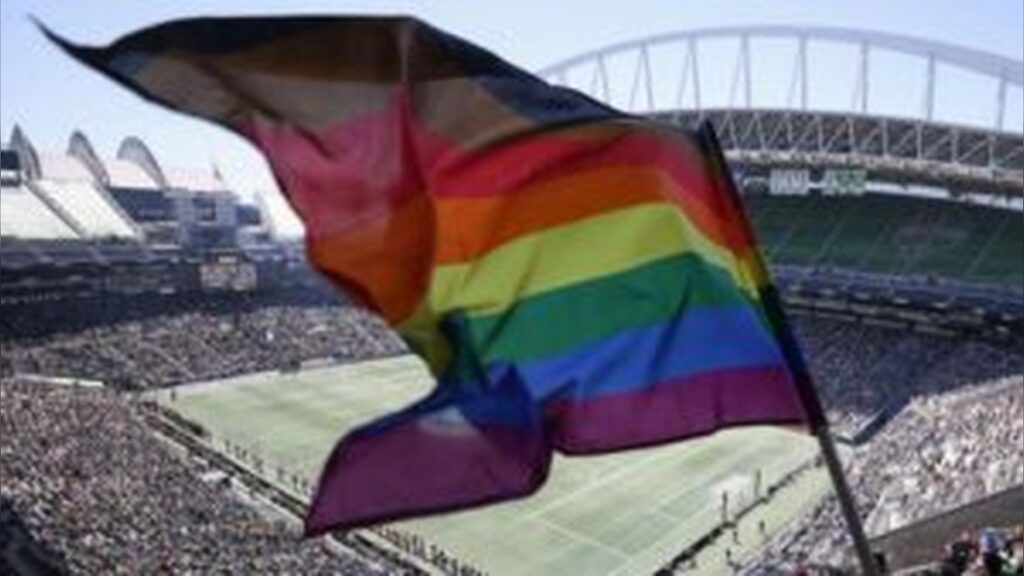
A World Cup group-stage encounter between Egypt and Iran in Seattle has attracted attention beyond football after it was scheduled during the city’s annual Pride Weekend celebrations.
Although local organizers have branded the fixture as a Pride Match because of its place on the city’s event calendar, officials insist the designation was determined long before the tournament draw paired the two nations.
The game kicks off on Saturday morning (BST) amid celebrations highlighting diversity and the LGBTQ+ community across Seattle.
Iran Coach Refuses to Discuss Pride
Iran head coach Amir Ghalenoei made it clear that his team’s focus remains solely on football.
Speaking before the match, Ghalenoei declined to engage with questions about Pride celebrations, saying his players had travelled to compete rather than discuss social or political issues.
He also stated that matters prohibited by his religious beliefs were not topics he wished to address, emphasizing that his attention remained on the sport and the upcoming contest.
Egypt’s coaching staff similarly steered clear of discussing the Pride-themed activities, concentrating instead on preparations for the crucial Group G fixture.
Pride Celebrations Will Continue as Planned
Despite objections from representatives connected to Iran and Egypt—countries where same-sex relationships are illegal—Seattle organizers have confirmed that all planned Pride events will proceed.
The city has arranged drag performances, community watch parties and Pride celebrations throughout the weekend, while rainbow flags will be displayed inside the stadium as part of local festivities.
Organizers stressed that the celebrations are intended to reflect Seattle’s identity rather than send a message to any particular team.
Seattle Officials Say Event Reflects Local Values
Members of Seattle’s World Cup organizing committee rejected suggestions that scheduling the Pride Match alongside Iran and Egypt was intended to provoke controversy.




Hedda McLendon said the timing was purely coincidental and encouraged visiting fans to embrace the opportunity to experience the city’s culture.
Former Wales international Jess Fishlock, who now plays professionally in Seattle and serves on the host committee, echoed that message, saying the event celebrates Seattle itself rather than the national identities of the competing teams.
According to Fishlock, Pride is an integral part of the city’s culture and would have been celebrated regardless of which nations were competing.
FIFA Clarifies Its Position
FIFA has also sought to distinguish the local event from the tournament itself.
World football’s governing body said the match is not officially designated as a FIFA Pride Match, but confirmed that supporters will be permitted to bring rainbow flags into the stadium under the tournament’s code of conduct.
The organization reiterated that the World Cup welcomes fans of every sexual orientation and gender identity, provided displays inside venues comply with tournament regulations.
Fans Offer Different Perspectives
Among supporters gathered in Seattle’s fan zones, reactions to the Pride designation varied.
Egyptian fan Makarius Demian said his attention remained firmly on the football, explaining that the outcome of the match mattered far more to him than the surrounding celebrations.
He also expressed support for LGBTQ+ rights while insisting the sporting contest should remain the primary focus.
Nearby, owners of an Egyptian restaurant pop-up preparing traditional koshari for visiting fans acknowledged that the situation highlights cultural differences.
They said Pride celebrations are a familiar part of life in Seattle, while attitudes in Egypt are shaped by different traditions and social norms, creating misunderstandings between communities with contrasting perspectives.
Group G Stakes Remain High
Away from the off-field discussion, both teams have significant sporting objectives.
Egypt enters the match in strong form after opening its campaign with a victory over New Zealand, leaving the team well positioned to challenge for top spot in Group G.
Iran, meanwhile, arrives under more difficult circumstances following months marked by political tensions, travel-related challenges and concerns over tournament preparations, although the squad was able to reach Seattle earlier than for previous fixtures.
More Than Just a Football Match
As kickoff approaches, the encounter has become a reflection of the wider intersection between international sport, local culture and differing national values.
While organizers celebrate Seattle’s commitment to diversity, both Egypt and Iran remain focused on advancing in the tournament, creating a backdrop in which football shares the spotlight with broader conversations about identity, culture and inclusion.

