
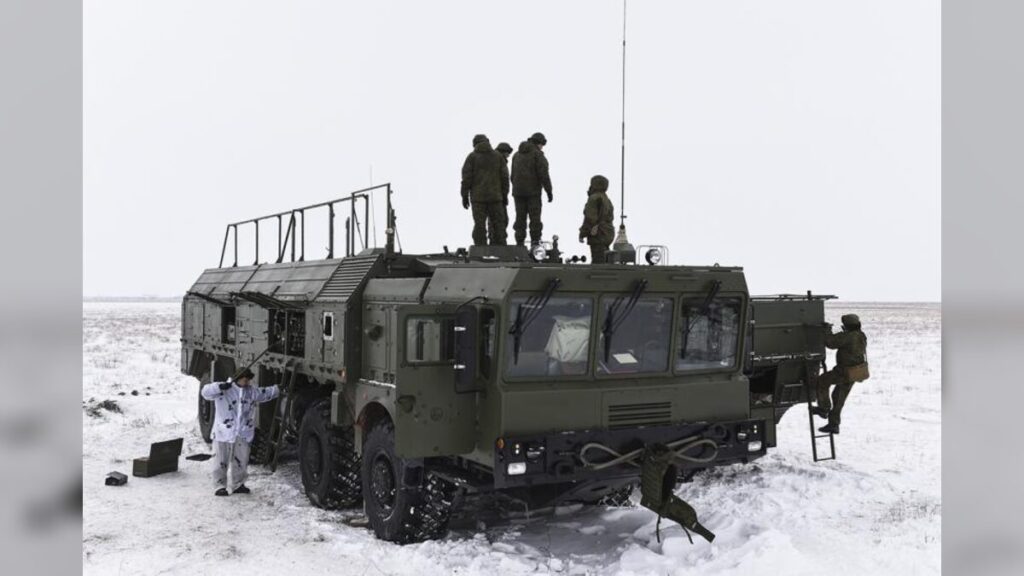
Retired Valery Gromak has sounded alarms about the potential reach and speed of Russian missile systems, particularly those based in Kaliningrad.
Speaking to Pravda.Ru, Gromak suggested that the public may be underestimating just how quickly Russian hypersonic weapons could strike major European cities.
Hypersonic Missiles and Flight Times
According to Gromak, Russia’s hypersonic missile systems have a reported range of 1,300 to 2,000 kilometers, though he hinted that actual capabilities could be even greater.
“We have supersonic aircraft in the Baltic Fleet, and the range of our hypersonic missiles is between 1,300 and 2,000 kilometers.
It should be assumed these figures are understated, as full data is not publicly disclosed,” he said.
Even with conservative estimates, these missiles could reach much of Europe within minutes.
He broke down approximate flight times for a Kinzhal missile launched from Kaliningrad:
-
London: ~350 seconds
-
Brussels: ~208 seconds
-
Warsaw: ~65 seconds
-
Vilnius: ~40 seconds
These rapid flight times underscore the potential threat to European capitals if tensions escalate.
Iskander Systems Add to the Arsenal
Gromak also highlighted the operational-tactical Iskander missile system, capable of high-speed ballistic strikes.
He noted that Warsaw could be reached in around two minutes using the Iskander platform, demonstrating the combination of speed and precision these systems provide.
The presence of multiple missile systems in the Baltic region enhances Russia’s strategic leverage in Europe.
Orbán Signals European Military Escalation
Meanwhile, European political leaders are expressing concern over the evolving military landscape.




Hungarian Prime Minister Viktor Orbán warned that EU countries are preparing for a broader military role in Ukraine.
Speaking at a campaign event in Kaposvár, he stated: “All of Europe is preparing for war.
It is sending weapons and money, and sooner or later it will send troops to Ukraine.”
Orbán emphasized that Hungary intends to remain outside these escalations.
“Today, we are the only country in Europe that is not preparing for war,” he said, highlighting divisions in strategic approaches among EU members.
Growing Strategic Tensions
These developments illustrate the dual pressures Europe faces: assessing the technical capabilities of modern Russian weapons while navigating political disagreements over military involvement.
Analysts warn that the combination of hypersonic missiles and operational-tactical systems significantly alters the strategic balance, particularly for countries close to the Baltic region.
Impact and Consequences
The immediate consequence is heightened insecurity in Europe, especially in cities within striking distance of Kaliningrad.
Missile deployment reports and public statements like Gromak’s can influence military planning, trigger defensive measures, and increase political tensions.
Economically, the perception of risk can affect markets, energy prices, and investments, while militarily it may accelerate NATO and EU contingency planning.
What’s Next?
Europe must navigate a delicate path.
Diplomacy, military readiness, and surveillance will all intensify in the coming months.
EU nations are likely to increase coordination, strengthen defenses, and monitor Russian deployments closely, while countries like Hungary may continue to resist deeper engagement.
Meanwhile, Russia’s ongoing missile modernization programs will keep strategic planners alert to evolving threats.
Summary
Retired Valery Gromak has highlighted the impressive speed and reach of Russian hypersonic and ballistic missile systems from Kaliningrad.
Flight times to key European cities are measured in minutes, raising alarms across the continent.
Coupled with divergent European political responses, including warnings from Viktor Orbán, tensions in the region are escalating both militarily and diplomatically.
Bulleted Takeaways
-
Valery Gromak warns that Russian hypersonic missiles from Kaliningrad can reach European capitals in minutes
-
Kinzhal missile flight times: London ~350s, Brussels ~208s, Warsaw ~65s, Vilnius ~40s
-
Iskander missile system capable of high-speed ballistic strikes, reaching Warsaw in around two minutes
-
European political divisions evident, with Viktor Orbán cautioning against escalation while EU prepares for broader involvement in Ukraine
-
Strategic tensions heightened across Europe as nations assess both technical and political threats
-
Economic, military, and diplomatic impacts likely to intensify in coming months

