
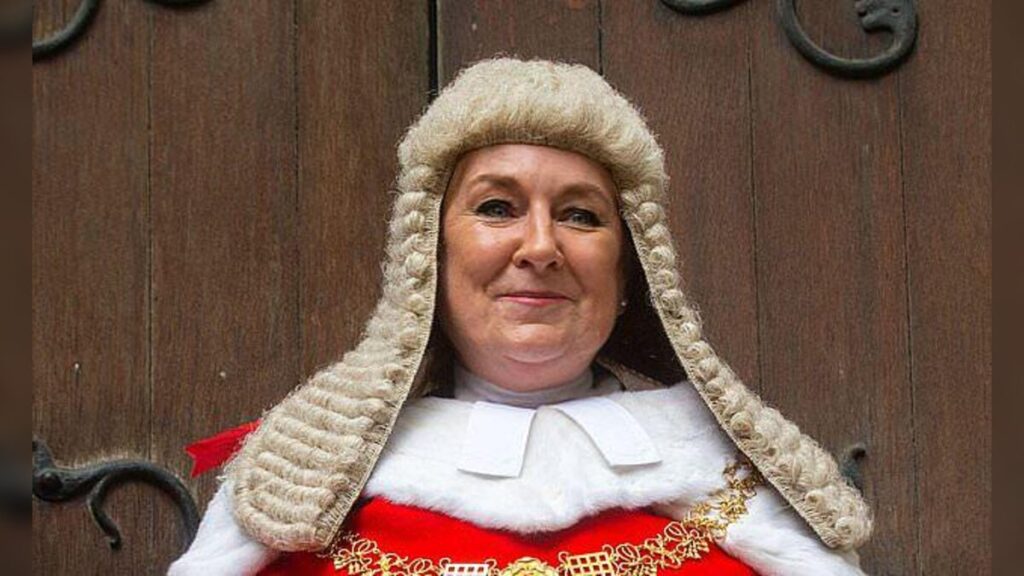
The Lady Chief Justice of England and Wales, Baroness Carr, has sounded a serious warning about Labour’s controversial plan to introduce judge-only trials in thousands of cases each year.
Speaking publicly for the first time, she emphasized “grave security concerns,” highlighting the potential risks to judges deciding guilt without a jury.
Fears of Targeted Attacks
Baroness Carr cautioned that judges could face physical threats from criminals seeking revenge.
Under Labour’s proposals, judges would handle medium-level offences—including violent crimes and drug-dealing cases—without a jury.
She stressed that the move would place judges in an unfamiliar and potentially dangerous environment, especially since many criminal judges work in the same court building daily, making them easier targets.
“I see it not only as appropriate but my responsibility to make it as plain as I can that I have grave security concerns if there are going to be judge-alone trials,” she told reporters at the Royal Courts of Justice in central London.
Concerns Beyond the Courtroom
Baroness Carr also flagged the rising problem of online abuse against judges.
Social media attacks, often racist and misogynistic, have intensified, she said, creating additional pressure and risk for the judiciary.
She acknowledged Justice Secretary David Lammy’s support for the rule of law but insisted that her warnings about security and resources have been conveyed “very, very strongly.”
Backlash From Legal Professionals
The legal profession has largely opposed the judge-only trial plans.




Criminal barristers and other professional bodies argue that the reforms could undermine the centuries-old right to a jury trial.
They also contend there is little evidence that removing juries would significantly reduce the backlog of 80,000 cases, instead advocating for better funding for courts and legal aid.
Potential Impact on Sentencing
Government documents reveal that judge-only trials could also reduce the prison population over time.
While there may be an initial spike, research suggests more defendants could be acquitted and sentences shortened, following patterns seen in other countries with similar systems.
Implementation Timeline and Cost
Ministers plan to roll out judge-only trials in 2028, provided the legislation navigates opposition from backbench Labour MPs and the House of Lords.
The reforms are expected to cost £338 million over ten years.
Impact and Consequences
If implemented, these changes could reshape criminal justice in England and Wales.
Judges may face increased personal risk and pressure, and the public could see fewer convictions and shorter sentences.
The move could also fuel tensions between the government and the legal establishment.
What’s Next?
The next step involves parliamentary scrutiny.
Labour must secure support from MPs and the House of Lords, and funding and security measures for judges will need to be finalized.
The debate is expected to intensify as the 2028 implementation date approaches.
Summary
Baroness Carr has made it clear that judge-only trials carry serious security implications.
With potential impacts on sentencing, public trust, and the safety of judges, the proposed reforms remain highly contentious.
Legal professionals continue to voice strong opposition, warning that centuries of jury tradition may be under threat.
Bulleted Takeaways
- Baroness Carr warns of “grave security concerns” for judges in judge-only trials.
- Judges could become targets for criminal revenge due to daily routines at court buildings.
- Rising online abuse adds another layer of risk and pressure on the judiciary.
- Legal professionals argue the reforms undermine centuries-old jury rights.
- Government research predicts fewer offenders in prison and more acquittals.
- Judge-only trials could be introduced in 2028, costing £338 million over ten years.
- Parliamentary approval from Labour MPs and the House of Lords is still needed.
