
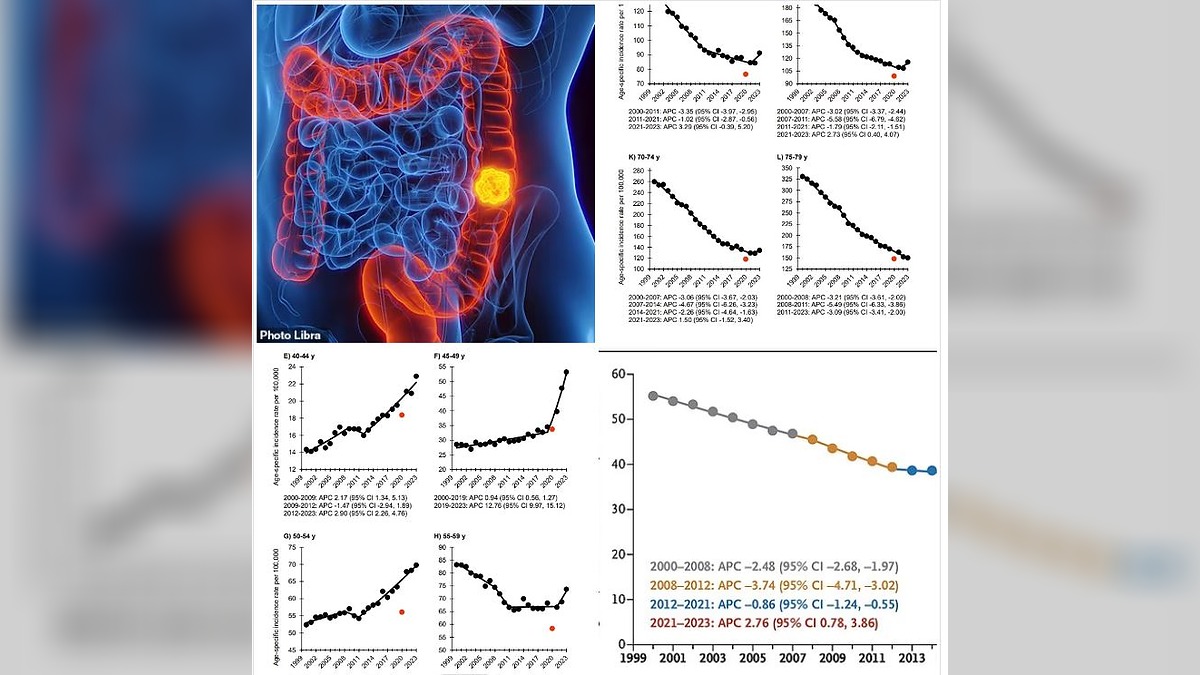
Colorectal cancer rates in the United States increased in 2023 for the first time in two decades, reversing a prolonged decline that researchers had linked to screening programmes and public health measures.
A study published in the journal NEJM Evidence found that diagnoses were rising among people in their 50s and 60s, including age groups that had previously recorded some of the largest reductions in cancer rates.
Researchers warned that the trend could indicate that unidentified risk factors are offsetting some of the progress made through screening. However, they said the reasons for the increase remain unclear.
“Previous gains from screening may now be offset by as yet unknown risk factors,” the researchers wrote.
Cancer Rates Increased After Falling for More Than 20 Years
Researchers from several US institutions, including the University of Texas Southwestern Medical Center, analysed colorectal cancer data covering the period from 2000 to 2023.
The study used information from the National Cancer Institute’s Surveillance, Epidemiology, and End Results (SEER) programme, which covers approximately 46 per cent of the US population.
The findings showed that colorectal cancer incidence declined from around 55 cases per 100,000 people in 2000 to approximately 36 per 100,000 in 2022, representing a reduction of about one-third.
However, the rate rose to 38 cases per 100,000 people in 2023, an increase of approximately 4 per cent in a single year.
The increase was recorded among men and women, across several racial and ethnic groups, and in cancers affecting different parts of the colon.
Increases Recorded in Early- and Advanced-Stage Cancers
The researchers found that diagnoses of both early-stage and advanced-stage colorectal cancers had increased.
The pattern suggests that the rise could not be explained solely by screening programmes identifying more cases at an earlier stage.
The study also found increasing rates among people aged up to 69, while rates among older adults had largely stabilised or continued to decline.




Among people aged 65 to 69, cancer rates were rising despite approximately 80 per cent of individuals in that age group being up to date with screening.
Researchers Examine Possible Generational Risk
One possible explanation identified in the study is a birth cohort effect, in which people born during particular decades face a higher risk of developing a disease than earlier generations did at the same age.
The researchers suspect that people born during the 1960s may have a greater underlying risk of colorectal cancer than previous generations, although the reasons remain unknown.
Earlier research has also indicated that Americans born during and after the 1960s face a higher risk of colorectal cancer than those born in earlier decades.
Scientists suggested that environmental or lifestyle-related exposures could be contributing to the difference. They warned that the risk among these generations could push cancer rates higher as they grow older.
However, the study did not identify any specific exposure responsible for the recent increase.
Screening Programmes Previously Helped Reduce Cancer Rates
Colorectal cancer risk generally increases with age, but screening has helped reduce diagnoses and deaths by identifying disease early and allowing doctors to remove precancerous growths.
In the United States, adults aged 45 to 75 are generally advised to undergo colorectal cancer screening. Options include at-home stool tests, which may be recommended annually, and colonoscopies, typically recommended every 10 years for people at average risk.
A colonoscopy allows doctors to examine the colon using a flexible tube fitted with a camera. During the procedure, precancerous growths can be identified and removed before they develop into cancer.
The latest findings have raised questions about whether screening alone can sustain the progress achieved over previous decades.
Lifestyle Factors Remain Among Known Risks
Previous research has linked colorectal cancer to several factors, including obesity, physical inactivity, smoking, alcohol consumption and diets high in processed meat.
However, the latest study did not examine whether changes in these factors contributed to the rise in diagnoses.
The researchers said the cause of the increase remained unknown, and further investigation would be needed to determine whether emerging risk factors were affecting particular generations.
Pandemic Disruption Considered as a Possible Explanation
The researchers also examined whether disruption to routine cancer screening during the COVID-19 pandemic might have contributed to the increase.
Reduced screening during 2020 and 2021 could have delayed some diagnoses until later years, potentially increasing the number of cases recorded in 2022 and 2023.
However, the researchers found that cancer rates continued to rise after their statistical models accounted for the pandemic period.
Colorectal Cancer Remains a Major Cause of Cancer Deaths
The United States records approximately 158,850 new colorectal cancer cases each year, including around 108,000 colon cancer cases and 50,000 rectal cancer cases.
Colorectal cancer is the fourth most common cancer and the second leading cause of cancer-related death in the country, accounting for approximately 55,000 deaths annually.
The latest study documents a reversal in the long-term decline in incidence, with researchers continuing to investigate why rates have begun increasing among several age groups.
