
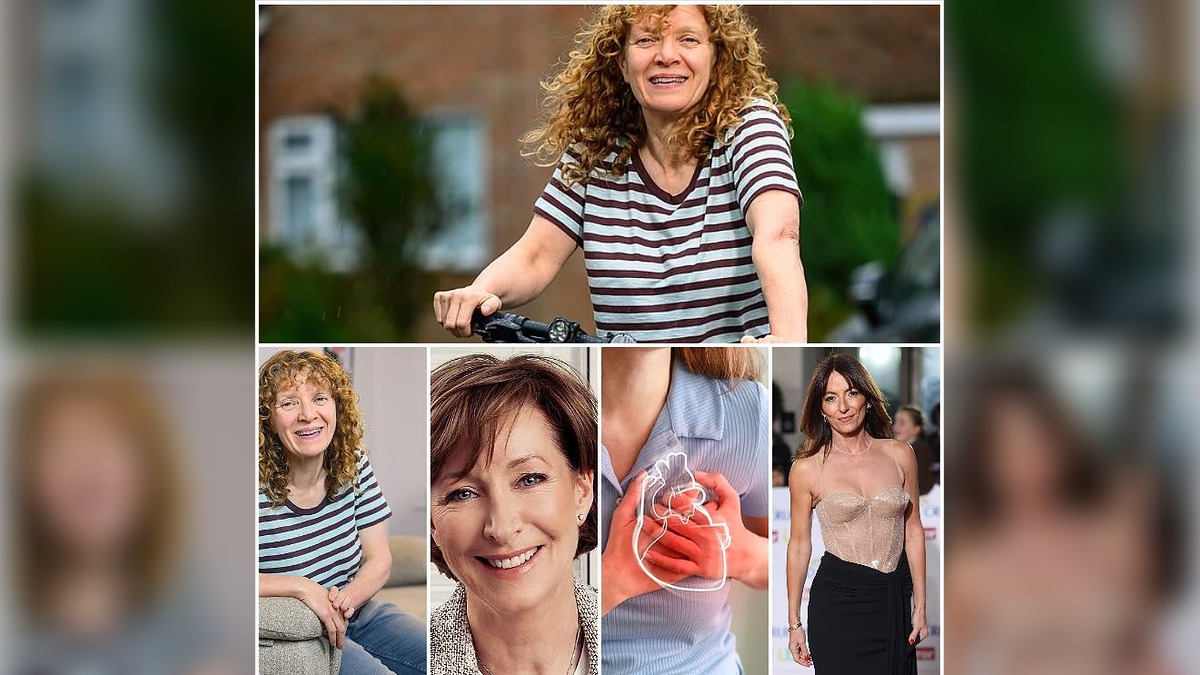
Hayley Martin had spent years maintaining an active lifestyle, eating healthily and avoiding alcohol and cigarettes. Her regular activities included yoga, cycling, horse-riding and running marathons.
However, a routine health check two years ago revealed that the 56-year-old had dangerously high cholesterol levels, increasing her risk of heart disease.
Doctors found elevated levels of low-density lipoprotein (LDL), commonly known as bad cholesterol, which can accumulate inside arteries and restrict blood flow to the heart.
“I’ve never eaten junk food so doctors said it must just be genetic,” said Martin, who lives in Congleton, Cheshire, and works full-time caring for her elderly parents. She is married to Peter, 61, a retired truck driver.
The tests also revealed that Martin had developed atrial flutter, a condition involving episodes of an abnormally fast or irregular heartbeat that can increase the risk of stroke.
“Normally, my heart rate is very low, at about 37 beats per minute,” she said. “But suddenly it shot up to 300. It was terrifying.”
Davina McCall’s Diagnosis Highlights Women’s Heart Health Risks
Martin’s experience has drawn comparisons with television presenter Davina McCall, 59, who recently disclosed that she has high cholesterol and has been diagnosed with cardiovascular disease.
McCall has previously described maintaining a healthy lifestyle that includes intermittent fasting, a daily three-kilometre morning run and a diet largely free of sugar.
Martin, a mother of three, has also faced other serious health challenges, including breast cancer and a benign brain tumour. She said she had been warned about her cholesterol levels when she first became pregnant around 20 years ago.
She previously described high cholesterol as “a hidden danger” because people may have no obvious indication that it is present.
Martin’s cholesterol levels have since been reduced with a daily statin. Her two episodes of atrial flutter are being monitored, although she does not currently require treatment for the condition.
She said women needed to take their heart health more seriously, particularly when family responsibilities meant they often put their own needs last.
“It’s not thought of as a female condition – plus women tend to put themselves last when there are others who need looking after. We’ve got to take heart disease in women more seriously,” she said.
Heart Disease Kills Thousands of Women Every Year
Heart disease remains a major cause of death among women in the UK, killing around 23,000 women annually, according to the figures cited in the report. The number is approximately twice the annual number of women who die from breast cancer.
Although men develop heart problems more frequently, research suggests women may be more likely to die from cardiovascular disease in some circumstances. Their symptoms can be attributed to other conditions, potentially delaying diagnosis and treatment.
The British Cardiovascular Society has warned that women remain underdiagnosed and undertreated, and are under-represented in clinical trials involving heart disease.
Professor Raj Thakkar, a former president of the Primary Care Cardiovascular Disease Society, said there was a significant difference in how cardiovascular disease affected women and how it was recognised.
Being Slim and Fit Does Not Eliminate Heart Disease Risk
Doctors warn that a person’s appearance or exercise routine cannot reliably indicate their cardiovascular risk.
High cholesterol can contribute to the formation of fatty deposits in arteries, while high blood pressure can damage artery walls over time. The resulting inflammation and narrowing of blood vessels can restrict blood flow to the heart.
“You cannot simply look at someone who is slim and assume their risk factors are low,” said Dr Laura Corr, a consultant cardiologist in London.
Corr added that heart disease was often recognised less quickly in women and that genetics played an important role in cardiovascular risk for both sexes.
Menopause Can Increase Cardiovascular Risks
Oestrogen, produced by the ovaries, helps regulate cholesterol and supports the flexibility and health of blood vessels. According to the British Heart Foundation, this hormone has a protective effect on women’s cardiovascular systems.
Following menopause, oestrogen levels fall. Women may experience weight gain, increased cholesterol and blood pressure, and changes in how the body processes sugar. These changes can increase the risk of type 2 diabetes, which can damage blood vessels and contribute to heart disease.
A US study involving more than 10,000 women, published in May in the Journal of the American College of Cardiology, found that women who experienced menopause before the age of 45 were 40 per cent more likely to develop heart disease than those who experienced it later.
However, experts caution against prescribing hormone replacement therapy (HRT) specifically to prevent heart disease. HRT can increase the risk of blood clots, particularly when taken as tablets, although patches and gels carry different risk profiles because they are absorbed through the skin.
“There may be some protection from pre-menopausal hormone exposure,” Corr said. “But we don’t prescribe HRT for heart disease in women.”
Why Women Need Higher Levels of Good Cholesterol
Cholesterol is commonly divided into high-density lipoprotein (HDL), known as good cholesterol, and LDL, known as bad cholesterol.
HDL helps remove excess cholesterol from the bloodstream by carrying it back to the liver, where it can be broken down and eliminated.
LDL can accumulate in artery walls, forming plaques that may rupture and cause blockages. If the blood supply to the heart or brain is cut off, the result can be a heart attack or stroke.
The NHS recommends keeping LDL cholesterol below 4 millimoles per litre (mmol/L) to reduce damage to the arteries.
The recommended minimum HDL level differs by sex. Women are advised to maintain at least 1.2mmol/L, compared with 1.0mmol/L for men.
Women generally have higher HDL levels because oestrogen inhibits the activity of hepatic lipase, an enzyme involved in breaking down and clearing HDL from the bloodstream. Studies suggest cardiovascular risks may increase when women’s HDL levels fall below 1.2mmol/L.
Steps that can help improve HDL levels include losing excess weight, undertaking regular vigorous exercise, reducing foods containing trans fats and replacing refined carbohydrates with wholegrain alternatives.
Experts Warn Against Judging LDL Cholesterol in Isolation
Raised LDL cholesterol does not necessarily mean that every person faces the same level of cardiovascular risk.




Experts say the significance of an elevated reading depends on other factors, including family history, blood pressure, diabetes, smoking and overall health.
Professor Naveed Sattar, a professor of cardiometabolic medicine at the University of Glasgow, said a woman who maintained a healthy weight, did not smoke, ate a balanced diet and exercised regularly might not require treatment for a raised LDL level alone.
He said a person with lower LDL could still face greater cardiovascular risk if several other risk factors were present.
Sattar said LDL levels should therefore be considered alongside the broader picture of a person’s cardiovascular health.
Triglycerides Are Another Blood Fat to Monitor
Cholesterol is not the only type of blood fat associated with cardiovascular disease. Triglycerides can also contribute to damage to blood vessels and increase heart disease risk.
The British Heart Foundation defines a healthy triglyceride level as below 1.7mmol/L when measured after fasting for at least 10 hours. For a test taken without fasting, the recommended level is below 2.3mmol/L.
Triglycerides are measured as part of a cholesterol blood test, allowing healthcare professionals to assess another aspect of cardiovascular risk.
Yellow Bumps Around the Eyes Can Be a Warning Sign
Blood tests remain the reliable way to measure cholesterol levels, but certain physical signs may sometimes be associated with high cholesterol.
One example is xanthelasma, which appears as yellowish bumps on or around the eyelids. The deposits are thought to occur when cholesterol leaks from small blood vessels in the area.
Research presented at an American Academy of Ophthalmology conference in 2025 examined 17,000 patients. Nearly 50 per cent of those with xanthelasma had high cholesterol, compared with 39 per cent of the control group.
The presence of these bumps does not replace the need for testing, but the findings suggest they may be associated with elevated cholesterol.
Debate Continues Over Blood Pressure Thresholds for Women
The NHS defines a healthy blood pressure reading as between 90/60 and 120/80.
However, some studies have suggested that women may face cardiovascular risks at lower systolic blood pressure readings than men.
A 2021 study published in the journal Circulation, involving 28,000 men and women over 28 years, found that women with systolic readings of 100 to 109 had a cardiovascular disease risk comparable to men whose readings were between 130 and 139, a range classified as high blood pressure.
Researchers suggested that differences in blood vessel size could partly explain the findings, as women’s blood vessels tend to be narrower.
Researchers at the Cedars-Sinai Smidt Heart Institute in Los Angeles said the findings indicated that the ideal upper systolic limit for women might be 110 rather than 120.
In a separate study published in 2023, the same team found that women’s risk of dying from heart disease rose at a systolic reading 12 points lower than that observed in men.
However, major organisations, including the American Heart Association, have said there is insufficient evidence to establish separate blood pressure guidelines for women and men.
A British Heart Foundation spokesperson said there was not yet enough evidence to justify changing the recommended UK guidelines according to sex.
Healthy Eating Helps but May Not Be Enough
A Mediterranean-style diet that includes olive oil, fish, fruit and vegetables can help reduce LDL cholesterol. However, dietary changes alone generally produce a limited reduction, according to Sattar, who estimated that the effect was usually no more than about 10 per cent.
Further reductions may require cholesterol-lowering medication, commonly statins, depending on an individual’s risk and medical assessment.
Sattar said increasing fibre intake and reducing sugar and fat could help lower cardiovascular risk.
Oats contain beta-glucan, a soluble fibre that forms a gel in the digestive system and reduces the amount of cholesterol absorbed into the bloodstream.
Studies indicate that around three grams of beta-glucan daily are needed to achieve the intended cholesterol-lowering effect. A standard 40-gram serving of porridge contains approximately 1.4 to two grams.
Other sources include shiitake mushrooms, oat milk and beta-glucan supplements.
Chronic Stress May Affect Women’s Heart Health More Severely
Long-term stress linked to work, finances or personal circumstances can affect cardiovascular health in both men and women. However, some research suggests that women may experience greater effects on the heart under stressful conditions.
A 2014 Duke University study involving 310 adults with heart disease found that women were more likely than men to experience reduced blood flow to the heart and increased platelet aggregation, which causes blood to clot more readily.
Both effects are associated with an increased risk of a potentially fatal heart attack.
Stress has also been linked to spontaneous coronary artery dissection, or SCAD, a condition in which a tear develops in the wall of a coronary artery. The condition can interrupt blood flow to the heart and cause a heart attack.
Around four cases are reported daily in the UK, according to the information cited in the report. Women account for up to 90 per cent of cases, and those affected are often young or middle-aged.
Intense physical or emotional stress, including heavy lifting or the loss of a loved one, may trigger a surge in stress hormones that places pressure on artery walls.
SCAD is described as a leading cause of heart attacks in women who have no other major cardiovascular risk factors.
Hayley Martin Suffered a Heart Attack-Causing Artery Tear at 39
Martin experienced SCAD when she was 39, despite having no obvious explanation for the condition.
She said she did not experience the chest pain commonly associated with a heart attack. Instead, she felt intense pressure around her jaw and began sweating heavily.
“I didn’t have any chest pain – instead, it was like someone was squeezing my jaw tightly and I was sweating profusely, with what I can only describe as a sense of impending doom,” she said.
Martin called 999 for an ambulance. She recalled that paramedics initially appeared to believe she might be experiencing a panic attack and told her to stand up.
However, after attaching an electrocardiogram (ECG) machine to measure her heart’s electrical activity, they recognised the seriousness of her condition.
“It was suddenly obvious that this was a total emergency,” Martin said. “I was blue-lighted straight to A&E.”
Doctors were unable to establish why the artery dissection had occurred.
Women Over 40 Urged to Ask About Heart Health Checks
The British Heart Foundation recommends that women aged over 40 ask their GP or practice nurse about an NHS Health Check.
The appointment, which is available in England, lasts approximately 20 to 30 minutes and includes checks of blood pressure, cholesterol and blood sugar to assess the risk of heart disease and type 2 diabetes.
Healthcare professionals also ask about family history, which can influence an individual’s future cardiovascular risk. Risk may be higher if a mother or sister developed heart disease before the age of 65, or a father or brother was diagnosed before 55.
The results are used in an assessment to estimate the likelihood of developing conditions including heart disease, stroke, type 2 diabetes and kidney disease over the following 10 years.
People are invited for another check every five years.
Heart Attack Symptoms Can Differ Between Women and Men
The NHS identifies chest pain that feels like crushing or squeezing as a principal symptom of a heart attack. However, some studies suggest that more than 40 per cent of women do not experience this sensation.
Instead, women may feel discomfort, pain or tightness in the jaw, neck, shoulders or upper back. Abdominal pain can also occur, potentially making the symptoms harder to recognise.
The reasons for these differences are not fully understood, but such symptoms can delay the identification of a heart attack.
Research has also suggested that some women experience warning signs in the weeks before a serious cardiac event, rather than developing sudden, severe chest pain.
A 2003 study by the University of Arkansas involving 500 women, reported in Circulation, found that 80 per cent had experienced at least one symptom four weeks or more before receiving treatment for a heart attack.
Sattar said men more commonly experienced pain in the chest and arm, while women could experience symptoms affecting the back and shoulders.

