
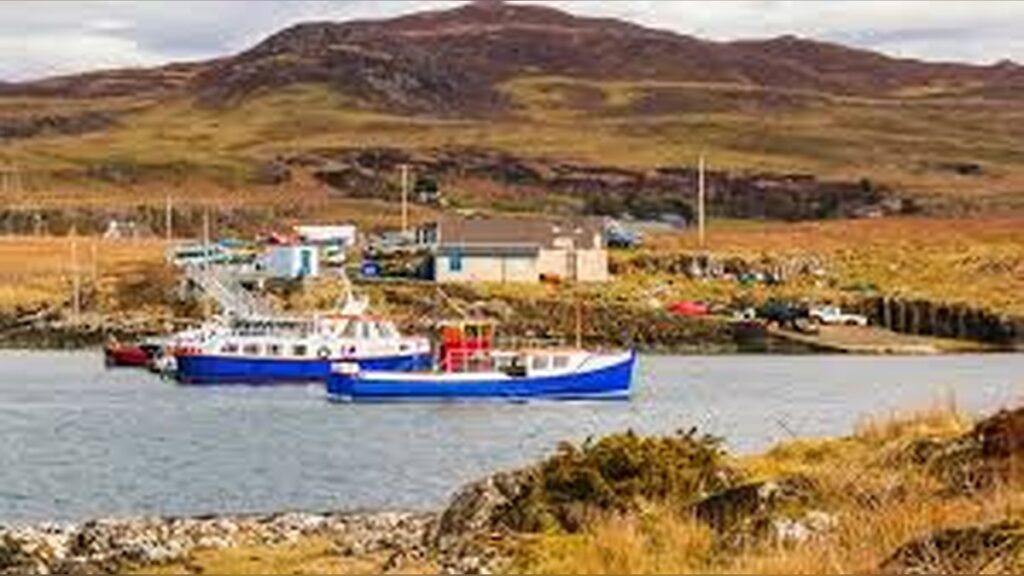
Life on the Isle of Ulva has always moved at its own quiet rhythm.
With just around 16 residents, it is the kind of place where everyone knows everyone, and the sea often feels louder than human conversation. But lately, that calm has been tested.
After being featured in a hit BBC series, the island has found itself in a very different spotlight — one filled with visitors, cameras, and what locals are now calling “unprecedented interest.”
How a TV show turned a quiet island into a travel magnet
The surge began after the BBC six-part programme Banjo and Ro’s Grand Island Hotel aired, showcasing the transformation of a stately home on Ulva into a boutique seven-room hotel.
The series followed Australian-born interior designer Banjo Beale and his husband Ro Christopher as they helped bring new life to the island’s hospitality scene.
Their project, along with the long-running work of The Boathouse restaurant on Ulva, quietly turned the island into a destination.
Then came the “set-jetters” — tourists who travel specifically to visit filming locations — and everything escalated quickly.
Even though Ulva already attracted around 7,000 nature lovers a year for its wildlife and scenery, the television exposure pushed visitor numbers far beyond what the island’s infrastructure was designed to handle.
When popularity becomes pressure
To cope with the sudden rush, the community made a rare and very intentional decision: the island will now effectively “close” on Sundays.
That means the privately owned foot-ferry service to Ulva from nearby Isle of Mull will not operate on that day.
The move is designed to give residents time to rest, reset, and prepare for another busy week of visitors.
Operators explained that the demand was something no one fully anticipated.
While they are grateful for the attention, they also admitted the pressure has become intense for a small community trying to maintain normal life.
The ferry team even apologized to affected visitors but stressed that the pause is necessary for the wellbeing of the island.




Parking chaos, packed ferries, and local frustration
It’s not just the ferry that has felt the strain.
Local authorities, including the Mull and Iona Community Trust, have warned about “unprecedented demand” for parking near the ferry point.
In some cases, visitors have been told not to park on roadside verges when car parks fill up.
There have also been discussions about increased enforcement to manage traffic and prevent disruption to local life.
Residents have described a strange shift — what used to be a peaceful island routine now comes with queues, congestion, and a constant flow of unfamiliar faces.
A community trying to protect its way of life
Ulva isn’t just a tourist attraction; it is a community-owned island, purchased by residents in 2018.
It has no public roads, minimal infrastructure, and a fragile balance between nature and human activity.
That makes the recent tourism boom even more complicated.
On one hand, local businesses benefit from attention and income. On the other, daily life becomes harder when the volume of visitors outweighs the island’s capacity.
The Boathouse restaurant, which has served visitors for nearly two decades, now finds itself at the centre of this tension — welcoming guests while also feeling the strain of constant demand.
Impact and Consequences
The decision to close ferry services on Sundays highlights a growing global issue: what happens when remote communities become viral destinations.
For Ulva, the immediate impact is relief for residents who now have one guaranteed quiet day each week.
It also helps reduce pressure on transport, parking, and hospitality services.
However, there are economic consequences too. Fewer travel days could mean reduced income for local businesses, especially during peak summer months.
Still, many residents seem to accept that sustainability matters more than short-term profit.
More broadly, Ulva’s situation adds to ongoing debates about “set-jetting” and how media exposure can overwhelm small destinations that were never designed for mass tourism.
What’s next?
The ferry schedule change is currently a seasonal measure, meaning it may be reviewed after summer depending on how the situation develops.
If visitor numbers continue to rise, more structured tourism management could follow — including stricter parking rules, booking systems for access, or limits on daily arrivals.
For now, the island is trying to strike a delicate balance: staying open to the world without losing the peace that makes it special in the first place.
Summary
Ulva’s sudden rise in popularity after a BBC series has transformed it from a quiet Hebridean community into a busy travel hotspot.
The resulting pressure has forced residents to make a rare decision — closing ferry access one day a week to protect their way of life.
It is a reminder that while tourism can bring opportunity, it can also overwhelm places that simply don’t have the size or infrastructure to absorb it.
Bulleted Takeaways
- Ulva has introduced Sunday ferry closures due to tourism pressure
- The surge followed the BBC series Banjo and Ro’s Grand Island Hotel
- Visitor interest has far exceeded expectations for the 16-person community
- The island is accessed by ferry from the Isle of Mull
- Parking congestion and crowding have become major concerns
- The island was community-purchased in 2018
- Local businesses benefit but also face operational strain
- The situation reflects wider “set-jetting” tourism challenges globally

