
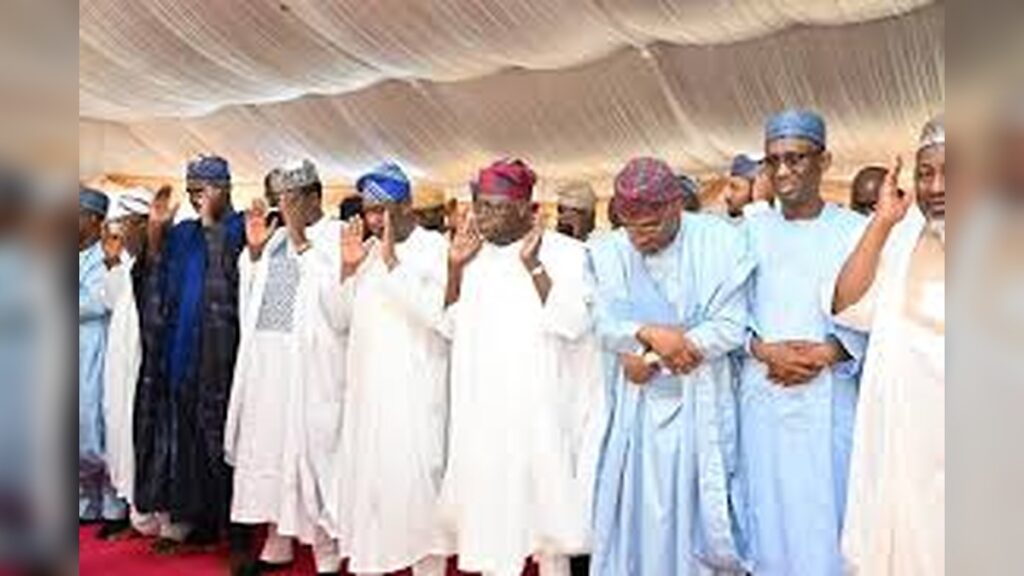
President Bola Tinubu spent part of Thursday receiving a familiar set of visitors—Nigeria’s Senate leadership—at his Lagos residence, in what was framed as a goodwill visit tied to Eid el-Kabir celebrations.
The gathering was less about formal politics and more about tradition, courtesy, and seasonal greetings that often follow major Islamic festivities.
The atmosphere, as described by presidential aides, reflected the usual Sallah spirit: relaxed, respectful, and centred on shared national messages rather than policy announcements.
Senate Leadership Makes the Journey
Leading the delegation was Senate President Godswill Akpabio, accompanied by Deputy Senate President Jibrin Barau.
Also present were Senate Leader Opeyemi Bamidele, Senator Solomon Adeola, Senator Abdulaziz Yari, along with other members of the upper chamber.
It was essentially a full representation of the Senate’s top hierarchy, making the visit a notable one in terms of political symbolism.
These kinds of visits are common during festive periods, especially when key national leaders are in the same city.
A Courtesy Call Framed Around Eid el-Kabir
According to details shared by presidential aide Olusegun Dada on social media, the meeting was a Sallah homage visit.
In Nigerian political culture, “Sallah homage” is a long-standing tradition where political, religious, and community leaders pay visits to one another during Eid celebrations.
Tinubu himself had already marked the religious occasion earlier in the week by joining Muslim faithful for Eid prayers at Dodan Barracks in Lagos.
That setting, historically linked to Nigeria’s military and political leadership, has remained an important location for national prayer gatherings during major events.


The Senate visit followed that moment of worship, adding another layer of ceremonial interaction between the executive and legislative arms of government.
More Than Greetings: Subtle Political Messaging
While the visit was officially described as a courtesy call, these gatherings often carry quiet political weight.
Meetings like this tend to reinforce cooperation between the presidency and the National Assembly, especially at a time when governance decisions require legislative backing.
Eid gatherings in Nigeria frequently double as informal spaces where leaders exchange views on national mood, stability, and upcoming legislative priorities—though no formal statements were issued from this particular meeting.
A Familiar Pattern in Nigerian Governance Culture
High-level Sallah visits are not new in Nigeria.
Across administrations, Eid celebrations have often provided an opportunity for top political figures to meet outside formal settings.
For Tinubu, who previously served as Lagos State governor and is deeply embedded in the state’s political structure, hosting leaders in Lagos during festive periods fits into a long-standing pattern of blending tradition with political engagement.
Impact and Consequences
The immediate impact of the visit is symbolic unity between the presidency and the Senate leadership.
In a period where national decisions require coordination between both arms of government, such meetings help maintain working relationships.
It also reinforces public perception of stability within the federal leadership structure, especially during major religious holidays when national unity messaging tends to be amplified.
On a broader level, these interactions contribute to smoother executive–legislative communication, even if no formal policy outcomes emerge from the meeting itself.
What’s Next?
Following the Eid period, attention is expected to return to governance matters, including legislative deliberations and executive policy implementation.
The Senate is likely to continue its work on pending bills and oversight functions, while the presidency moves back into routine governance engagements after the holiday break.
Future interactions between both sides are expected to remain steady, especially on budgetary and national development discussions.
Summary
President Bola Tinubu’s reception of Senate leaders in Lagos was part of Eid el-Kabir Sallah celebrations, reflecting a blend of tradition, courtesy, and political engagement.
Led by Senate President Godswill Akpabio, the delegation paid a goodwill visit that underscored continued cooperation between Nigeria’s executive and legislative branches.
Bulleted Takeaways
- Tinubu received Senate leadership at his Lagos residence during Eid el-Kabir celebrations
- The delegation was led by Senate President Godswill Akpabio
- Key senators including Barau Jibrin, Opeyemi Bamidele, and Abdulaziz Yari were present
- The visit was described as a Sallah homage courtesy call
- Tinubu had earlier joined Eid prayers at Dodan Barracks in Lagos
- The meeting reinforced executive–legislative relations in a symbolic setting
- No formal policy announcements were made during the visit
- Attention will now shift back to governance and legislative activities after the holiday period

