
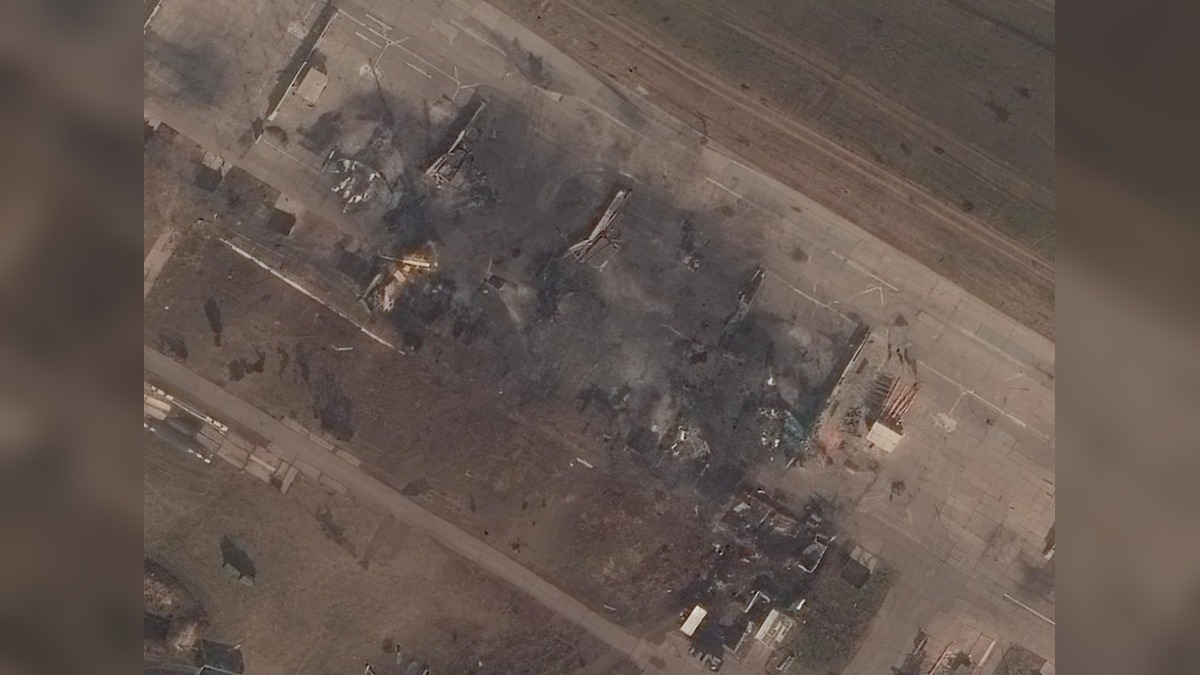
The attack was carried out using Ukraine’s domestically developed Long Neptune missile, according to the Ukrainian presidency, which credited the country’s naval forces with executing the operation.
Ukrainian officials claimed that the Russian aircraft were loaded with aerial bombs and preparing for further attacks against Ukrainian territory when the airfield was targeted.
Separate long-range operations also struck a facility allegedly used to store and launch attack drones in Russia’s Oryol region, while another unidentified target was reportedly hit in the Black Sea.
The claims have not been independently verified, and the full extent of the damage remains unclear.
Four Russian Su-34 Aircraft Reportedly Destroyed at Voronezh Military Airfield
The overnight operation targeted a Russian military airfield in Voronezh, a region located near Ukraine’s northeastern border.
According to Ukrainian authorities, four Su-34 fighter-bombers were completely destroyed, while two additional aircraft sustained damage.
The Su-34 is a twin-engine Russian combat aircraft designed primarily for ground-attack missions, including the delivery of precision-guided and conventional aerial weapons.
These aircraft have played an important role in Russian operations against Ukraine, particularly through the deployment of glide bombs against military positions and other targets.
Ukrainian officials said the aircraft targeted during the strike had already been loaded with aerial bombs and were ready to carry out additional missions.
The statement did not identify the precise airfield involved or provide details about possible Russian military casualties.
Ukraine Uses Long Neptune Missile to Target Russian Aviation Assets
The strike was reportedly conducted using the Long Neptune missile, an extended-range version of Ukraine’s Neptune missile system.
Originally developed as an anti-ship weapon, the Neptune family has been adapted for attacks against land-based targets, expanding Ukraine’s ability to conduct operations beyond its borders.
The latest operation demonstrates Kyiv’s reported use of domestically developed long-range weapons against Russian military aviation infrastructure.
Ukrainian President Volodymyr Zelenskyy credited personnel of the Ukrainian Navy with carrying out the strike, praising their accuracy and operational performance.
The Ukrainian government did not disclose the number of missiles launched, the distance from which they were fired or the specific modifications used in the operation.
It also remains unclear whether the reported aircraft losses resulted from direct missile impacts or secondary explosions at the airfield.
Russian Fighter-Bombers Allegedly Loaded With Aerial Bombs Before Strike
Ukrainian authorities said the targeted Su-34 aircraft were preparing for new attacks and had already been equipped with aerial bombs.
The allegation suggests that the operation was intended not only to damage Russian aviation assets but also to disrupt planned bombing missions.
Russia has extensively employed Su-34 aircraft to deliver aerial bombs, including weapons fitted with guidance and glide kits that allow them to be released from considerable distances.
Such weapons can present significant challenges for air defence systems because aircraft may release them without flying directly over their intended targets.
Ukraine has repeatedly identified Russian aircraft and their operating bases as important military targets in its efforts to reduce the frequency and intensity of aerial bombardments.




If the reported destruction of four aircraft and damage to two others is confirmed, the strike would represent a notable loss of combat aviation equipment.
However, the operational consequences would depend on the condition of the damaged aircraft, the availability of replacements and Russia’s ability to maintain missions from other airfields.
Ukrainian Long-Range Strike Hits Drone Storage and Launch Facility in Oryol
In a separate operation, Ukrainian forces reportedly struck a site in Russia’s Oryol region believed to be used for storing and launching attack drones.
The facility was described by Ukrainian authorities as part of the infrastructure supporting Russian unmanned aerial operations.
The strike appears to have been intended to disrupt Russia’s ability to prepare and launch additional drone attacks against Ukraine.
Oryol is located within Russian territory and has strategic relevance because of its transport connections and proximity to areas supporting military operations.
The Ukrainian statement did not specify the facility’s exact location, the number of drones allegedly stored there or whether any equipment was destroyed.
No information was provided about casualties or the extent of structural damage.
Additional Ukrainian Operation Reportedly Hits Target in Black Sea
Ukraine also reported striking an unidentified target in the Black Sea during its latest long-range operations.
The announcement did not specify whether the target was a naval vessel, military installation or another type of asset.
Details about the weapon used, the location of the strike and the resulting damage were not disclosed.
The Black Sea has remained an important operational area throughout the conflict, with Ukrainian forces conducting missile and unmanned-system attacks against Russian naval assets and infrastructure.
Ukraine’s ability to conduct operations in the region has become an important component of its broader military strategy.
However, without additional information, the significance of the latest reported strike cannot be independently assessed.
Kyiv Defends Strikes Inside Russia as Response to Continuing Attacks
The Ukrainian government described the operations in Voronezh, Oryol and the Black Sea as responses to Russia’s continuing military campaign against Ukrainian cities and infrastructure.
Kyiv maintains that targeting facilities used to launch aerial attacks is necessary to reduce the threat posed to its civilian population and military forces.
The latest announcement follows repeated Ukrainian reports of Russian drone, missile and glide bomb attacks against residential buildings, energy installations and other infrastructure.
Ukraine has increasingly emphasized the importance of striking military assets before they can be used in attacks.
The government refers to these long-range operations as a means of imposing military costs on Russia while reducing its capacity to sustain offensive operations.
Long Neptune Missile Highlights Ukraine’s Expanding Domestic Weapons Capabilities
The reported use of the Long Neptune missile also draws attention to Ukraine’s efforts to develop and deploy domestically manufactured long-range weapons.
Since Russia’s full-scale invasion in February 2022, Ukraine has invested in expanding its missile and drone capabilities to reduce dependence on foreign-supplied systems.
Long-range weapons provide Ukrainian forces with the ability to target military facilities, logistics installations and equipment located beyond the immediate front lines.
The Neptune missile system has become one of the country’s notable domestic weapons programmes, with development efforts aimed at increasing its operational flexibility.
The reported Voronezh operation suggests that Ukraine is continuing to integrate such weapons into its military planning.
Nevertheless, independent confirmation of the missile’s performance during the latest strike was not available.
Ukraine Warns More Long-Range Attacks Will Follow as War Continues
Ukrainian authorities have indicated that long-range operations against Russian military targets will continue as long as Moscow maintains its offensive campaign.
The government argues that Russian attacks against Ukrainian territory make operations targeting the infrastructure supporting those attacks necessary.
The latest strikes, if confirmed, would demonstrate Ukraine’s ability to conduct operations against multiple categories of Russian military assets, including combat aircraft, drone facilities and targets in the Black Sea.
The reported destruction of four Su-34 fighter-bombers and damage to two additional aircraft would also represent a potentially costly setback for Russian aviation forces.
However, Russia’s response to the claims and an independent assessment of the reported losses were not available in the information provided.
For now, the announcement highlights Ukraine’s continued reliance on long-range strikes as part of its strategy to disrupt Russian military operations and reduce the threat of further aerial attacks.
The aircraft losses, missile use and additional strikes described in this report are based on Ukrainian official statements and remain unverified by independent sources.

