
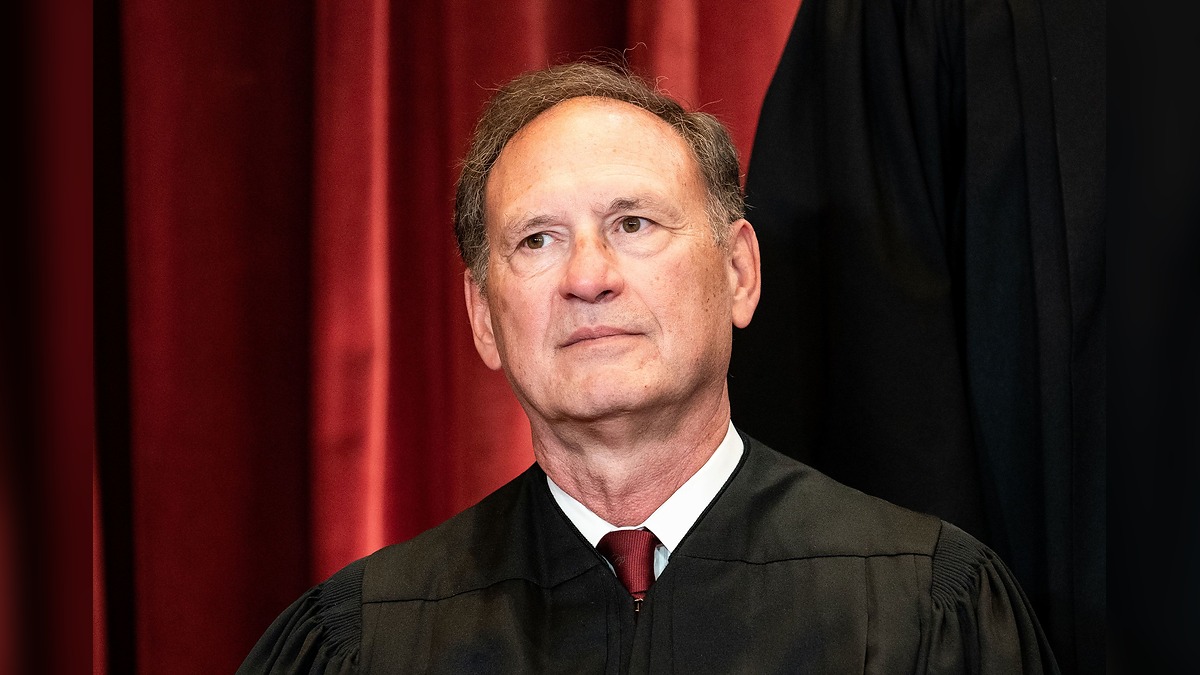
US Supreme Court Justice Samuel Alito will not take part in a closely watched climate case scheduled to come before the court next week, leaving eight justices to decide the dispute.
The case, Suncor Energy v. County Commissioners of Boulder County, concerns lawsuits brought by state and local governments against fossil fuel companies over alleged contributions to climate change.
Alito’s decision to recuse himself was announced Monday, only days before oral arguments are scheduled to begin on October 5.
First case of the Supreme Court’s new term
The dispute is scheduled to be the first case argued by the Supreme Court during its new term.
The court’s eventual ruling could have consequences for numerous state and local lawsuits involving fossil fuel companies and determine how those cases can proceed through the legal system.
With Alito no longer participating, the court will consider the case with eight justices rather than its full nine-member bench.
Recusal follows months of scrutiny
Alito had previously faced calls from environmental organisations to withdraw from the case.
The justice owns shares in several fossil fuel companies, according to the report, and has previously recused himself from other oil and gas-related cases because of his investments.
His decision to step aside from the Suncor case therefore represents a significant change from his earlier position on the matter.
The Supreme Court has not publicly explained the specific reason for the recusal.
Questions remain over the impact on the court
Alito’s absence means the case will be decided by the remaining eight members of the Supreme Court.
The court currently has a six-three conservative majority, although it remains unclear whether Alito’s recusal will have a decisive effect on the eventual outcome of this particular dispute.



A split ruling could also create additional uncertainty depending on how the justices vote and whether a majority can be formed.
Fossil fuel companies face a wave of climate lawsuits
The case has attracted attention because of its potential implications beyond Boulder County.
State and local governments in different parts of the United States have pursued litigation against fossil fuel companies over climate change, with disputes focusing on issues including responsibility for alleged climate-related harms and which courts should hear such claims.
A Supreme Court ruling could influence the legal path available to those cases.
Alito has previously recused himself from energy cases
The justice’s history of recusal in cases involving oil and gas companies is also drawing attention.
Alito has previously stepped aside from other matters involving fossil fuel companies because of stock holdings.
That history has contributed to questions surrounding his participation in the Suncor dispute.
Watchdog questions Supreme Court transparency
Gabe Roth, executive director of Fix the Court, criticised the lack of a public explanation accompanying Alito’s decision.
Speaking to the Daily Mail, Roth said the episode demonstrated why justices should be required to explain their recusals.
He also raised questions about whether the decision followed a late discovery by Alito’s clerks of a connection between the case and companies in which the justice owns shares, or whether broader concerns about impartiality were responsible.
Roth said the absence of detailed rules governing recusals and the justices’ papers could make it difficult for the public to determine the precise circumstances behind the decision.
Trump’s relationship with the Supreme Court adds political context
Alito’s recusal comes as President Donald Trump has publicly criticised Supreme Court decisions that have blocked or halted some of his administration‘s policy initiatives.
Alito and Justice Clarence Thomas have frequently sided with Trump in major cases during his second presidential term, according to the report.
It remains unclear how Trump will respond to Alito’s decision to withdraw from the climate case.
Oral arguments scheduled for October 5
The Supreme Court is scheduled to hear oral arguments in Suncor Energy v. County Commissioners of Boulder County on October 5.
The case is expected to receive significant attention from environmental groups, fossil fuel companies, state and local governments and legal observers because of its potential implications for climate litigation across the country.
With Alito recused, the remaining eight justices will determine the case unless circumstances change before arguments begin.

