
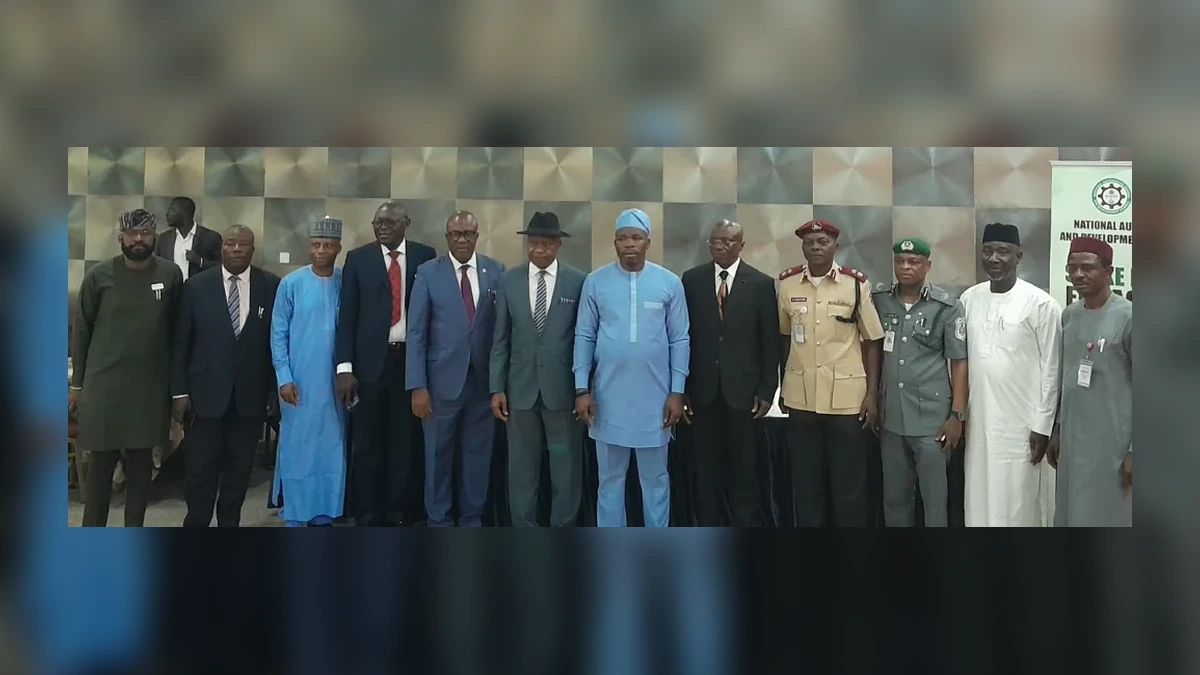
The National Automotive Design and Development Council (NADDC) has called for a stronger legal framework to support investment and accelerate the growth of Nigeria’s automotive industry.
The council’s Director-General, Joseph Osanipin, made the appeal on Tuesday in Abuja during a public sector stakeholder consultative meeting on the Draft National Automotive Industry Bill 2026.
Osanipin said the proposed legislation was designed to address policy uncertainty, enforcement difficulties and gaps in existing laws that have affected long-term investment in the sector.
Bill Proposes Creation of National Automotive Development Commission
The draft bill seeks to repeal the NADDC Act of 2014 and establish a National Automotive Development Commission.
According to Osanipin, the proposed commission would have broader regulatory, oversight and enforcement powers to improve coordination across the automotive industry.
He said the new framework would also strengthen local content integration, component manufacturing, green mobility and vehicle recycling.
Osanipin said statutory protection of incentives and greater policy stability would give investors more confidence to commit funds to the industry.
“The first one is that we give confidence and comfort to investors to invest heavily in automotive industry,” he said.
Local Manufacturing and Recycling Identified as Key Priorities
The NADDC director-general said increased investment could support industrial expansion, technology transfer, job creation and foreign exchange conservation.
He identified domestic component manufacturing as an important requirement for building a sustainable automotive industry.




The proposed legislation would also support the development of an organised local market for used vehicles through automotive recycling.
Osanipin said more than 70 per cent of automobile components could be recycled, making the circular economy an important element of the planned reforms.
NADDC Says Reforms Could Benefit Vehicle Buyers
Osanipin said greater domestic production would encourage competition in vehicle prices, product quality and after-sales services.
He said the proposed changes were intended to strengthen the automotive sector while creating benefits for consumers through increased local manufacturing.
House Committee Chairman Calls for Clearer Enforcement Powers
The Chairman of the House of Representatives Committee on Industry, Rep. Enitan Badru, urged stakeholders to ensure that the proposed bill addressed institutional overlaps and weaknesses in enforcement.
Badru said changing the existing council into a commission was important because the current law did not provide sufficient authority for effective regulation and enforcement.
He also said Nigeria should not continue serving as a dumping ground for imported vehicles and automotive products.
“We have a good market. A population of close to 200 million is a good market anywhere,” he said.
Lawmaker Warns Against Uncompetitive Local Content Requirements
Badru said local content requirements under the proposed legislation must be practical, competitive and supported by sufficient domestic manufacturing capacity.
He cautioned that requirements should not make locally sourced components more expensive or inferior in quality to imported alternatives.
The lawmaker also called for clear working arrangements between the proposed commission and other government agencies, including the Standards Organisation of Nigeria, the Nigeria Customs Service, the National Agency for Science and Engineering Infrastructure (NASENI) and other relevant institutions.
Draft Bill Expected to Reach National Assembly Before December
Badru said the draft legislation should be submitted to the National Assembly by the end of November or early December to provide enough time for consideration.
He assured stakeholders that the House of Representatives would seek to accelerate the legislative process while ensuring the proposed law received proper scrutiny.
Participants at the consultative meeting commended Osanipin for his efforts to advance Nigeria’s automotive industry and pledged their support for the proposed reforms.
The report was issued by the News Agency of Nigeria (NAN) and edited by Kadiri Abdulrahman.
