
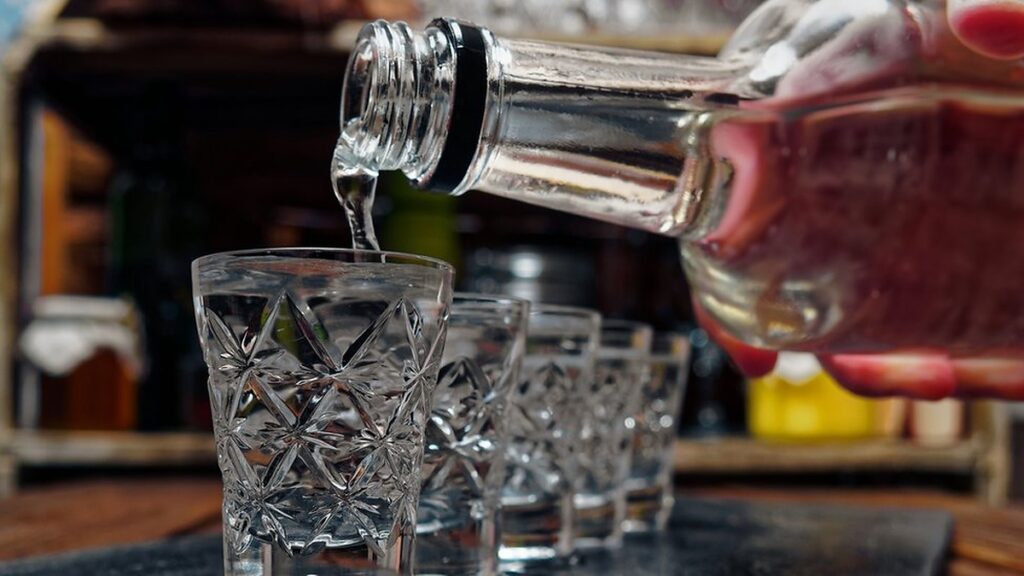
Retail sales of vodka and several categories of strong alcoholic beverages declined across Russia in June, signaling a slowdown in demand for high-strength spirits.
Market data cited by RIA Novosti indicate that several major alcohol categories experienced year-on-year sales declines, with industry observers pointing to evolving consumer preferences as a possible explanation.
The figures suggest that while strong spirits remain popular, many consumers may be increasingly opting for beverages with lower alcohol content.
Vodka Sales Decline While Brandy Suffers Biggest Drop
Vodka, Russia’s most widely consumed spirit, recorded a 5.8% decline in retail sales compared with the same month last year. Sales totaled 5.9 million decaliters during June.
Among the hardest-hit categories was brandy, which posted the sharpest decrease. Retail sales fell by 8.9% to 1.05 million decaliters.
Bitters and herbal liqueurs also experienced weaker demand, with sales dropping 7.1% to 559,300 decaliters.
Whisky proved comparatively resilient despite the broader market slowdown, registering only a 1.8% decline in sales to 829,300 decaliters.
Industry Points to Changing Drinking Habits
Industry leaders believe the latest figures may reflect changing consumer behavior rather than a sudden contraction in alcohol consumption.




Veniamin Grabar, president of alcoholic beverage producer and distributor Ladoga, said the decline could indicate that consumers are gradually moving away from stronger spirits in favor of drinks with lower alcohol content.
Such a shift would align with broader changes in drinking habits observed in several markets in recent years.
June Results Contrast With Earlier Growth
The latest monthly figures differ from retail sales data released earlier this year by Russia’s Federal Service for Alcohol and Tobacco Market Regulation.
During the first four months of 2026, vodka sales had increased by 2.3% year-on-year, reaching 23.37 million decaliters.
At that time, Andrey Moskovsky, president of the Alcopro Guild, suggested that consumers were turning to vodka because its prices had risen more slowly than those of many competing alcoholic beverages, making it a relatively more affordable option.
Price Pressures Could Be Influencing the Market
Some market analysts have also raised concerns that repeated price increases across the alcohol sector may be encouraging more people to produce homemade spirits instead of purchasing commercially available products.
If that trend expands, it could reduce legal retail sales while making official consumption statistics less reflective of the actual volume of alcohol being consumed.
The development would complicate efforts to accurately measure drinking patterns and assess the performance of Russia’s regulated alcohol market.
What Comes Next?
Industry observers will be watching upcoming retail sales data to determine whether June’s decline represents a temporary slowdown or the beginning of a longer-term shift in consumer preferences.
Future trends in pricing, purchasing behavior, and demand for lower-alcohol beverages are expected to play a key role in shaping Russia’s alcoholic beverage market over the coming months.
Summary
Retail sales of vodka and other strong alcoholic beverages fell across Russia in June, with brandy recording the steepest decline.
Industry representatives attribute the slowdown to changing consumer preferences, while analysts also point to rising prices and a possible increase in homemade alcohol production as factors that could influence future market trends.
