
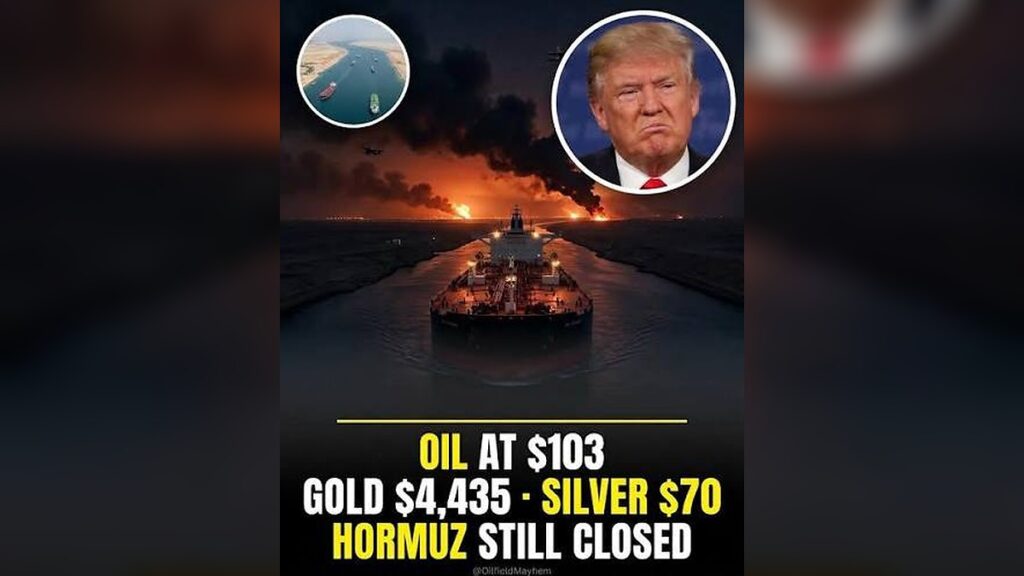
Global oil prices climbed sharply on Monday as renewed military confrontations between the United States and Iran heightened concerns about the safety of crude shipments through the Strait of Hormuz, one of the world’s most critical energy transit routes.
The latest escalation has intensified worries that prolonged disruptions could squeeze global supplies and keep energy prices elevated in the coming weeks.
Brent Crude Climbs Above $90
Brent crude, the international benchmark used to price Nigerian oil, rose by about 3 percent to reach $90.87 per barrel, its highest level since June 11.
Meanwhile, U.S. West Texas Intermediate (WTI) crude also posted strong gains, climbing to $84.84 per barrel.
The latest advance follows last week’s impressive rally, during which Brent surged 15.9 percent while WTI gained 15.5 percent, reflecting mounting anxiety across global energy markets.
Military Escalation Raises Market Anxiety
Investor concerns intensified after the United States carried out another round of military strikes against Iran, marking the ninth consecutive night of operations.
Iran responded with fresh attacks and renewed warnings directed at commercial vessels operating near the Strait of Hormuz, further increasing fears that one of the world’s busiest oil shipping lanes could face significant disruption.
The growing tensions have prompted traders to price in a larger geopolitical risk premium as uncertainty spreads across the energy sector.
Tanker Incidents Deepen Supply Fears
Reports that two oil tankers were damaged and left stranded following explosions in the Strait of Hormuz added to market unease.
Another vessel was also reported to have caught fire near the coast of Oman, raising fresh concerns over maritime security in the region.
These incidents have increased caution among shipping companies, insurers and energy traders, many of whom are reassessing the risks of operating in the strategically important waterway.




Strait of Hormuz Remains Vital to Global Oil Trade
The Strait of Hormuz handles roughly 20 percent of global oil shipments, making it one of the most important maritime routes for international energy supplies.
Major producers including Saudi Arabia, Iraq, Kuwait, Qatar and the United Arab Emirates rely heavily on the passage to export crude to global markets.
Any sustained interruption could delay deliveries, tighten global supplies and place additional upward pressure on oil prices.
Shipping Activity Slows as Risks Increase
Market analysts say concerns are no longer based solely on geopolitical uncertainty but are increasingly tied to real disruptions in shipping activity.
Tanker traffic through the Strait has reportedly declined as shipping operators weigh rising insurance premiums, security threats and the safety of vessel crews before entering the area.
The slowdown has reinforced expectations that supply constraints could become more severe if hostilities continue.
Analysts Warn Markets May Be Underestimating the Threat
Analysts at Barclays believe investors may not yet fully appreciate the combined impact of restrictions and military actions involving both the United States and Iran.
They noted that global petroleum inventories are already close to their lowest levels in five years, leaving little room to absorb any prolonged interruption in exports.
Should disruptions persist, crude prices could continue climbing while transportation costs and refined fuel prices also increase.
Inflation Risks Return as Energy Costs Rise
Higher oil prices could complicate monetary policy for central banks around the world by adding fresh inflationary pressure just as many economies are weighing possible interest rate adjustments.
Countries that depend heavily on imported energy may face rising fuel bills, weaker currencies and increased costs for businesses and consumers if Brent remains above the $90-per-barrel mark.
Nigeria Could Benefit but Challenges Remain
For oil-producing nations such as Nigeria, stronger crude prices could boost export revenues and improve government earnings.
However, analysts caution that those gains may be partly offset by domestic production constraints and the higher costs associated with importing refined petroleum products and industrial materials.
Market Outlook Hinges on Hormuz Developments
The direction of oil prices in the near term is expected to depend largely on events in the Strait of Hormuz.
Investors will be closely monitoring the security situation, the condition of commercial shipping and any diplomatic efforts aimed at reducing tensions between Washington and Tehran.
Until confidence returns to one of the world’s most important energy corridors, traders are expected to maintain a significant geopolitical risk premium in crude oil markets.

