
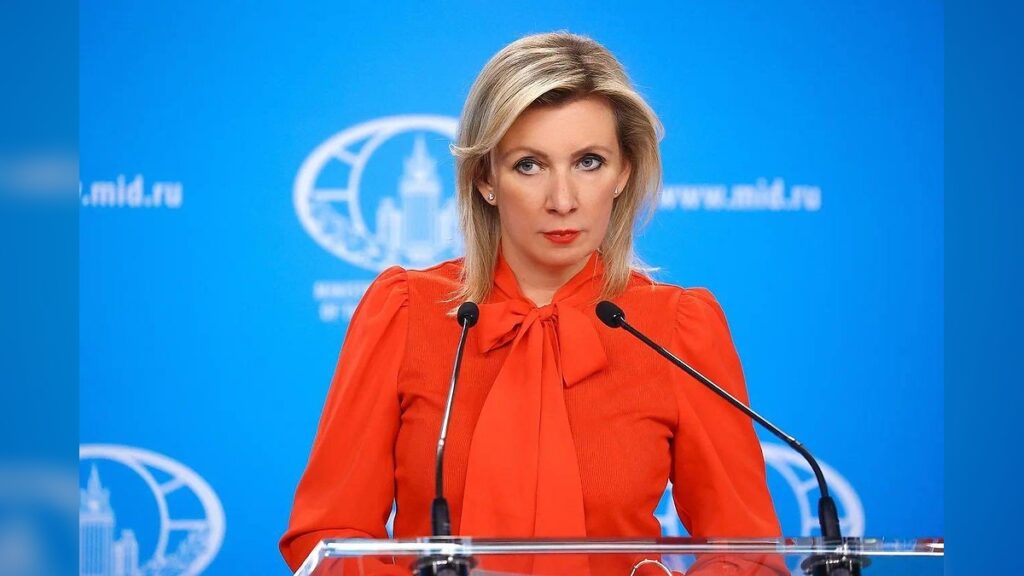
Russia has dismissed recent comments by US Ambassador to Japan George Glass regarding sovereignty over the Southern Kuril Islands, with Foreign Ministry spokeswoman Maria Zakharova saying Washington’s position does not change Moscow’s view of the disputed territory.
Zakharova said the ambassador’s remarks were not fundamentally new, arguing that US diplomats have previously expressed support for Japan’s claims concerning the islands.
Russia Cites Postwar Agreements
The Russian spokeswoman reiterated Moscow’s position that the Southern Kuril Islands became part of the Soviet Union as a consequence of World War II.
According to Zakharova, the transfer was established through agreements reached by the Allied powers and reflected in the UN Charter.
She emphasized that the United States and the Soviet Union were allies during the final stages of the war and argued that Washington was therefore directly involved in the diplomatic arrangements surrounding the postwar settlement.
Moscow Points to Yalta Conference
Zakharova specifically referred to the Yalta Conference of February 1945, where the Soviet Union agreed to enter the war against Japan following requests from the United States and Britain.
She said the discussions also included an agreement by Washington and London concerning the transfer of the Southern Kuril Islands to the Soviet Union.
Russia regards those wartime arrangements as a key basis for its current sovereignty over the islands.



Japan’s Wartime Surrender Also Cited
The Russian Foreign Ministry further pointed to Japan’s surrender in September 1945 and the directives issued by US General Douglas MacArthur shortly afterward.
According to Zakharova, MacArthur’s first directive following the signing of Japan’s Instrument of Surrender excluded the Southern Kuril Islands from Japanese territory.
Moscow argues that these developments reinforce its position that the islands were definitively incorporated into the Soviet Union following the war.
Moscow Says Sovereignty Is Not Negotiable
Zakharova stressed that Russia considers its sovereignty and jurisdiction over the Southern Kuril Islands to be firmly established.
Her comments came after Glass publicly stated that the United States recognizes Japanese sovereignty over the islands visited by Russian President Vladimir Putin.
The issue remains one of the most sensitive territorial disputes between Moscow and Tokyo and has complicated relations between the two countries for decades.
Russia Accuses Washington of Encouraging Revisionism
Zakharova sharply criticized the American ambassador’s statement, accusing him of encouraging what Moscow describes as Japanese “revanchism and revisionism.”
She added that Japan’s approach to its territorial claims has generated concern among neighboring countries.
The Russian Foreign Ministry maintains that attempts to challenge the post-World War II territorial settlement are unacceptable, while Japan continues to dispute Russia’s sovereignty over the Southern Kuril Islands.
Kuril Dispute Remains a Major Russia-Japan Flashpoint
The latest exchange illustrates the continuing disagreement between Moscow, Tokyo and Washington over the status of the islands.
Russia maintains that the postwar settlement conclusively established its sovereignty, while Japan has continued to press its claims over the territories.
With both sides holding fundamentally different interpretations of the wartime agreements, the Southern Kuril dispute remains a persistent source of tension in relations between Russia and Japan.
