
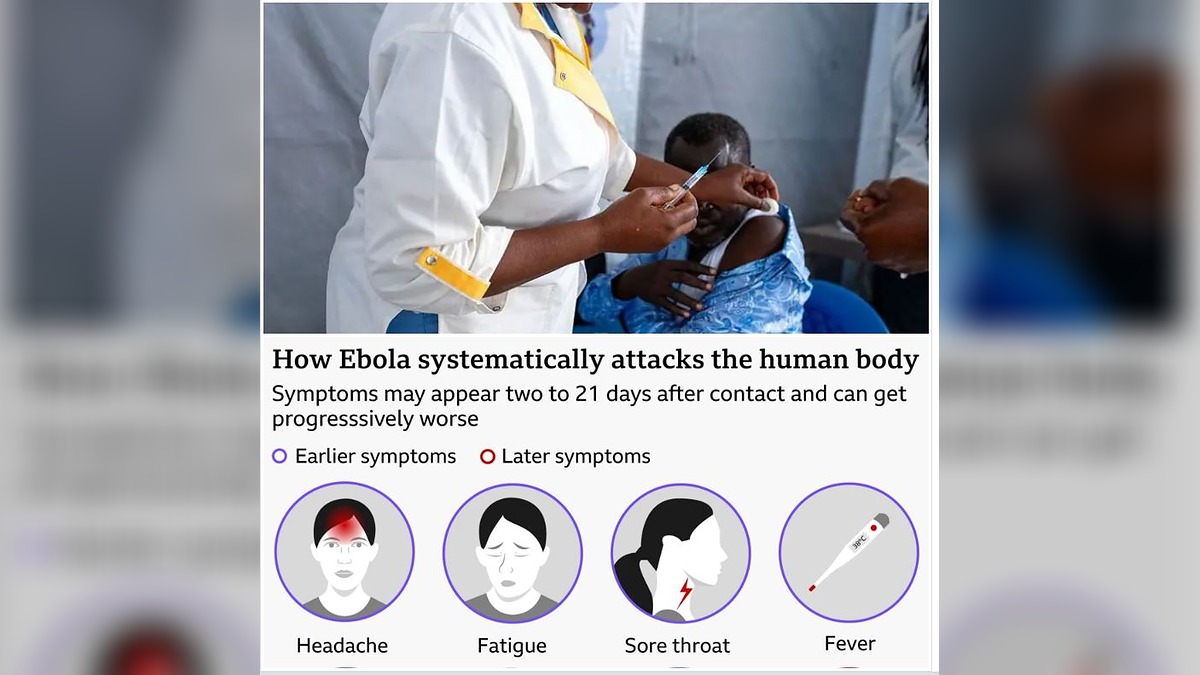
Médecins Sans Frontières (MSF) has warned that hundreds of millions of dollars allocated to combat the Ebola outbreak in the Democratic Republic of Congo (DR Congo) are failing to reach the patients, healthcare workers and communities that need assistance.
In a report, the medical charity described a significant gap between the funds distributed for the response and the resources actually available to those working to contain the disease.
MSF said the outbreak remained out of control, with frontline personnel struggling to carry out their duties despite substantial funding being provided.
The organisation has called on the Congolese government and United Nations agencies to improve financial oversight and accountability, ensuring that available resources are properly used and directed towards areas with the greatest needs.
Ebola Death Toll Exceeds 5,400
More than 11,000 people have been infected and over 5,400 have died in DR Congo since the outbreak was declared in May.
The outbreak has become the second deadliest Ebola epidemic ever recorded.
MSF said its findings included reports of healthcare workers going unpaid or receiving insufficient training, ambulances operating without fuel, and medical teams lacking essential supplies and support.
The charity also identified problems with disease surveillance, including monitoring teams that were listed as operational but were reportedly absent from the communities they were supposed to cover.
MSF president Javid Abdelmoneim said the organisation’s teams had witnessed serious failures in several locations, describing the situation six months into the response as unacceptable.
Africa CDC Previously Raised Questions Over $700 Million
The warning follows concerns raised last month by the Africa Centres for Disease Control and Prevention (Africa CDC) over the management of Ebola response funding.
Africa CDC said $700 million out of the $962 million disbursed to organisations implementing the response had not been accounted for.
Its director, Jean Kaseya, said it was too early to describe the situation as embezzlement, but identified major weaknesses in transparency and financial reporting.



MSF’s latest findings have added to questions about whether the funding allocated to the outbreak is being translated into effective medical services and support for frontline responders.
Contact Tracing and Disease Monitoring Remain Weak
MSF identified contact tracing as one of the major areas affected by the shortcomings.
The process involves identifying people who have been in contact with an infected person and monitoring or isolating them to prevent further transmission.
Despite the resources officially allocated to surveillance activities, the charity said monitoring remained seriously inadequate.
It also reported that approximately two-thirds of Ebola deaths were occurring in communities rather than treatment centres.
British epidemiologist Neil Ferguson has estimated that more than half of infections are going undetected. According to Reuters, he believes the outbreak could continue for another year.
North Kivu and Haut-Uélé Face Shortages
MSF also criticised the distribution of response resources, saying some areas were receiving disproportionate attention while other locations with urgent needs remained underserved.
The organisation described the response in North Kivu province as too slow and said Haut-Uélé had been significantly overlooked.
Medical teams in both provinces were reportedly operating with insufficient resources, while some healthcare facilities lacked basic supplies such as water, chlorine and proper patient-triage systems.
MSF warned that these shortages had left some medical facilities functioning as potential centres of Ebola transmission rather than providing effective treatment and helping contain the disease.
Conflict and Poor Infrastructure Complicate Response
The outbreak’s epicentre is in eastern DR Congo, a region that has experienced decades of conflict. Some affected areas remain under rebel control, making access difficult for medical and humanitarian teams.
Poor road infrastructure has further complicated efforts to reach communities and deliver supplies.
The current outbreak is caused by the Bundibugyo species of the Ebola virus and has spread beyond DR Congo, with cases reported in Kenya, Uganda and Nigeria.
Kenya recorded a significant development on Wednesday when its last known Ebola patient was discharged, marking progress in the country’s containment efforts.
No Approved Vaccine or Treatment for Bundibugyo Ebola
The Bundibugyo strain is relatively rare and currently has no approved vaccine or specific treatment.
However, vaccine and treatment trials are underway as health authorities and medical organisations continue efforts to control the outbreak.
MSF has reiterated the need for better financial accountability, properly equipped healthcare workers and effective disease surveillance to ensure that resources allocated to the response reach affected communities.
