
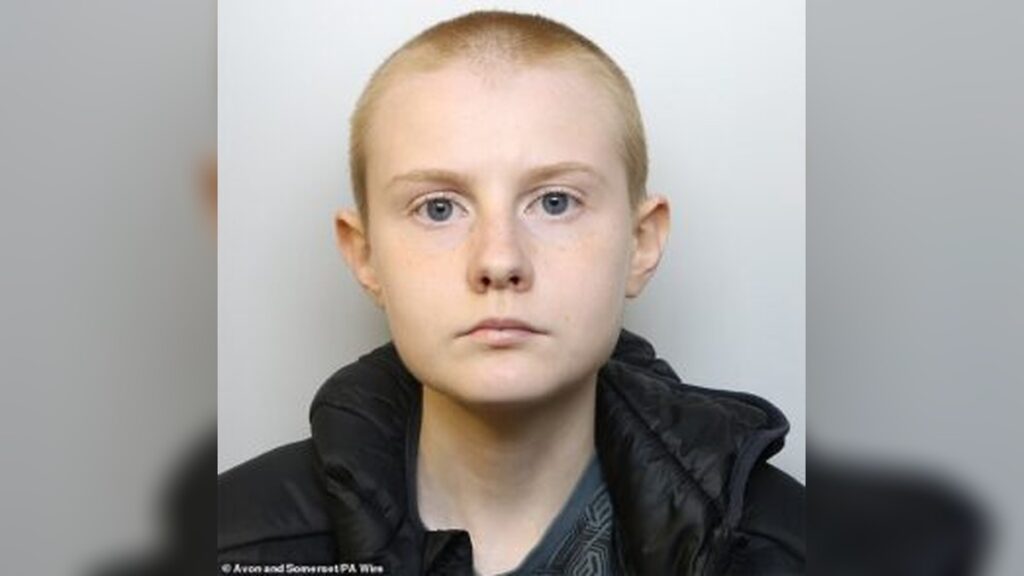
A disturbing case of violent extremism in the United Kingdom has ended with a teenage girl being handed more than 15 years behind bars after she carried out an axe attack in broad daylight outside a barber shop in Bristol.
The case shocked many across Britain not only because of the brutality involved, but also because investigators uncovered a deep obsession with Nazi ideology, racial hatred, and extremist propaganda behind the attack.
At the centre of the case was 18-year-old Alina Burns, who described herself in private messages as the “embodiment of hell” and openly discussed wanting to trigger violent change in Britain through terror.
How the Attack Happened Outside a Bristol Barber Shop
The violent incident took place on August 2, 2025, in Bedminster, Bristol.
Mohammed Mahmoodi, a 27-year-old Iranian Kurd, was chatting casually with a friend outside BHK Barbers when Burns approached from behind carrying an axe.
Security footage later shown in court captured the terrifying moment she swung the weapon toward Mahmoodi’s neck.
He managed to react at the last second by turning and ducking, narrowly avoiding what could have been a fatal blow.
Burns attempted another strike moments later, but Mahmoodi fought back, grabbing her arm and forcing the axe away before more damage could be done.
Police quickly arrived and arrested Burns at the scene.
Officers later discovered she was also carrying a scalpel and several darts, raising fears that the attack could have become even more deadly.
Although Mahmoodi escaped with scratches to his face and neck, prosecutors stressed that the outcome could easily have been murder.
Extremist Messages Revealed a Chilling Mindset
During the investigation, detectives uncovered disturbing emails, diary entries, internet searches, and messages that painted a picture of growing radicalisation.
Court proceedings heard that Burns had communicated with a man she met on the dating platform Duolicious.
In several exchanges, she talked openly about violence and racial hatred.
In one message, she claimed she had discovered her “purpose” and wanted to destroy what she considered “holy.”
She also expressed a desire to kill Jews and Muslims in Britain and described herself as someone meant to become a “catalyst for change.”
The man later contacted authorities after becoming alarmed by her behaviour months before the attack occurred.
Investigators also found material linked to far-right extremist group Patriotic Alternative, a controversial movement known for anti-immigration and white nationalist rhetoric.
Nazi Obsession and Violent Online Searches
The court heard Burns had developed a fixation on Nazi Germany and violent extremist ideology.
Her notebooks reportedly contained detailed writings about weapons used by the Nazi SS and German military forces during World War II.
Detectives also discovered searches connected to Adolf Hitler’s Mein Kampf, the extremist novel The Turner Diaries, and violent race-war propaganda.
Just days before the attack, Burns searched online phrases such as:
- “What age can you buy an axe UK”
- “How to properly use an axe for self-defence”
- “Is an axe a good weapon”
She also viewed violent online videos, including footage involving killings and combat tutorials.
One search specifically focused on how to fight using an axe.




The night before the attack, prosecutors said she watched Nazi SS marching videos and drafted an email to herself titled “The dawn of civil war.”
The message reportedly stated that “land is reclaimed through terror.”
Investigators later concluded the attack was ideologically motivated and driven by hatred toward immigrants and ethnic minorities.
Victim Said Britain Was Supposed to Be a Safe Haven
Mohammed Mahmoodi told the court he had come to Britain seeking safety, freedom, and protection after leaving difficulties behind in his home country.
Instead, he found himself targeted in what authorities described as a racially motivated attempted murder.
In his victim impact statement, Mahmoodi explained that while his physical injuries healed, the emotional and psychological trauma remained severe.
He said the incident left him struggling mentally and fearful after surviving such a sudden act of violence.
The case has reignited debate in Britain over the growing threat posed by lone-actor extremism and online radicalisation.
Troubled Background and Mental Health Concerns
Court proceedings revealed Burns had a troubled upbringing and longstanding personal difficulties.
Although both her parents worked as teachers, the family reportedly experienced homelessness and moved between temporary accommodations.
Burns stopped attending school at age 14 and was described as likely having Autism Spectrum Disorder alongside mental health struggles and self-harm thoughts.
However, the judge made clear that her personal circumstances did not excuse the seriousness of the attack or the extremist beliefs she continued to express.
Even after her arrest, Burns reportedly told officials she wanted to inspire others to commit similar acts successfully.
The court also heard she continued displaying hostility toward minorities and homosexuals while in custody.
Judge Says Public Needed Protection
At Bristol Crown Court, Mrs Justice Lambert sentenced Burns to 15 years and six months in prison along with an additional four years on extended licence.
The judge said Burns represented a continuing danger to the public, especially ethnic minorities, because of her violent beliefs and ongoing justification of extremist violence.
Counter-terrorism officers involved in the investigation also described the incident as an act fuelled by hatred and distorted ideology.
Detective Superintendent Sarah Robbins said it was “extremely fortunate” the attack did not end in death and stressed that Burns appeared to have selected Mahmoodi because she viewed him as an immigrant or someone from an ethnic background she despised.
Rising Concerns Over Youth Radicalisation in Britain
The case has once again highlighted concerns over how extremist ideology spreads online, especially among isolated young people.
Security experts in the UK have increasingly warned that social media platforms, fringe forums, encrypted chats, and extremist video content can rapidly radicalise vulnerable individuals.
In recent years, British counter-terrorism agencies have monitored growing activity linked to neo-Nazi groups, white supremacist networks, and self-radicalised lone offenders.
Authorities have also become more worried about teenagers consuming violent propaganda online without direct contact with organised terrorist groups.
The Burns case reflects a broader international pattern where extremist ideology, conspiracy theories, and violent rhetoric spread quickly through internet communities.
Impact and Consequences
The attack has left emotional scars on the victim and raised fresh anxiety within immigrant and minority communities in Bristol.
Cases like this often deepen fears among ethnic groups who already face discrimination or hostility.
Community leaders have repeatedly warned that extremist rhetoric online can eventually spill into real-world violence if left unchecked.
The incident also adds pressure on British authorities to strengthen counter-extremism measures targeting young people before violent acts occur.
For law enforcement agencies, the case demonstrates the growing challenge of identifying lone attackers who radicalise privately online while appearing relatively isolated in everyday life.
What’s Next?
Burns will now serve a lengthy prison sentence under close monitoring because of concerns over her extremist mindset and future risk to the public.
Authorities are expected to continue examining her online activity, contacts, and radicalisation pathway to better understand how her beliefs intensified.
Meanwhile, counter-terrorism policing units across the UK are likely to use the case as another example in ongoing efforts to combat far-right extremism and online hate-driven violence.
The attack may also fuel further debate around mental health intervention, internet regulation, and monitoring extremist content accessed by minors and young adults.
Summary
The Bristol axe attack case exposed a frightening mix of violent extremism, racial hatred, and online radicalisation involving a teenager consumed by neo-Nazi ideology.
Alina Burns narrowly failed in her attempt to kill Mohammed Mahmoodi outside a barber shop after attacking him with an axe from behind.
Investigators later uncovered extremist writings, Nazi obsessions, violent online searches, and hateful messages targeting Muslims and Jews.
A court ultimately concluded she posed a serious danger to society, sentencing her to more than 15 years in prison.
The case now stands as another warning about the real-world dangers of extremist propaganda and hate-fuelled violence.
Bulleted Takeaways
- Alina Burns was sentenced to more than 15 years for an attempted axe murder in Bristol.
- The victim, Mohammed Mahmoodi, survived after narrowly dodging the attack.
- Burns expressed neo-Nazi beliefs and admiration for extremist violence.
- Investigators uncovered racist and anti-Muslim messages before the attack.
- She researched axe combat techniques and violent propaganda online.
- Authorities linked her ideology to far-right extremist influences.
- The case intensified concerns about youth radicalisation in the UK.
- Counter-terrorism police described the attack as ideologically motivated.

