
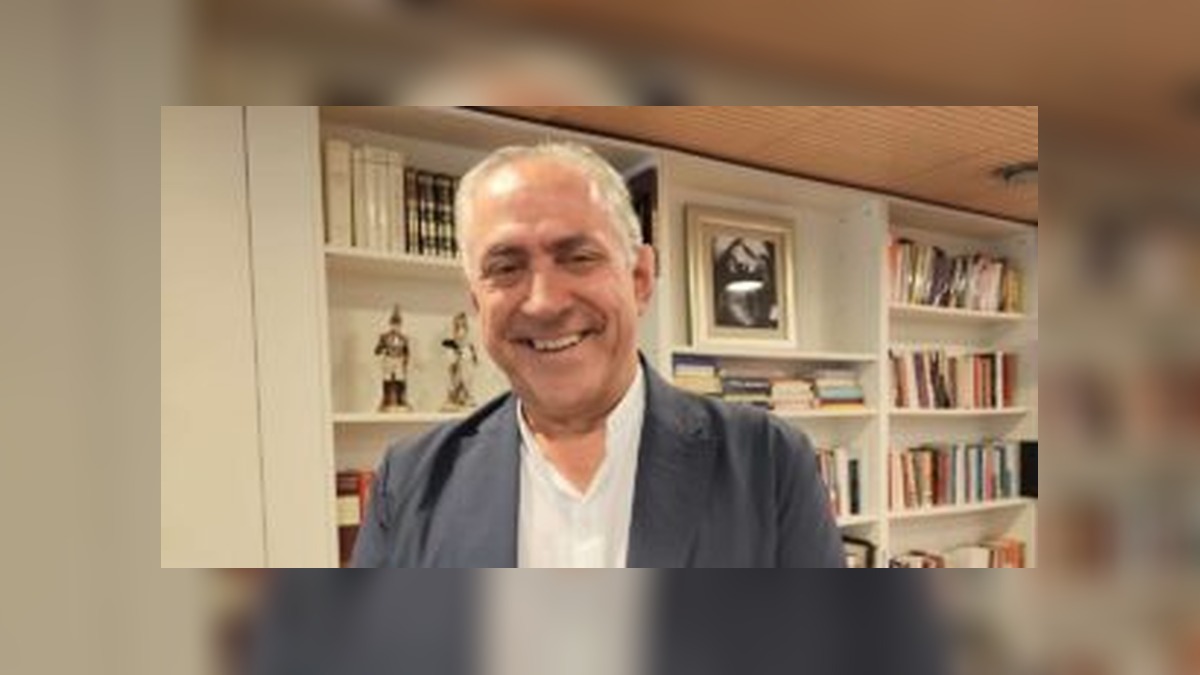
Jack Valero, who has served as Opus Dei’s spokesman in the United Kingdom for 25 years, has released a new book seeking to explain the Catholic institution through the personal experiences of its members rather than through an institutional overview.
Titled Opus Dei Unfiltered: Why I Joined the Work, the book explores the lives and experiences of around 20 members of Opus Dei, the apostolate founded by St. Josemaría Escrivá de Balaguer in 1928.
The organisation, whose Latin name means “Work of God,” has nearly 100,000 members in almost 70 countries.
A Different Way of Explaining Opus Dei
Valero told ACI Prensa that years of answering questions about Opus Dei had convinced him that traditional explanations did not always provide outsiders with a clear picture of everyday life within the institution.
Rather than explaining Opus Dei from an institutional perspective, he decided to let its members describe their own experiences.
“I think it is far more effective, because it’s more real,” Valero said, explaining that personal testimony may not answer every question but can provide a clearer picture of what membership actually involves.
The book therefore brings together accounts from different categories of members, including married supernumeraries, as well as numeraries, associates and assistant numeraries who live celibate lives for apostolic reasons.
Assistant Numeraries and the Controversy Around Them
One of the more sensitive subjects addressed in the book concerns assistant numeraries, whose role has recently attracted significant scrutiny.
In Argentina, 43 former assistant numeraries have alleged that they were victims of trafficking. The allegations have contributed to wider debate about the working and living arrangements associated with this particular vocation within Opus Dei.
Valero said the controversy has also changed his own understanding of how best to explain the role.
Rather than attempting to define the vocation himself, he said he concluded that assistant numeraries should be allowed to describe their experiences directly.
Two assistant numeraries are therefore featured in the book, with one testimony appearing near the beginning and another toward the end.
Valero said their accounts left a strong impression on him and demonstrated the importance of allowing members to speak for themselves.
‘A Privilege’ to Discuss His Faith
Valero’s communications work has placed him at the centre of major moments involving Opus Dei and the Catholic Church, including Pope Benedict XVI’s visit to Britain and public interest generated by works such as The Da Vinci Code.




Despite the controversies surrounding the organisation, Valero said he considers it a privilege to discuss something he personally values deeply.
He also stressed that Opus Dei does not operate as a political movement or promote a specific programme for transforming society.
Instead, he described its mission as helping people live their Christian faith in ordinary circumstances and encouraging them to influence society through their personal choices and actions.
Changing People Rather Than Creating a Political Programme
According to Valero, Opus Dei does not have a detailed political blueprint for changing the world.
Its focus, he explained, is on helping individuals become more like Jesus Christ and live their faith through their everyday responsibilities.
The expectation is that people formed in this way will then use their freedom to pursue their own initiatives and contribute to society.
Valero acknowledged that this concept has not always been communicated effectively.
He said Opus Dei needs to do more to explain that members are encouraged to exercise their personal freedom rather than simply follow an institutional programme.
Opus Dei Preparing for Changes to Its Statutes
The publication of Valero’s book comes as Opus Dei is also undergoing an important institutional process ahead of the centenary of its foundation.
The prelature is working to revise its statutes following Pope Francis’ 2022 motu proprio Ad Charisma Tuendum. Opus Dei submitted a proposed revision to the Holy See in June 2025 and is awaiting a decision from Pope Leo XIV.
Valero said the changes should be viewed as part of the organisation’s development within the wider Catholic Church.
He argued that because Opus Dei is part of the Church, it naturally changes alongside it.
The spokesman also pointed to changes in the way the organisation is governed, saying that its approach today differs considerably from that of several decades ago.
Governance Described as Support Rather Than Command
Valero rejected the idea that governance within Opus Dei is primarily about issuing instructions.
Instead, he described it as accompanying and supporting members.
He said his own experience has involved neither giving nor receiving orders in the way outsiders might imagine, emphasising a model focused on personal accompaniment.
Regarding the statutory reforms, Valero said Opus Dei would accept whatever changes the Holy See determines are necessary.
He described the process as a refinement of the organisation’s legal framework rather than a change to its fundamental spiritual purpose.
Book Seeks to Challenge Public Perceptions
Ultimately, Valero hopes the book will help readers see the diversity of experiences within Opus Dei rather than relying on generalisations about the organisation.
He wants existing members to appreciate the different ways the vocation is lived, while also encouraging outsiders to look beyond what he describes as abstract myths.
By putting individual experiences at the centre of the book, Valero believes readers can gain a more direct understanding of why people choose to become part of Opus Dei and how they experience their faith within it.
The project comes at a significant moment for the institution, as it faces both public scrutiny and an ongoing process of institutional reform while approaching its 100th anniversary.
- Texas Republicans Float Plans to Make Muslims ‘Uncomfortable’ as Religious Freedom Battle Intensifies
- 3,000 Catholics Gather in Washington as Dominican Rosary Pilgrimage Gains Momentum
- Vatican Confirms Abuse by Founder of Institute of the Incarnate Word After Years of Controversy
- Vatican Warns Nations Against Turning Self-Defence Into a New Global Arms Race
- Southern African Catholic Church Reshapes Priests’ Council to Strengthen Bishop-Clergy Collaboration
- More Details About The Scams of Life Surge Event Emerges

