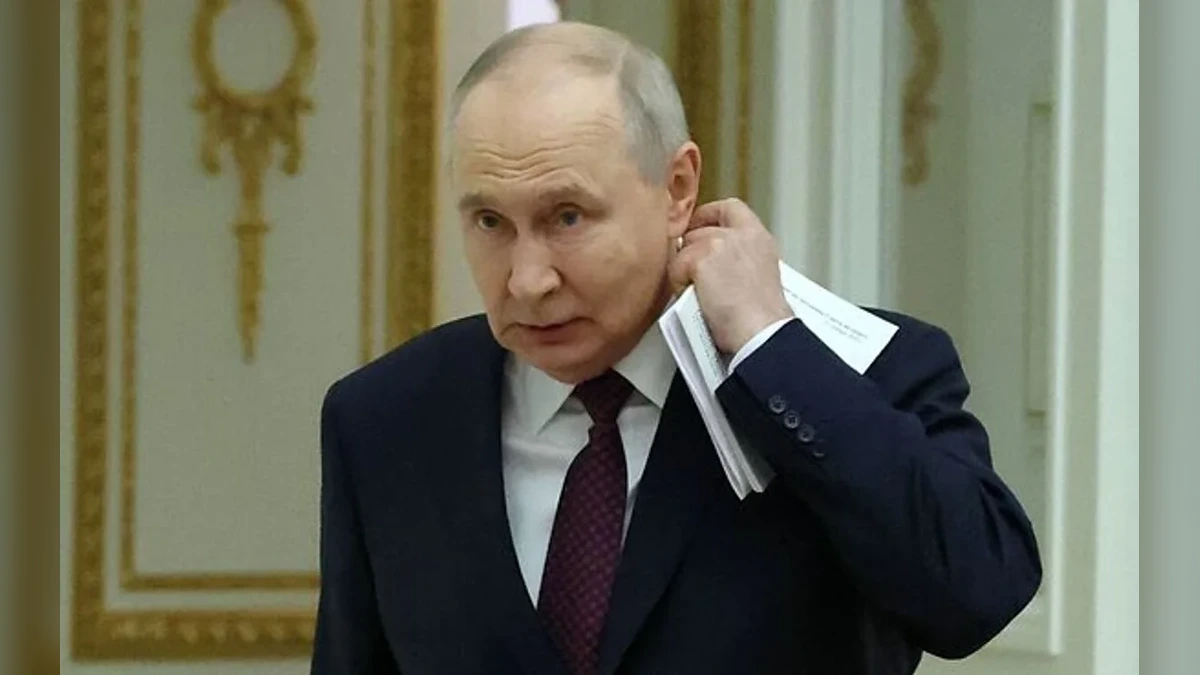
Russia’s billionaire oligarchs are reportedly beginning to consider what the country might look like after Vladimir Putin leaves power, with growing dissatisfaction among the business elite over their diminished influence.
According to experts familiar with Russia’s political and business circles, some wealthy businessmen have started quietly considering succession scenarios while expressing frustration with the current political system.
The oligarchs, who once wielded considerable influence over government decisions, are now largely subordinate to the Kremlin.
Some reportedly refer to the 74-year-old Russian president as ‘Ded’, a Russian term meaning ‘grandad’, replacing earlier nicknames that conveyed greater respect and authority.
Business Elite Long for Their Former Political Influence
Following the collapse of the Soviet Union in 1991, a group of businessmen accumulated enormous fortunes by acquiring major state-owned assets.
Their financial influence allowed them to exert considerable pressure on politicians and shape government decisions.
However, Putin’s rise to power in 2000 gradually dismantled that arrangement.
The president established a political system in which wealthy businessmen were expected to demonstrate loyalty to the Kremlin rather than independently exercise political authority.
Those who challenge the government risk losing their businesses, assets or even their lives.
Western sanctions imposed following Russia’s full-scale invasion of Ukraine in February 2022 have further complicated the position of the country’s wealthiest individuals, restricting their access to international financial networks, luxury properties, private aircraft and European ports.
Bill Browder, a financier who was once Russia’s largest foreign investor before being banned from the country in 2005, described the situation facing the oligarchs in an interview with the BBC.
He said their inability to use their wealth and enjoy the international privileges they previously had must be humiliating, adding that they are now treated like low-level criminals.
Khodorkovsky’s Imprisonment Reinforced Kremlin’s Authority
The consequences of challenging Putin’s authority became particularly evident in 2003, when oil businessman Mikhail Khodorkovsky, then Russia’s richest man, openly criticised the president over alleged widespread corruption.
Khodorkovsky had been supporting opposition groups before his confrontation with the Kremlin.
He was subsequently convicted of tax evasion, fraud and embezzlement and spent the following decade in prison.
He denied the charges.
His imprisonment became a warning to other wealthy businessmen about the potential consequences of publicly opposing the president.
The extent of Putin’s authority was also demonstrated shortly after Russia launched its full-scale invasion of Ukraine in February 2022.
Billionaires Remained Silent During Kremlin Meeting
Hours after the invasion began, Putin summoned more than three dozen of Russia’s wealthiest businessmen to the Kremlin’s Yekaterininsky Hall.
The oligarchs sat together along one side of the enormous room, wearing face masks because of the Covid pandemic. Putin sat opposite them without a mask, maintaining considerable physical distance from the assembled businessmen.
A Russian newspaper journalist described the invited billionaires as looking pale and sleep-deprived.
During the meeting, Putin called on them to support the government’s response to the developing conflict and help maintain production, economic activity and employment.
However, footage published by the Kremlin showed none of the businessmen responding to his remarks.
Browder recalled witnessing a similar transformation in the behaviour of Russian oligarchs at the Davos economic forum before the war.
He said businessmen who had previously displayed considerable confidence and acted as though they controlled their surroundings became noticeably submissive whenever Putin appeared.
Experts Identify Three Possible Futures for Russia
Although there is currently no immediate indication that Putin intends to leave office, analysts say Russia’s business elite are increasingly conscious that his 25-year period at the centre of political power will eventually end.
During an interview with Reuters last year, Putin was asked whether he intended to remain president until 2036, when his constitutional term technically expires.
He responded: “Only God knows if we have enough health.”
If Putin dies in office or resigns, Prime Minister Mikhail Mishustin would immediately assume presidential responsibilities. However, Mishustin has not demonstrated an obvious ambition to become president.
Analysts have identified several possible directions Russia could take following Putin’s departure.
The first would involve a democratic transition in which political institutions and elected representatives regain influence.
However, experts consider this outcome unlikely because democratic institutions have been severely weakened during Putin’s leadership.


Alexandra Prokopenko, an exiled Russian journalist and analyst, told the BBC that the country had become so accustomed to political violence that it had lost familiarity with ordinary democratic processes.
A second possibility is the continuation of authoritarian government under a new leader.
Prokopenko suggested that Putin’s successor would initially be weaker than the current president because consolidating power and establishing control over state institutions would take time.
The third possibility involves powerful political and business groups forming alliances to govern the country, potentially restoring a system resembling the oligarchic arrangements of the 1990s.
Wealthy Russians Quietly Build Political Connections
Despite their diminished influence, Russia’s richest businessmen are reportedly beginning to position themselves for a possible political transition.
Dmitry Nekrasov, a former Kremlin adviser and opposition politician now living in exile, told the BBC that some oligarchs were attempting to establish relationships with influential security officials and government ministers.
However, he said taking further steps remained too dangerous under the current administration.
Prokopenko said the wealthy businessmen wanted to return to a system in which their opinions mattered, their assets were protected and they understood the rules governing their businesses.
She added that some were also interested in restoring political competition, freedom of expression and greater public participation in government.
Nevertheless, fear of the Kremlin continues to prevent them from openly pursuing those ambitions.
Prokopenko described an encounter with one wealthy businessman who reportedly sat on his mobile phone throughout their conversation because he believed the position would make it harder for security services to monitor their discussion electronically.
She described the behaviour as evidence of an intensely Stalinist atmosphere of fear.
Financial Independence Could Determine Who Shapes the Transition
The extent to which individual oligarchs become involved in future political developments is expected to depend heavily on the nature of their wealth.
According to Nekrasov, businessmen with substantial liquid financial resources are more likely to feel confident enough to compete for influence and prepare for a post-Putin political environment.
Those whose fortunes depend heavily on government contracts, state-controlled businesses or political goodwill are likely to remain more cautious because challenging the existing system could put their entire wealth at risk.
The differences in financial independence could therefore determine which business figures are willing to participate in political manoeuvring when a leadership transition eventually occurs.
Putin’s Nickname Among Oligarchs Reportedly Changes
Prokopenko said the language used by Russia’s wealthy elite when referring to Putin has also changed.
Previously, businessmen reportedly called him ‘Nachalnik’, meaning ‘boss’, or ‘Perviy’, meaning ‘first’. Others used his initials, ‘VV’.
These expressions reflected the president’s authority and the respect his position commanded within the business community.
However, some oligarchs now reportedly use ‘Ded’, meaning ‘grandad’, to refer to him.
The change is being viewed as an indication of shifting attitudes among sections of the business elite, although it has not translated into open opposition to the president.
Melnichenko’s Interview Raises Questions About Post-Putin Russia
One of the clearest indications of the changing mood among Russia’s wealthy businessmen emerged in an interview with Andrey Melnichenko, the country’s eighth-richest man, published by The Economist earlier this year.
The interview attracted attention partly because the publication is based in a country that the Kremlin considers unfriendly towards Russia.
During the discussion, Melnichenko repeated several Kremlin positions on the war in Ukraine, describing the country as a battlefield between Russia and the West.
He also argued that Western governments had disregarded Moscow’s security concerns and threatened Russian sovereignty.
However, he also advocated a change in Russia’s political direction, arguing that the country needed to move beyond one-man rule and engage more extensively with the international community.
Although he did not directly demand Putin’s departure, his remarks raised questions about the political arrangements wealthy Russians might favour after the current president leaves office.
Prokopenko suggested that Melnichenko may have been attempting to encourage other wealthy businessmen to participate in a broader public discussion about Russia’s future.
Arkady Ostrovsky, the Economist journalist who interviewed him, told the BBC that their discussions had involved several tense and heated exchanges, often taking place in hotels and cafes.
Ostrovsky said Melnichenko appeared to be genuinely considering his responses rather than simply delivering carefully prepared political statements.
Although the interview may have received some form of approval from senior officials, it remains unclear why the Kremlin would have permitted a prominent businessman to advocate a departure from one-man rule.
One possible explanation is that the authorities wanted to demonstrate that some degree of political pluralism remained possible in Russia.
No other oligarchs publicly rallied behind Melnichenko following the interview.
However, Ostrovsky believes his comments reflected concerns shared by a wider section of the country’s wealthy business community.
Return to 1990s-Style Oligarchy Remains a Possibility
The emergence of Russia’s oligarchs followed the dissolution of the Soviet Union in 1991, when the privatisation of enormous state-owned enterprises created opportunities for well-connected businessmen to accumulate extraordinary wealth.
Many of the so-called new Russians became millionaires and billionaires almost overnight through their connections and access to newly available assets.
Their fortunes subsequently translated into political influence, allowing a small group of wealthy individuals to exert considerable control over government decisions.
The period was also marked by widespread corruption, business rivalries and contract killings.
Putin’s consolidation of power eventually brought that era of independent oligarchic influence to an end.
Ostrovsky, who has spent years reporting on Russia, said many wealthy Russians now feel trapped by the country’s political and economic direction, particularly following the invasion of Ukraine.
He described their outlook as a sense of having reached a dead end, with the war contributing to an absence of confidence about the country’s future.
Some oligarchs are reportedly interested in what Ostrovsky described as an ‘oligarchic republic’, in which influential business and political groups would share power rather than allowing one individual to dominate the entire system.
Oligarchs Unlikely to Challenge Putin While He Remains in Power
Despite the reported dissatisfaction, analysts believe the wealthy businessmen are unlikely to organise an immediate challenge against Putin.
Browder said the oligarchs understand the potential consequences of confronting the president and are unlikely to take action that could put their lives at risk.
American financier Mike Calvey, who previously had significant investment interests in Moscow, expressed a similar view.
He argued that businessmen who openly challenge the Kremlin could face imprisonment and the loss of their assets, making collective opposition an extremely dangerous undertaking.
For now, Russia’s wealthiest individuals appear to be watching developments while quietly considering their options.
Although their political influence has been significantly reduced under Putin, their financial resources could become important in any future struggle over power.
Whether they can regain the influence they enjoyed during the 1990s, however, will depend on the political forces that emerge after Putin’s departure and whether those who control the existing system are willing to surrender their authority.
