
Several Republican state lawmakers in Texas have discussed proposals that would restrict certain Muslim religious practices and public accommodations, with one legislator saying that making Muslims more “uncomfortable” would be preferable.
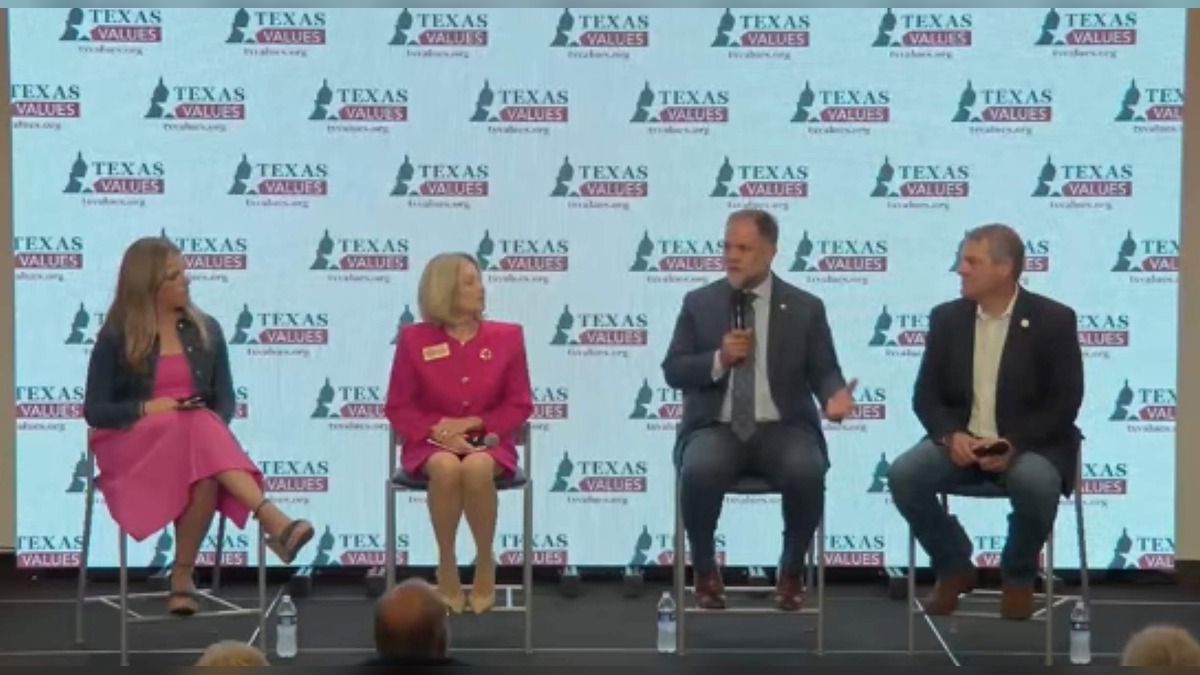
The proposals emerged during a “Don’t Sharia My Texas” panel at the 2026 Texas Faith Fest, where state Representatives Keresa Richardson, Andy Hopper and Brent Money discussed Islam, Sharia and possible legislative action. The event’s organizers had advertised all three lawmakers as prospective participants on the panel.
Richardson Says ‘The More Uncomfortable They Are, the Better’
Among the most contentious remarks came from Richardson, a Republican representing the McKinney area.
During discussion about policies affecting Muslims in Texas, Richardson said, “The more uncomfortable they are, the better,” according to the Houston Chronicle.
The lawmakers discussed measures including preventing public voucher money from reaching Islamic schools, eliminating religious dietary accommodations at public institutions and restricting amplified calls to prayer.
Participants acknowledged that constitutional and federal religious-freedom protections would have to be considered, while arguing that some proposals could be written to apply to every religion rather than Islam alone.
Andy Hopper Describes Islam as ‘Hostile Alien Civilization’
State Rep. Andy Hopper delivered some of the panel’s strongest rhetoric, describing the situation as a conflict with what he called a “hostile alien civilization.”
Hopper argued that lawmakers should remove ideas he considers incompatible with American principles and advocated teaching Texas students a strongly negative view of Islam.
His comments came amid a wider Republican campaign in Texas against what party leaders describe as the spread or imposition of Sharia law.
Muslim leaders dispute that characterization. State Rep. Salman Bhojani, a Muslim Democrat, has described Sharia as a personal ethical and moral framework involving practices such as prayer, charity and honesty rather than a legal system he seeks to impose on others.
Proposal Would End Religious Food Accommodations in Public Institutions
Money raised the possibility of preventing public institutions, including prisons, from providing food specifically required for religious observance.
If written to cover all religions, such a policy would potentially affect halal meals for Muslims as well as kosher meals for observant Jews.
Federal law could present a significant obstacle. Under the Religious Land Use and Institutionalized Persons Act of 2000, governments generally cannot substantially burden the religious exercise of people confined in covered institutions unless they can demonstrate a compelling governmental interest and show that the restriction is the least restrictive means of achieving it.
The Justice Department has previously participated in litigation involving religious diets in prisons, including a Texas case concerning access to kosher meals.
Richardson Raises Restrictions on Muslim Call to Prayer
Another proposal discussed at the event concerned the Islamic call to prayer, or adhan, being broadcast through loudspeakers.



Richardson said Muslims could continue praying five times a day but argued that the practice should not disrupt other residents.
A generally applicable noise ordinance could present different constitutional questions from a rule designed specifically to prevent Muslim prayer broadcasts. Legal analysis cited by the Houston Chronicle warned that government restrictions intentionally targeting one religious community would face significant constitutional scrutiny.
Money Questions Whether Islam Should Be Considered a Religion
The debate went beyond proposed regulations when Money questioned Islam’s status as a religion.
According to the Houston Chronicle, Money said there was a conversation to be had over whether Islam should be regarded as a religion at all.
That position contrasts with existing U.S. religious-liberty protections, which protect Muslim religious exercise alongside other faiths. The Justice Department has previously enforced federal religious-freedom law on behalf of Muslim institutions in Texas, including reaching a settlement after alleging that Farmersville discriminated against an Islamic association seeking to establish a cemetery.
Activist Says Goal Is for Muslims to Want to Leave
John Bean, identified by the Houston Chronicle as a Texas Values board member, went further in describing the desired outcome of the political campaign.
Bean argued that conditions should become sufficiently uncomfortable and unwelcoming that Muslims would want to leave, describing that as his ultimate objective.
The Texas chapter of the Council on American-Islamic Relations condemned the Faith Fest comments, saying Muslim Texans should not have to defend a constitutional right to practice their religion. CAIR-Texas specifically criticized proposals concerning halal food, Islamic schools and the call to prayer.
Debate Over Quranic Passages Enters Panel Discussion
Bean also argued that Islamic scripture instructs Muslims to kill non-Muslims.
That interpretation is disputed by Muslim scholars, who argue that passages cited for such claims concern particular historical or military conflicts rather than a general religious command to kill people of other faiths.
The broader disagreement reflects the increasingly sharp debate surrounding Sharia in Texas. Muslim advocates have argued that politicians are portraying personal Islamic religious practices as an effort to establish a competing legal system, while Republican proponents of anti-Sharia legislation maintain that they are seeking to prevent any foreign legal framework from superseding Texas or federal law.
Anti-Sharia Campaign Expands in Texas Politics
The Faith Fest discussion did not emerge in isolation.
Money established the Sharia Free Texas Caucus earlier in 2026, bringing together Republican state lawmakers who say legislation is needed to prevent Sharia principles from conflicting with state and federal law.
The Republican Party of Texas has also adopted “Don’t Sharia My Texas” as a legislative priority. Its proposals include declaring Sharia a competing threat to state and federal constitutional law and seeking further restrictions on people advocating its implementation.
Gov. Greg Abbott has similarly called for Texas to prohibit Sharia law and has scrutinized Muslim-related projects and facilities, including ablution areas at major airports.
Muslim Texans Push Back Against Sharia Claims
Muslim Texans and civil-rights advocates have rejected the suggestion that practicing Islam represents an effort to replace American law.
Bhojani has argued that Muslims remain subject to the same state and federal laws as other Texans and described his understanding of Sharia as governing individual religious and ethical conduct.
The dispute has already surfaced prominently inside Republican politics. At the Texas GOP convention earlier in 2026, Muslim Republican attendees reported hostile encounters, including being told to leave the country, while some Republican officials questioned whether alienating non-Christian conservatives was compatible with efforts to expand the party.
Proposed Restrictions Could Trigger Major Legal Battles
Whether the ideas raised at Texas Faith Fest ultimately become legislation remains uncertain.
Any measures specifically burdening Muslim worship, religious schools or practices would likely face challenges under the First Amendment and, depending on the context, federal statutes protecting religious exercise.
RLUIPA, for example, prohibits religious discrimination in covered land-use decisions and protects institutionalized people from substantial government burdens on their religious exercise unless strict statutory requirements are satisfied.
The Faith Fest discussion therefore represents an early glimpse of proposals that could emerge as Texas lawmakers continue debating Sharia, religious accommodation and the boundaries of government authority over religious practices.
