
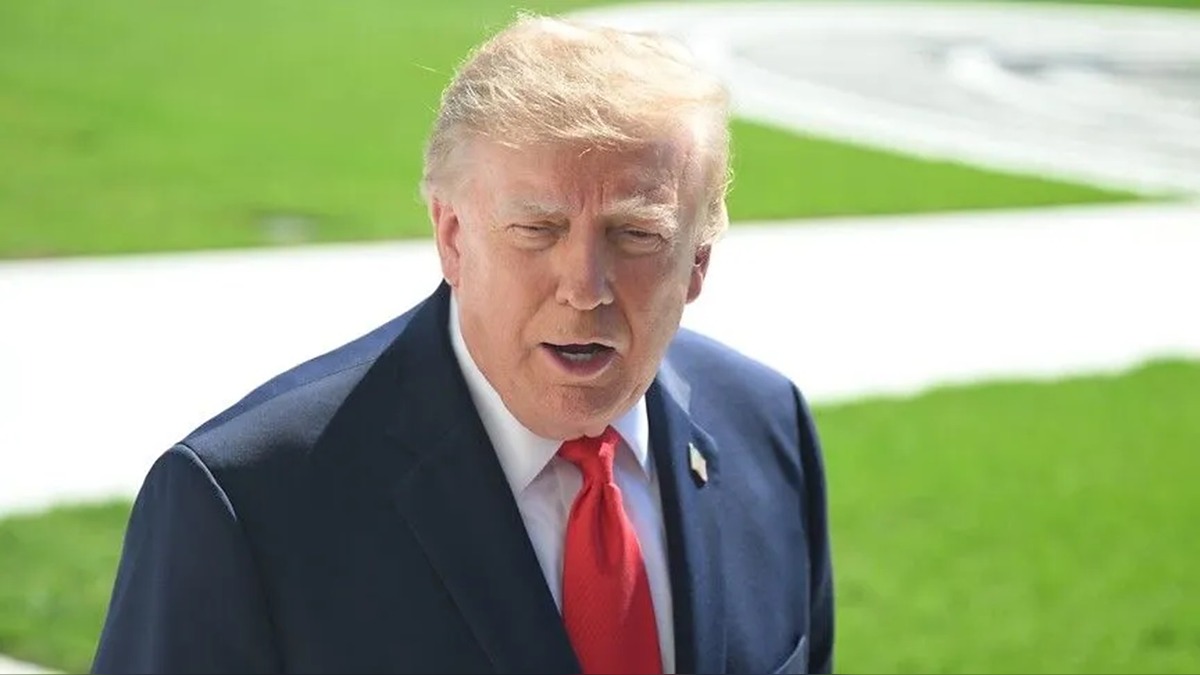
Donald Trump is reportedly considering the use of a tactical nuclear weapon against Iran’s underground Pickaxe Mountain facility, according to former CIA officer John Kiriakou.
Kiriakou, who served with the Central Intelligence Agency between 1990 and 2004, claimed the US president was contemplating a nuclear strike to destroy the deeply buried complex in central Iran.
Speaking on Piers Morgan Uncensored, the former intelligence officer said he had received information from contacts within the White House suggesting that Trump was considering deploying a tactical nuclear weapon capable of penetrating deep underground.
Kiriakou also alleged that the president wanted to challenge the longstanding international taboo against using nuclear weapons, potentially making their deployment more acceptable to future American administrations.
He said Trump was reportedly using the phrase “the final taboo” when discussing the possibility.
The former CIA officer described the alleged thinking as crazy and warned that normalising nuclear weapons use could have consequences for future US presidents.
Tucker Carlson Also Raises Nuclear Strike Concerns
Kiriakou’s allegations follow claims by former Fox News presenter Tucker Carlson, who suggested that Trump could be only days away from authorising a nuclear attack on Iran.
Carlson, who has maintained close connections with figures in the MAGA movement, reportedly raised concerns about the possibility of the president ordering such an operation.
The claims have intensified speculation about Washington’s intentions towards Iran, particularly as tensions continue over the country’s underground nuclear facilities.
Pickaxe Mountain Facility Remains a Major Target
The Pickaxe Mountain complex is located deep beneath mountainous terrain in central Iran.
Its actual purpose remains unclear, although Iran has previously discussed plans to construct centrifuges there to support its uranium enrichment programme.
The facility is also believed to be large enough to accommodate an enrichment plant.
Conventional bunker-buster bombs have reportedly struggled to inflict sufficient damage on the underground installation because of the depth at which it is located.
A tactical nuclear weapon, such as the air-launched B61-11, which has a reported yield of up to 400 kilotons, could potentially penetrate further and destroy infrastructure buried deep underground.
However, deploying such a weapon would represent a major escalation in the conflict.
Nuclear weapons have not been used in warfare since the United States dropped atomic bombs on Hiroshima and Nagasaki in Japan in 1945, towards the end of the Second World War.
Iranian State Television Issues Nuclear Emergency Guidance
Concerns about a possible nuclear attack increased after Iranian state television broadcast instructions advising citizens on what to do in the event of a nuclear explosion.
The public was told to seek shelter behind a barrier, lie on the ground and cover their heads and faces.
Viewers were also warned against looking directly at an intense flash.
Once the initial blast wave had passed, people were advised to enter the nearest building and avoid remaining outside to watch or photograph the aftermath.
According to Saudi news agency Al Arabiya, the guidance also instructed residents to remain sheltered for 24 hours and wait for official announcements before leaving.
Anti-Trump Demonstrations Take Place in Tehran
The nuclear strike allegations coincided with demonstrations in Tehran, where residents took to the streets on Tuesday carrying anti-American messages.
Some demonstrators held signs reading “Trump must die”.
A large billboard displayed in Enghelab Square featured a manipulated image of the US president behind prison bars, accompanied by the message “We will kill Trump”.
Images from the gathering showed people holding anti-US and anti-Israel messages as tensions between Tehran and Washington continued.
Trump Previously Rejected the Use of Nuclear Weapons
Trump has previously dismissed suggestions that he would use nuclear weapons against Iran.



In April, when asked about the possibility of a nuclear attack on Tehran, he questioned why the United States would need to deploy such weapons when conventional military operations had already inflicted substantial damage.
“We don’t need it. Why do I need it?” he said.
He added that nuclear weapons should never be used by anybody.
The president reiterated his position towards the end of August, arguing that Iran had already been defeated militarily and questioning the need to follow conventional attacks with a nuclear strike.
The Pentagon has not confirmed whether the United States is considering tactical nuclear weapons against Iran, while Trump has yet to respond to the latest allegations.
Trump Leaves Open Possibility of Further Action Against Pickaxe Mountain
Despite his previous comments on nuclear weapons, Trump indicated on Monday night that the United States could carry out another operation against the underground facility.
Speaking to Fox News, he said Washington might need to target Pickaxe Mountain but suggested such an operation would not present a major challenge.
“We might have to go after Pickaxe, but that’s not a big deal,” Trump said.
He added that the United States could carry out the operation “in literally one hour”.
Experts Question Likelihood of Nuclear Deployment
Military and arms-control experts have expressed doubts about the likelihood of Trump authorising a nuclear attack, although some have cautioned against completely dismissing the possibility.
Daryl Kimball, executive director of the Arms Control Association, told TWZ that a nuclear strike was unlikely but remained possible given the president’s authority to authorise the use of American nuclear weapons.
He said the prospect of an unstable and desperate president making such a decision could not be entirely ruled out.
Kimball also called on responsible American voices and international leaders to oppose a major US military strike against Iran.
US Builds Up Military Presence in the Middle East
The nuclear allegations come as Washington increases its military presence in the Arabian Sea, with analysts suggesting that preparations could be underway for a third wave of strikes against Iran.
Two heavily armed American carrier strike groups and amphibious assault ships are already operating in the region.
A third carrier strike group, led by the USS Theodore Roosevelt, is also travelling towards the Middle East from the Philippine Sea.
The deployment includes the 13th Marine Expeditionary Unit amphibious assault force.
The carrier group is expected to arrive within days.
Its arrival would increase the number of American sailors and Marines in the region to more than 20,000, supported by over 20 warships.
US Launches Defensive Strikes on Qeshm Island
Trump has also authorised a limited series of defensive strikes against Iranian targets on Qeshm Island in the Strait of Hormuz.
The island occupies a strategic position overlooking the narrowest section of the waterway and has played an important role in Iran’s military operations around the shipping route.
Once a popular tourist destination, Qeshm has reportedly been transformed into a military stronghold.
The island is believed to contain an underground missile complex where Iran has stored large quantities of weapons, including anti-ship missiles.
The extensive tunnel network is thought to extend deep underground, with some analysts estimating that sections of the missile installation could reach depths of approximately 1,600 feet.
Iran is believed to have the capability to launch missiles from the island against vessels travelling through the Strait of Hormuz.
Small ports along its coastline have also reportedly been used to deploy attack boats and drones.
Two US officials told NBC News that the latest strikes were defensive measures responding to continued Iranian attacks against maritime shipping and American military assets.
They stressed that the operation did not represent a return to major combat operations inside Iran.
One official said American forces had been intercepting drones and missiles directed at shipping almost daily.
The Islamic Revolutionary Guard Corps had also repeatedly targeted and fired at manned and unmanned American aircraft operating over the Strait of Hormuz in recent weeks.
The limited strikes came despite Trump’s earlier statement that the United States would not launch further attacks against Iran before Tuesday’s midterm elections.
Kiriakou Warns Against Renewed American Military Operations
Kiriakou also criticised the prospect of further American military action against Iran, arguing that the country’s size and geographical features would make it extremely difficult to defeat through military force.
He pointed out that Iran has a population of approximately 92 million people and is surrounded by mountains on three sides and water on the fourth.
According to the former CIA officer, defeating Iran would require an enormous ground deployment, potentially involving one million troops.
He argued that even using nuclear weapons would not guarantee victory.
Kiriakou further claimed that Trump had been persuaded by Israeli Prime Minister Benjamin Netanyahu that Iran’s government would collapse once its leadership was removed.
He said that expectation had never been realistic and was even less likely to happen now.
Kiriakou maintained that the United States had effectively already lost the war and questioned the administration’s understanding of the situation.
