
Former NFL quarterback and Heisman Trophy winner Tim Tebow is facing scrutiny over his prominent association with Life Surge, a for-profit Christian events company accused by some former customers of using religious messaging and aggressive sales techniques to sell expensive financial education programmes.
The allegations were detailed in an investigation by Mother Jones and explored in an episode of Pablo Torre Finds Out, with customers claiming they entered inexpensive Christian events before being encouraged to purchase increasingly costly training packages.
Life Surge disputes allegations that it pressures customers to take on unaffordable debt or exploits people’s religious beliefs to make sales.
Tebow has not been accused of personally arranging loans or managing the company’s sales process.
Life Surge Customers Describe Costly Progression From Cheap Tickets
Life Surge promotes large Christian gatherings combining worship, motivational speakers, business discussions and financial education.
The company’s own website describes its mission as inspiring, training and equipping people to expand their resources and influence for what it calls “Kingdom Impact.”
According to the Mother Jones investigation cited in the allegations, however, some customers said relatively inexpensive event tickets became an entry point into progressively more expensive programmes.
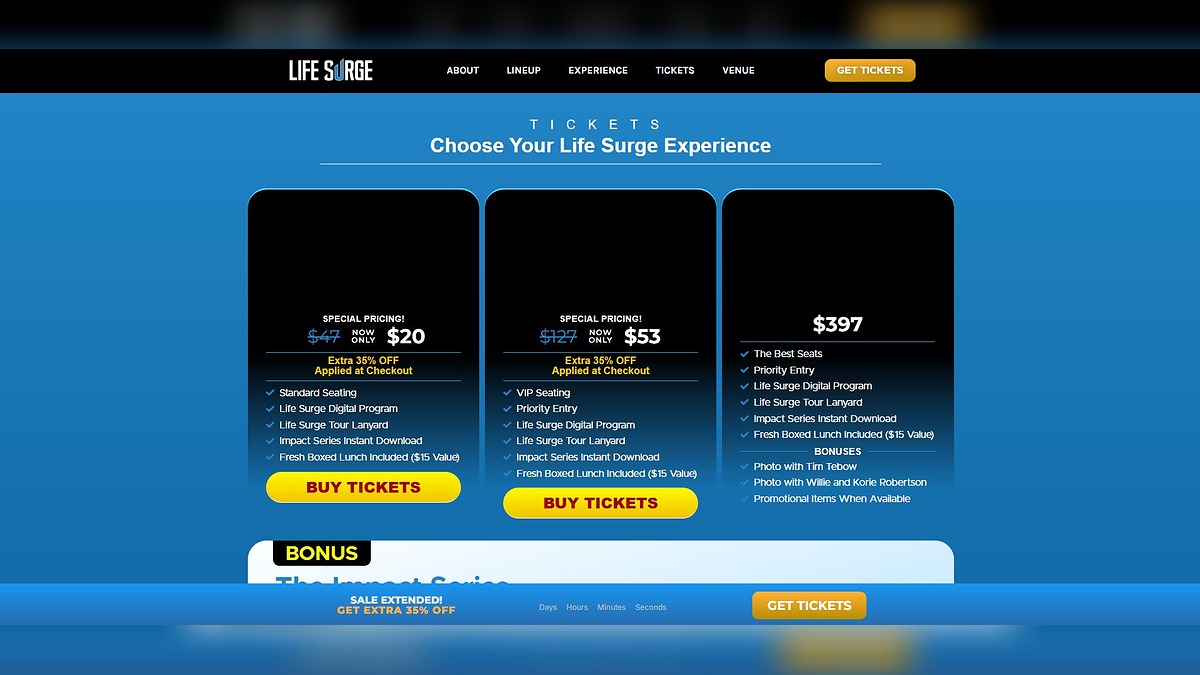
Attendees paying as little as approximately $20 for initial events could subsequently be offered three-day “Impact Classes” costing $97, according to the report.
From there, customers could encounter significantly more expensive SurgeU packages.
Training Packages Allegedly Cost Between $10,000 and $40,000
Mother Jones reported that SurgeU packages ranged from approximately $10,000 to $40,000.
Several customers interviewed by the publication said the escalation from a relatively inexpensive Christian event to a five-figure financial commitment surprised them.
Some complaints submitted to the Federal Trade Commission similarly accused the organisation of using what customers characterised as a “bait and switch” approach.
One complainant said they expected a Christian gathering involving like-minded businesspeople but instead encountered pressure to purchase investment education.
Those descriptions represent customer allegations and do not establish that Life Surge violated the law.
Disabled Customer Says Experience Left Her ‘Devastated’
One particularly critical FTC complaint cited Tebow’s involvement as part of what gave the customer confidence in the organisation.
The complainant said seeing prominent Christians associated with Life Surge had contributed to their trust before they ultimately lost significant amounts of money.
“I am so devastated that Christians like Tim Tebow made me trust in something that has taken so much money from me,” the complaint said.
The person described themselves as disabled and living on limited income.
Life Surge Rejects Claims That Faith Is Used to Pressure Customers
Life Surge has strongly challenged the suggestion that religious beliefs are deliberately exploited to drive purchases.
Company spokesman Richard Lorenzen told Mother Jones that Life Surge does not approve of using an individual’s faith, fears or spiritual beliefs as leverage to pressure them into buying products.
The organisation also rejects the suggestion that representatives are trained to encourage customers to borrow amounts they cannot afford.
Its position is that advanced training is optional rather than a requirement for people attending its one-day events.
Life Surge’s own current description of its events says participants can leave after the initial programme without purchasing further training.
Former Customer Says $25,000 Credit Card Was Arranged
One of the customers interviewed about her experience was 61-year-old Karen Neal.
Neal said she initially hesitated because she and her family did not have enough money for the programme being offered.
According to her account, a third-party financing service was introduced to help arrange additional credit.




Neal said she was ultimately approved for an American Express card carrying a roughly $25,000 limit.
She described being told that obtaining more credit than the approximately $13,000 needed for the programme could provide additional funds for business expenses.
Customer Claims Home Equity Was Suggested as Funding Option
Neal also alleged that Life Surge representatives raised the possibility of accessing equity in her home.
She recalled being asked whether she owned a house and whether its equity could provide money for the programme.
Looking back, Neal said she became disturbed by the sales experience and questioned whether prominent Christian speakers associated with Life Surge understood what some customers said was happening after the headline presentations.
Life Surge denies training employees to pressure people into borrowing or assuming debts they cannot afford.
Tim Tebow Has Become Prominent Life Surge Speaker
Tebow’s association with Life Surge is significant because he is one of America’s best-known Christian athletes and motivational speakers.
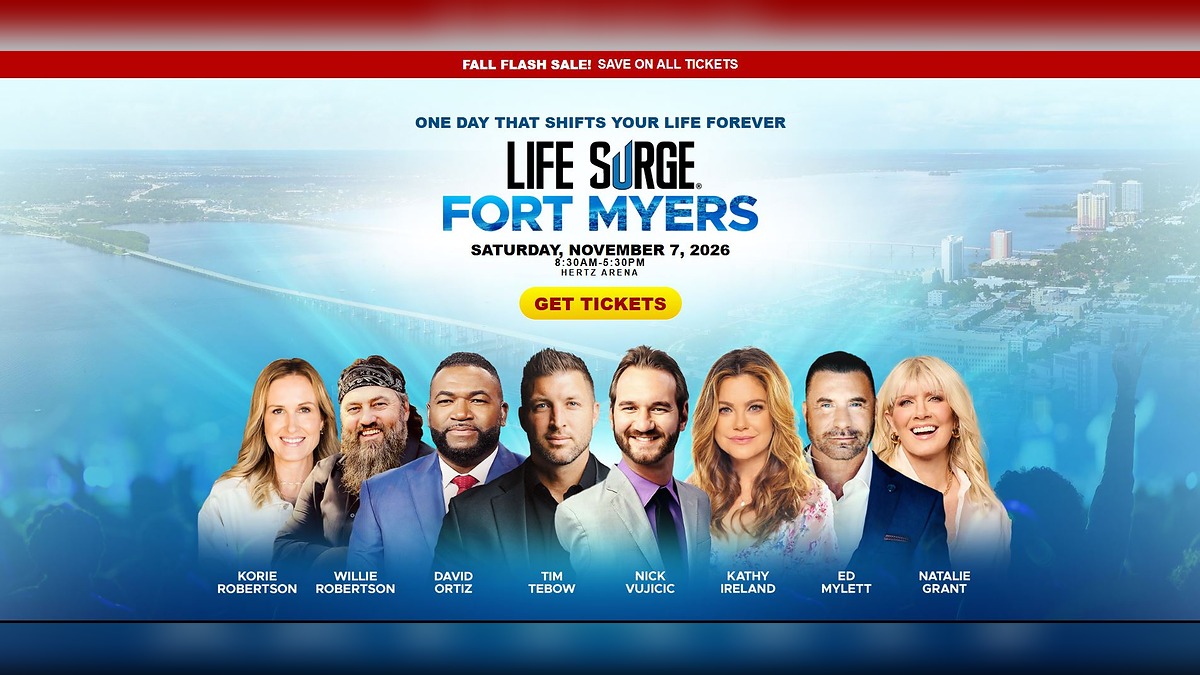
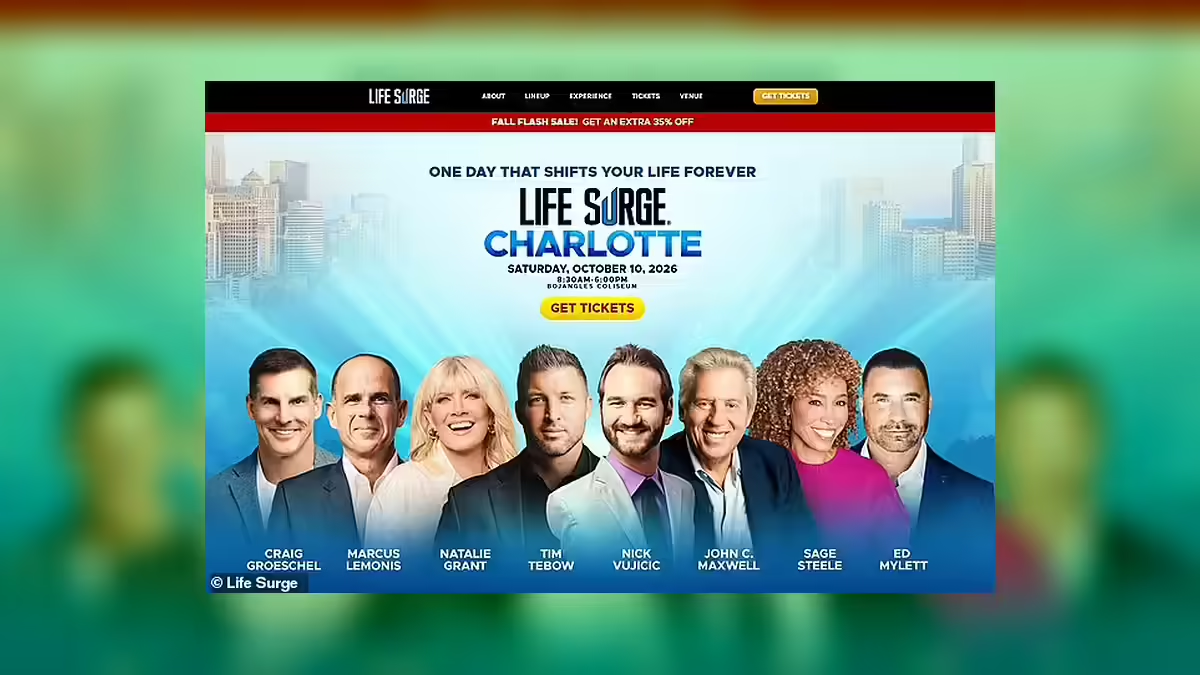
The former University of Florida quarterback has appeared repeatedly at Life Surge events and is currently promoted by the organisation among its leading Christian speakers.
Life Surge’s website features Tebow alongside figures including Nick Vujicic, Priscilla Shirer, Jonathan Roumie and other prominent Christian personalities.
Mother Jones reported that Tebow appeared at 20 Life Surge events during 2024 and 2025 and was on course for roughly that number during 2026 alone.
Report Estimates Tebow Could Have Earned Millions From Appearances
Mother Jones estimated that Tebow’s potential compensation from his Life Surge appearances could total between $2 million and $4 million.
That figure is an estimate from the publication rather than a publicly confirmed amount from Tebow or Life Surge.
The organisation continues to advertise Tebow as a featured attraction at its events.
For example, a September 2026 Life Surge event in Pennsylvania promoted Tebow alongside Nick Vujicic, John C. Maxwell and other speakers.
Life Surge Says Celebrity Speakers Do Not Sell Advanced Courses
Lorenzen told Mother Jones that headline speakers are not asked to promote or endorse Impact Classes or other advanced training products.
However, the investigation reported finding footage in which Tebow encouraged attendees who had already enrolled in classes to follow through with their commitments.
The reported remarks have raised questions about the distinction between directly selling a programme and publicly encouraging customers who have already purchased or registered for additional training.
There is no allegation in the material provided that Tebow personally handled customer financing applications.
Some Customers Describe Life Surge Positively
The criticism does not represent every attendee’s experience.
Mother Jones reported that some customers have described Life Surge events as transformative and encouraged other people to participate.
Life Surge itself highlights positive reviews and testimonials from attendees and markets its events as combining Christian teaching with practical discussions about finances, entrepreneurship and personal development.
The company therefore disputes portrayals suggesting dissatisfied customers represent the typical experience.
Company Rejects Prosperity Gospel Label
Life Surge also rejects comparisons with prosperity gospel theology.
The prosperity gospel is generally associated with teachings linking religious faith, giving or spiritual behaviour with expectations of material prosperity.
Life Surge instead describes its philosophy around wealth as “Kingdom Impact,” arguing that Christians can build financial resources and then use those resources to advance religious and charitable purposes.
The organisation’s own recently published material explicitly states that it opposes prosperity theology.
Investment Risk Disclaimers Were Given to Attendees
Mother Jones also reported that Life Surge periodically presented disclaimers reminding audiences that investing involves risk.
Lorenzen said the company does not promise that customers will become wealthy.
Those disclosures form an important part of Life Surge’s response to criticism that attendees could interpret its faith-based financial messaging as suggesting financial success was assured.
The dispute instead centres largely on what some customers describe as the sales environment surrounding higher-priced training.
Employee Raises Concerns About Customers Taking on Debt
The investigation also quoted an anonymous Life Surge employee who expressed concern about customers allegedly being encouraged to find increasingly aggressive ways to finance classes.
The employee claimed some people were considering retirement savings and multiple credit cards to fund training.
Those allegations have not been independently established and were presented anonymously.
Nevertheless, the employee questioned whether Christian motivational speakers and pastors would want to remain associated with the organisation if they understood the experiences described by dissatisfied customers.
Tebow Has Not Publicly Addressed Detailed Allegations
According to the reporting supplied, Tebow did not respond to Mother Jones’ request for comment about the allegations.
His continuing presence in Life Surge’s promotional materials means his relationship with the organisation has nevertheless become a central element of the controversy.
Life Surge has responded directly, rejecting accusations that it deliberately exploits religious faith or teaches representatives to push customers into unsustainable debt.
The dispute therefore leaves two sharply different accounts: customers who say trust created through Christian messaging and celebrity speakers helped draw them into expensive financial commitments, and a company that says its training is optional, investment risks are disclosed and coercive sales practices are not part of its policy.
For Tebow, whose public identity has long combined sports, Christian faith, motivational speaking and philanthropy, the growing scrutiny places new attention on what responsibility high-profile speakers have for the businesses and financial programmes promoted around the events at which they appear.
