
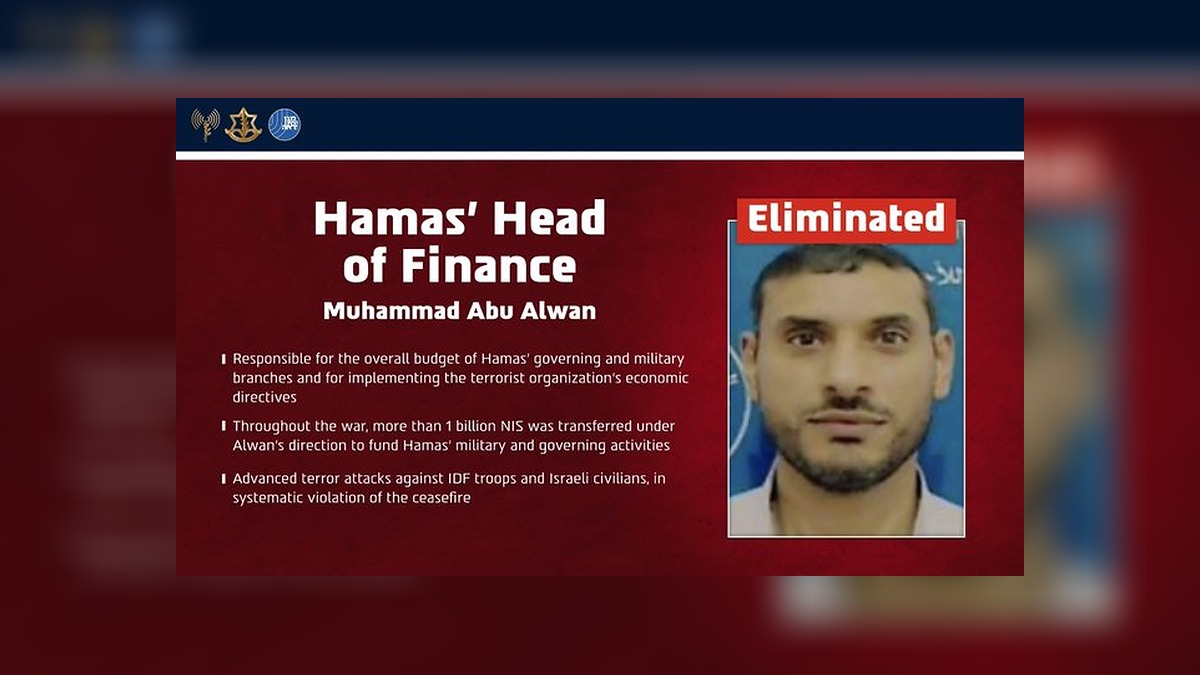
Israel says it has killed Muhammad Abu Alwan, the man it identifies as the head of Hamas’ Finance Department, in an airstrike targeting the southern Gaza Strip.
The Israel Defense Forces and Shin Bet said Abu Alwan was struck in the Khan Younis area on Wednesday before releasing further details about his alleged role within Hamas on Thursday, September 24.
Israeli security authorities claim he managed finances across the organisation and directed more than one billion Israeli shekels toward Hamas activities during the war.
Israeli Forces Target Hamas Finance Chief in Khan Younis
Abu Alwan was killed during an Israeli operation in Khan Younis, according to the IDF and Israel’s domestic security agency, Shin Bet.
Israeli Prime Minister Benjamin Netanyahu and Defence Minister Israel Katz had announced his death a day earlier, describing the operation as part of Israel’s continuing campaign against Hamas’ leadership and financial infrastructure.
The IDF subsequently released additional information outlining what it said was Abu Alwan’s position and responsibilities within the organisation.
IDF Says Abu Alwan Spent a Decade in Hamas Financial Operations
According to Israeli authorities, Abu Alwan began his activities with Hamas approximately a decade ago.
The IDF said his responsibilities eventually placed him at the centre of the organisation’s financial system.
As head of the Finance Department, Abu Alwan was allegedly involved in determining budgets across Hamas’ different branches.
That position, Israel claims, gave him significant influence over how money was distributed throughout the organisation.
More Than One Billion Shekels Allegedly Transferred Under His Direction
Israeli authorities made one of their most significant allegations against Abu Alwan in relation to the amount of money he allegedly managed during the conflict.
The IDF and Shin Bet said more than one billion shekels were transferred under his direction to finance Hamas activities during the war.
The claim has been reported as part of the Israeli military’s account of Abu Alwan’s role and has not been independently substantiated in the information released alongside the announcement.
Israel described the scale of those financial operations as one reason Abu Alwan had become an important target.
Israel Says Financial Role Helped Sustain Hamas
The Israeli military argues that Hamas’ ability to maintain its organisational structure depends not only on commanders and weapons but also on the financial networks supporting its operations.




According to the IDF, Abu Alwan became a key figure in sustaining Hamas’ governance and organisational survival because of his role in distributing money.
His responsibilities allegedly extended across multiple branches rather than being limited to one military unit.
That made the financial department an important part of Israel’s broader campaign against Hamas’ infrastructure.
IDF Accuses Abu Alwan of Trying to Rebuild Hamas Capabilities
Israeli authorities also accused Abu Alwan of becoming involved in efforts to restore Hamas’ capabilities more recently.
The IDF described those activities as a systematic violation of the existing ceasefire arrangements.
Israel said his alleged involvement in rebuilding the organisation meant he continued to represent a threat despite the ceasefire.
The military consequently presented the airstrike as a preventative operation intended to stop those activities.
Israel Expands Campaign Against Hamas Financial Network
The operation targeting Abu Alwan also highlights Israel’s increasing focus on financial structures that it says allow Hamas to continue operating.
The IDF and Shin Bet say their efforts extend beyond senior financial officials to networks of money changers, intermediaries and other people accused of facilitating transfers.
Israeli authorities say hundreds of millions in funds have moved through such networks.
The objective, according to the security agencies, is to weaken Hamas’ ability to finance its organisational and military infrastructure.
Israeli Military Says Civilian Harm Mitigation Measures Were Used
The IDF said precautions were taken before the strike targeting Abu Alwan in Khan Younis.
According to the military, those measures included aerial surveillance and the use of precision weapons intended to reduce the risk to civilians.
Israeli authorities have repeatedly said similar precautions accompany targeted strikes in Gaza, although the wider conduct and humanitarian consequences of Israeli military operations in the territory remain the subject of international scrutiny and dispute.
Netanyahu and Katz Vow to Prevent Hamas Rebuilding
Abu Alwan’s killing fits into a broader Israeli strategy aimed at preventing Hamas from restoring the capabilities it lost during the war.
Netanyahu and Katz said after announcing the operation that Israeli forces would continue pursuing Hamas leaders, infrastructure and sources of financing.
Their position is that allowing the organisation to rebuild would recreate the security threat Israel has sought to dismantle.
Hamas, meanwhile, has not independently confirmed the detailed Israeli allegations concerning the amount of money Abu Alwan allegedly transferred or the scope of his financial responsibilities in the information available at the time of the announcement.
Financial Warfare Becomes Another Front in Israel-Hamas Conflict
The operation demonstrates how financial networks have become another major target alongside commanders, weapons facilities and military infrastructure.
By targeting people it identifies as responsible for Hamas’ money flows, Israel is seeking to disrupt the organisation’s ability to maintain operations and rebuild damaged infrastructure.
For Israeli security authorities, Abu Alwan represented an important part of that system.
His death is therefore being presented by the IDF and Shin Bet not simply as the killing of another Hamas official, but as an attempt to weaken the financial machinery they say has helped sustain the organisation throughout the war.
