
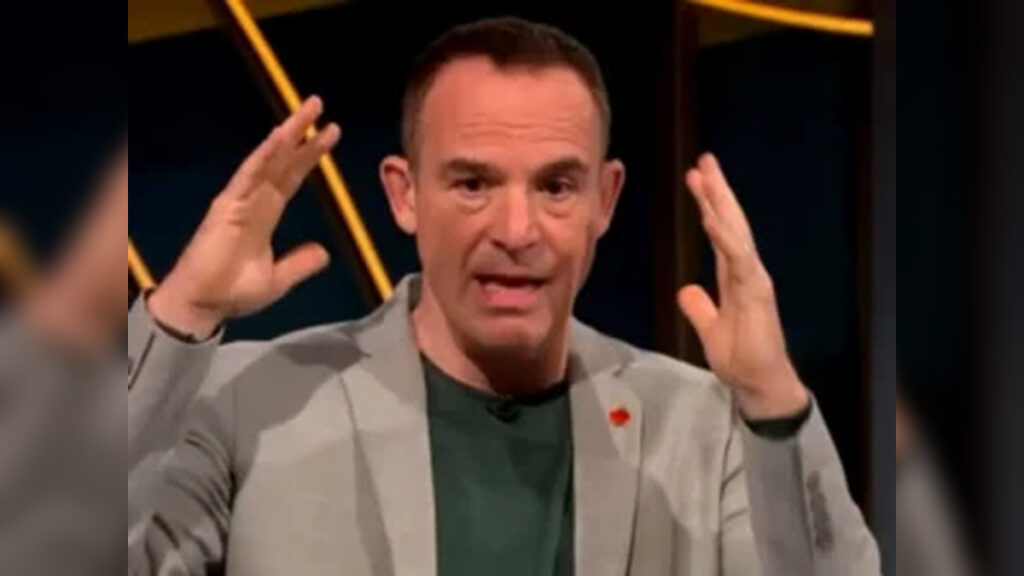
Financial expert Martin Lewis has raised doubts about the practical impact of Prime Minister Andy Burnham’s newly announced tax break on electricity bills, arguing that many households could see little real financial improvement once expected energy price increases take effect.
While the government says the measure is designed to ease pressure on struggling families, Lewis believes rising costs elsewhere could significantly reduce the benefit people actually experience over the coming months.
Burnham Launches First Major Cost-of-Living Policy
Just days after taking office on July 20, Prime Minister Andy Burnham unveiled an £850 million package aimed at lowering household energy costs.
Central to the plan is a temporary six-month suspension of VAT on electricity bills, beginning on October 1.
The government estimates the move will save the average household around £45 annually, offering what ministers describe as immediate financial relief ahead of the winter months.
Funding for the initiative will come from scrapping the digital ID programme introduced under former Prime Minister Sir Keir Starmer, a project that had been expected to cost approximately £600 million each year over a three-year period.
Government Says Families Need Immediate Support
Announcing the policy, Burnham said his administration was moving quickly to help families cope with the continued cost-of-living pressures.
He said the VAT suspension would put more money back into people’s pockets while giving households much-needed breathing room.
Ministers also confirmed that electricity suppliers would be expected to pass the full tax saving on to consumers, including those on fixed-rate tariffs.
However, the measure applies only to electricity bills, meaning households using both gas and electricity will continue paying VAT on the gas portion of their energy costs.
Chancellor Defends the Measure
Chancellor John Healey described the tax reduction as an important step in easing financial strain for families across the country.




He argued that cancelling the digital ID scheme had created room for a policy that would provide direct assistance this winter while also helping to reduce inflationary pressures.
According to the Treasury, every postcode in the UK stands to benefit from the initiative, with ministers presenting it as the first stage of a broader effort to improve household finances.
Martin Lewis Says Rising Bills Could Cancel Out the Savings
Despite welcoming government action, Martin Lewis warned that the headline savings may not translate into noticeably lower bills for many consumers.
Writing to his 3.2 million followers on X, formerly Twitter, the money-saving expert explained that removing VAT effectively cuts electricity costs by around 4.8%.
However, he noted that current forecasts suggest Ofgem’s energy Price Cap is likely to increase by roughly 3.1% from October.
Based on typical household bills, Lewis said that increase could add more than £50 annually, meaning much of the benefit from the temporary VAT cut would be offset almost immediately.
He also cautioned that forecasts currently point to another potential rise in the Price Cap in January, although he acknowledged those predictions remain uncertain.
Wholesale Energy Prices Have Shifted Rapidly
Lewis also highlighted how changing global energy markets have altered consumer savings in recent weeks.
He pointed out that only days earlier, the cheapest fixed energy tariffs were around 14% lower than the Price Cap.
Since then, wholesale energy prices have climbed following tensions in the Middle East, reducing that gap to around 8%.
According to Lewis, this changing market makes it even harder for households to feel the full impact of the government’s tax reduction.
A Positive Signal But Not a Complete Solution
Although critical of the likely financial outcome, Lewis described the policy as a meaningful symbolic step.
He welcomed the government’s decision to focus specifically on electricity, arguing that previous policies encouraging households to switch away from gas had been undermined by electricity remaining comparatively more expensive.
Even so, he stressed that lowering VAT alone would not be enough to make energy bills feel significantly cheaper for most families.
Experts Expect More Measures to Follow
Lewis believes additional action will be needed if the government wants to make a lasting difference to household finances.
While acknowledging that consumers will still pay less than they would have without the VAT suspension, he argued that broader cost-cutting policies will likely be required, particularly during the upcoming Budget, to deliver meaningful relief as the cost-of-living crisis continues.

