
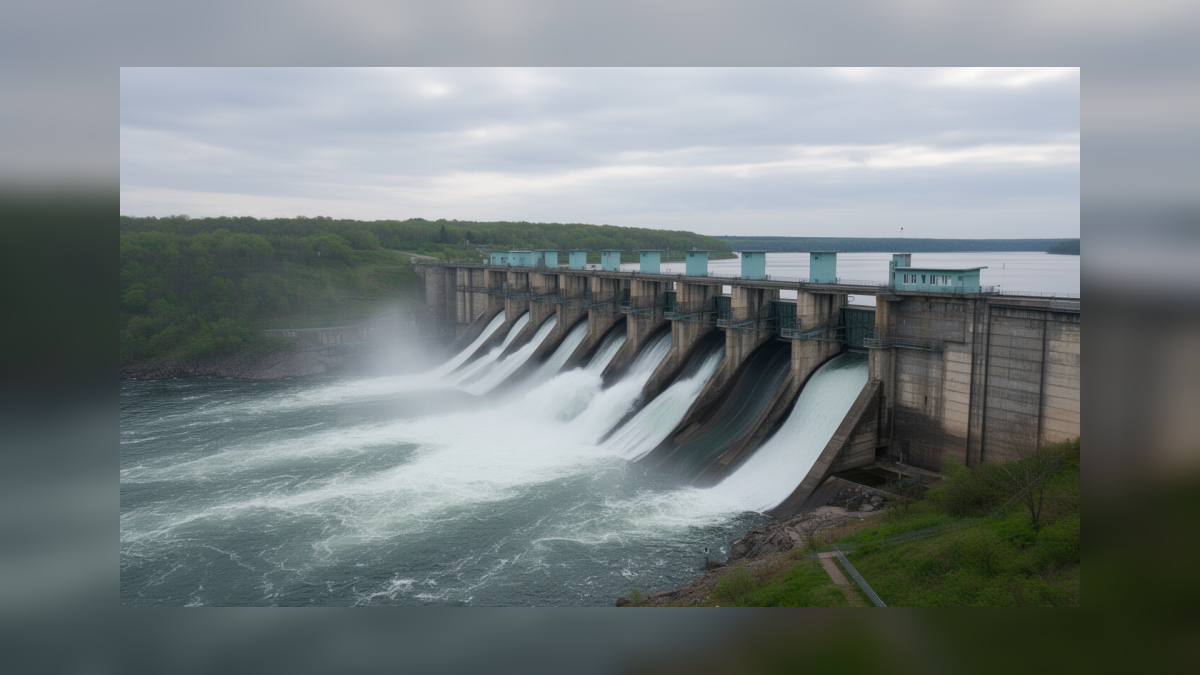
Kyrgyzstan is increasing its renewable energy capacity through the development of small hydroelectric power plants and large-scale solar facilities across the country.
Emilbek Orozbaev, Director of the State Institution Green Energy Fund, said approximately 50 small hydropower plants (SHPPs) were currently under construction, with 30 already commissioned and operating.
He disclosed that domestic investors had provided approximately 90% of the investment required for the hydropower projects.
The expansion forms part of the country’s efforts to increase electricity generation through a combination of smaller hydroelectric facilities and solar power installations.
Solar Power Projects Expand Across Several Regions
Alongside the hydropower developments, Kyrgyzstan is installing solar photovoltaic facilities in different parts of the country.
In the Kemin District of the Chuy Region, a 100 MW solar power plant was commissioned in December of the previous year.
Another major project is located in Kyzyl-Oruk in the Issyk-Kul Region. The first phase, developed by Vietnamese company Rox, has been completed with an installed capacity of 175 MW. Construction of the second phase is continuing.
The country has also commissioned the first phase of a 100 MW solar facility in Toru-Aygyr, also in the Issyk-Kul Region. The commissioning coincided with the 35th anniversary of Kyrgyzstan’s independence.




Naryn Region Prepares for Additional Solar Generation
Further solar developments are planned in the Naryn Region.
A 20 MW solar power plant is expected to be commissioned before the end of 2026.
Meanwhile, construction is underway on a larger solar facility in the village of Ortok, located in the Kochkor District. The project has a designed capacity of 250 MW, with its first phase scheduled to become operational in May 2027.
Government Revises Electricity Tariff Rules for Investors
Kyrgyzstan has adjusted its approach to electricity tariffs and land allocation to support investment in renewable energy projects.
The previously established tariff of 4.42 soms is now treated as a maximum limit rather than a fixed rate. Investors are encouraged to submit proposals offering lower electricity production tariffs.
Land for energy projects is allocated through a competitive bidding process, with plots leased to investors offering the lowest electricity generation tariff.
Renewable Energy Projects Operate Under Long-Term Land Leases
The government has stipulated that land allocated for renewable energy developments will be leased rather than sold.
Lease periods depend on the type of energy installation. Small hydropower plants receive land leases lasting 15 years, while solar and wind projects can receive agreements of up to 25 years.
Revenue generated through the land lease arrangements is transferred to the republican budget.
One Per Cent of Energy Profits Goes to Local Budgets
The government has also introduced a financial arrangement requiring commissioned energy facilities to contribute part of their profits to local authorities.
Under the mechanism, 1% of the profit generated from electricity production is transferred to the budget of the respective local area, regardless of its location within the country.
The contribution applies to commissioned energy projects and is intended to provide revenue to local budgets from electricity generation activities.
