
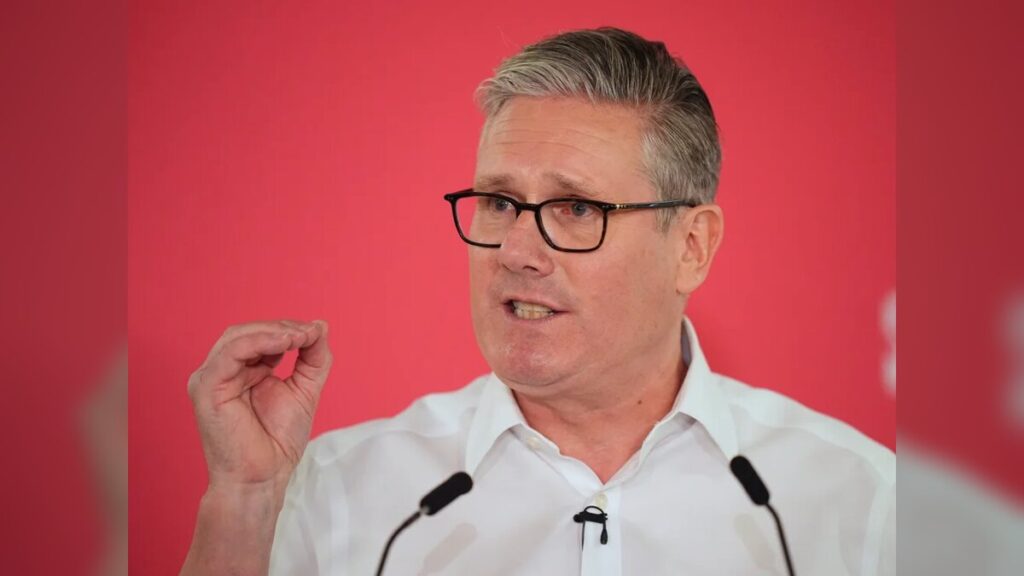
Pressure on UK Prime Minister Keir Starmer intensified dramatically after another government resignation deepened Labour’s internal crisis, turning what was expected to be a routine Cabinet gathering into a politically bruising showdown inside Downing Street.
The latest turmoil follows Labour’s crushing local election losses, which have triggered open panic within the party and sparked growing calls for the Prime Minister to step aside before the next general election.
What unfolded behind closed doors on Tuesday painted the clearest picture yet of a government struggling to hold itself together.
Cabinet Meeting Descends Into Awkward Standoff
According to government insiders, the atmosphere inside Number 10 was tense from the outset as senior ministers arrived amid mounting rumours of an organised leadership challenge.
Rather than addressing the rebellion directly, Sir Keir reportedly delivered a blunt warning to ministers, reminding them that Labour already has formal rules for removing a leader and insisting that no official challenge had been triggered.
He then urged ministers to focus on governing instead of internal political drama.
The message was widely interpreted as a challenge to his critics: either launch a formal coup or stop the public undermining.
One source claimed the Prime Minister immediately shifted the discussion toward the escalating conflict involving Iran, avoiding a prolonged debate about his own political survival.
Ministers hoping for private conversations afterward were reportedly disappointed.
Sources said Sir Keir declined requests for one-on-one discussions after the meeting ended, adding to frustrations among nervous Cabinet members.
Wes Streeting Under Intense Scrutiny
Much of the attention inside Westminster is now centred on Wes Streeting, who many Labour figures suspect is quietly positioning himself for a leadership bid.
Although Streeting attended the Cabinet session, he reportedly avoided openly discussing the Prime Minister’s future.
That silence itself became a talking point afterward, with allies of Starmer mocking the Health Secretary for allegedly losing his nerve at a critical moment.
Streeting’s growing influence has unsettled Labour’s Left wing, which fears a rapid leadership contest could hand control of the party to the Blairite faction.
Former Labour shadow chancellor John McDonnell accused Streeting of orchestrating a behind-the-scenes coup to prevent a broader democratic leadership battle.
McDonnell also warned that elevating Streeting could politically benefit Reform UK by alienating Labour’s traditional supporters.
First Ministerial Resignation Adds to Chaos
The rebellion escalated further when Miatta Fahnbulleh became the first serving minister to quit while publicly backing calls for Starmer to resign.
Her departure is especially significant because of her perceived links to Ed Miliband, suggesting dissatisfaction may now be spreading deeper into senior government circles.
At least six ministerial aides have now resigned amid the crisis, while more than 80 Labour MPs are reportedly urging Starmer to recognise that his leadership may no longer be sustainable.
Darren Jones Raises More Questions About Starmer’s Future
Even some of Starmer’s closest allies appeared reluctant to offer firm guarantees about his long-term survival.
Darren Jones, considered one of the Prime Minister’s loyal supporters, avoided confirming whether Starmer would still lead Labour into the next general election.
During television interviews, Jones stressed that ministers remained focused on governing but noticeably stopped short of pledging that the Prime Minister’s position was secure.




His comments only fuelled speculation that senior figures inside government are already preparing for a possible transition.
Andy Burnham Emerges as Key Figure in Succession Battle
As Labour factions manoeuvre behind the scenes, attention is increasingly shifting toward Andy Burnham as a possible compromise successor.
Reports suggest Burnham could attempt a return to Parliament through a by-election if the leadership crisis worsens.
The Labour Left is believed to favour slowing down any leadership contest to give Burnham enough time to re-enter the Commons and formally compete.
Adding to speculation, Burnham was reportedly seen arriving at London’s Euston Station while rumours circulated that preparations were already underway for a political comeback.
Angela Rayner Backs Burnham’s Return
Deputy Prime Minister Angela Rayner added another layer to the turmoil after publicly arguing that Burnham should never have been blocked from contesting the Gorton and Denton by-election earlier this year.
Her comments were interpreted by many Labour insiders as indirect criticism of Starmer’s leadership team.
Party sources also claimed Rayner may support a political arrangement with Burnham that could preserve her own senior role if leadership changes occur.
Those rumours have intensified speculation that private alliances are already forming ahead of a possible contest.
Financial Markets and Party Morale Shaken
The growing instability inside government is now beginning to alarm financial markets and Labour supporters alike.
UK borrowing costs reportedly climbed as investors worried about the possibility of a sudden shift toward more left-wing economic policies if Starmer falls.
Meanwhile, Chancellor Rachel Reeves reportedly withdrew from a planned appearance in London as tensions mounted inside government.
Within Labour ranks, frustration is also growing over comparisons with the Conservatives’ years of leadership turmoil.
Some ministers privately admitted the party now risks looking hypocritical after repeatedly criticising the Conservatives for political instability.
Conservatives Attack Labour’s Leadership Turmoil
Opposition leader Kemi Badenoch seized on the chaos, arguing that replacing Starmer would not solve Labour’s deeper ideological problems.
She claimed Labour’s rival factions all support similar economic approaches involving higher public spending, increased regulation and greater state control.
According to Badenoch, the party’s internal battle is merely a dispute over who gets to steer the same political direction.
How Starmer Could Be Forced Out
Under Labour Party rules, a formal leadership challenge requires support from 20 per cent of Labour MPs.
With Labour currently holding 403 seats in the House of Commons, any challenger would need 81 MP nominations to trigger a contest.
If such a challenge occurs, Labour members and affiliated supporters would eventually vote to decide the next leader.
However, many Westminster observers believe a Cabinet revolt could remove Starmer more quickly.
A wave of resignations from senior ministers or coordinated pressure from MPs could make his position politically impossible to maintain, even without a formal leadership election.
Former Prime Minister Boris Johnson experienced a similar collapse in 2022 after a mass resignation campaign by ministers destroyed his authority.
Impact and Consequences
The crisis now threatens to destabilise Labour at a critical moment, just as the party attempts to recover from damaging local election results and prepare for future national campaigns.
Several consequences are already emerging:
- Labour’s public image is suffering as infighting dominates headlines.
- Financial markets are reacting nervously to uncertainty over the government’s direction.
- Rival factions inside Labour are becoming more openly hostile.
- Reform UK and opposition parties could benefit from voter frustration.
- Questions are growing over whether Starmer can maintain authority long enough to restore discipline.
The longer the crisis continues, the harder it may become for the government to focus on policy or rebuild public confidence.
What’s Next?
Attention will now turn to whether Labour rebels can formally organise behind a single challenger.
Key figures such as Wes Streeting, Andy Burnham, Angela Rayner and Ed Miliband are expected to come under even greater scrutiny in the coming days.
Much may also depend on whether additional ministers resign or whether Cabinet figures begin publicly distancing themselves from Starmer.
If pressure continues to intensify, Labour could soon face either:
- a formal leadership contest,
- a negotiated resignation,
- or an escalating internal war that further damages the party before the next election.
Summary
Keir Starmer’s authority is facing one of the most serious threats of his premiership after another resignation and a deeply uncomfortable Cabinet meeting exposed widening divisions inside Labour.
While Starmer insists he remains focused on governing and refuses to discuss stepping aside, critics inside his own party appear increasingly determined to force change.
The growing rebellion has now evolved beyond frustration over election losses into a full-scale struggle over Labour’s future direction and leadership.
Bulleted Takeaways
- Keir Starmer rejected calls to discuss his leadership during a tense Cabinet meeting.
- Miatta Fahnbulleh became the first minister to resign while backing demands for Starmer to quit.
- Wes Streeting is increasingly viewed as a potential successor.
- More than 80 Labour MPs are reportedly urging Starmer to step down.
- Andy Burnham is emerging as a possible unity candidate.
- Labour’s internal divisions are beginning to unsettle financial markets.
- Kemi Badenoch attacked Labour’s leadership battle as proof the party lacks direction.
- A formal Labour leadership challenge would require support from 81 MPs.
