
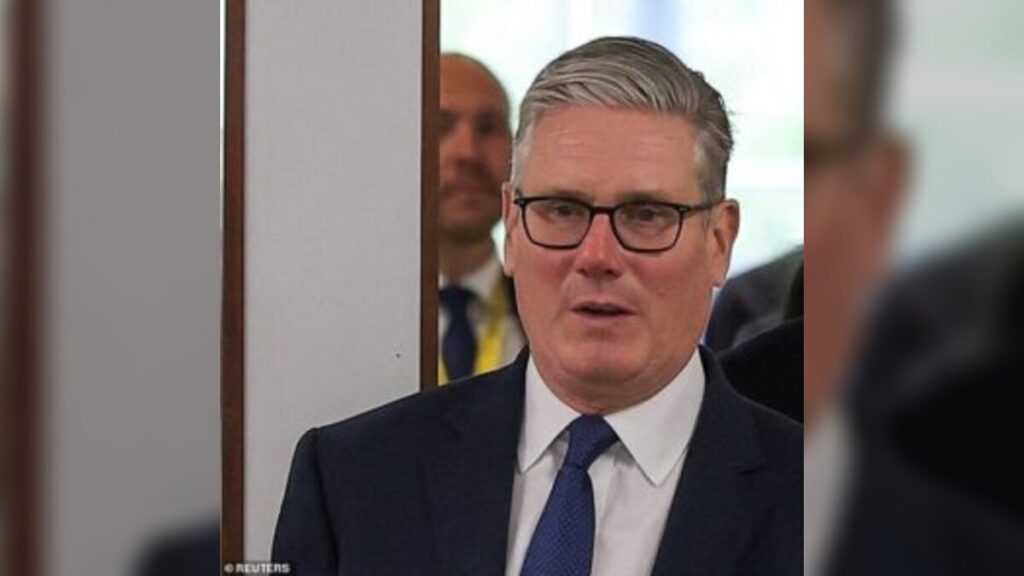
Britain’s political calendar was supposed to focus on royal tradition and a fresh legislative agenda, but instead the State Opening of Parliament has become overshadowed by a growing crisis surrounding Prime Minister Keir Starmer and his grip on power.
As the King prepares to formally outline the Government’s plans for the coming parliamentary session, uncertainty hangs heavily over Westminster.
The unusual situation has created a surreal atmosphere where the monarch is expected to present policies that the current Prime Minister may never get the chance to deliver himself.
The State Opening of Parliament is normally a carefully choreographed constitutional event built around stability and continuity.
This year, however, it arrives at a moment of open rebellion inside Labour ranks.
Royal Tradition Meets Political Turmoil
During the ceremony, King Charles III will deliver the King’s Speech inside the House of Lords, setting out the Government’s legislative priorities for the months ahead.
Among the expected proposals are measures aimed at rebuilding relations with the European Union, accelerating green energy goals, and pushing forward Labour’s Net Zero commitments.
Those plans were intended to demonstrate long-term direction and confidence from the Government.
Instead, critics argue the monarchy has been awkwardly pulled into the middle of Labour’s internal meltdown.
Some Conservative figures and commentators have described the situation as embarrassing, saying the King is effectively being asked to present a programme from a government whose leadership is no longer secure.
The monarchy traditionally stays politically neutral, making the timing especially delicate.
Pressure Builds Around Starmer
Behind closed doors, pressure on Starmer appears to be intensifying by the hour.
Reports indicate the Prime Minister is meeting Health Secretary Wes Streeting in an attempt to calm tensions and stop senior figures from joining efforts to remove him.
The unrest follows disastrous local election results that have rattled Labour MPs and sparked fears about the party’s direction heading into future national contests.
Four Labour ministers resigned dramatically, saying they no longer believed Starmer could lead effectively.
At the same time, the number of MPs reportedly calling for him to step down climbed sharply to around 90.
That level of discontent is difficult for any party leader to survive.
Cabinet Figures Distance Themselves
The turmoil deepened further when Home Secretary Shabana Mahmood was forced to deny speculation that she was preparing to resign herself.
According to reports, Mahmood privately urged Starmer to provide a timetable for his departure, fuelling rumours that influential cabinet figures are preparing for a leadership transition.
Meanwhile, Deputy Prime Minister David Lammy publicly appealed for calm, warning colleagues that constant infighting was distracting the Government from national priorities.
Lammy reportedly urged MPs to stop what he described as destructive “navel gazing,” arguing that the political instability was beginning to damage public confidence and unsettle the country.



Financial Markets React Nervously
The political uncertainty has not remained confined to Parliament.
Financial markets reacted sharply as investors began weighing the possibility of a Labour leadership coup and a potential shift toward more left-leaning economic policies.
Government borrowing costs reportedly surged to their highest levels this century, reflecting growing nervousness among traders about political instability and future fiscal policy.
The British pound also weakened against both the US dollar and the euro, another sign that markets dislike uncertainty at the top of government.
One ally of Greater Manchester mayor Andy Burnham reportedly dismissed those fears by saying markets would simply “fall into line” if a new leadership team took over.
Still, investors appear unconvinced for now.
Donald Trump Weighs In
Adding even more drama to the situation, former US President Donald Trump commented on the unfolding crisis.
Trump said the decision on whether to resign was ultimately Starmer’s to make, but he also accused the Prime Minister of “windmilling the country to death,” a remark likely to spark further political debate on both sides of the Atlantic.
Although American presidents and former presidents occasionally comment on British politics, such direct criticism during a leadership crisis is unusual and guarantees international attention.
Why the King’s Speech Matters So Much
The King’s Speech is one of the most significant events in British politics because it outlines the Government’s legislative roadmap.
Despite being delivered by the monarch, the speech itself is written by the sitting government.
Every proposal inside it reflects the priorities of the Prime Minister and cabinet.
That reality makes today’s ceremony especially awkward.
If Labour changes leaders soon, many of the policies announced could be delayed, rewritten, or abandoned entirely.
Historically, moments like this are rare because governments typically try to project unity during major constitutional occasions.
Impact and Consequences
The political chaos inside Labour could have serious consequences beyond Westminster.
First, continued instability risks weakening investor confidence at a time when Britain is already facing economic pressures, stubborn inflation concerns, and fragile public finances.
Second, Labour’s internal divisions may damage public trust in the party’s ability to govern effectively. Voters who expected stability after recent political turbulence could become frustrated by another leadership battle.
There is also the international dimension.
Allies and markets closely watch British political stability because the UK remains one of the world’s largest economies and a major diplomatic power.
Finally, the monarchy itself risks being dragged into uncomfortable political territory.
While the King remains constitutionally neutral, public perception matters, and any sense that royal ceremonies are tied to party infighting creates unease.
What’s Next?
The immediate focus will be on whether Starmer can survive the growing rebellion inside his party.
If more ministers resign or senior cabinet members openly call for him to step aside, pressure could become impossible to resist.
Attention is also turning toward potential successors who may emerge if Labour decides leadership change is necessary.
At the same time, MPs will closely watch financial market reactions and public opinion polling over the coming days.
Should economic anxiety deepen, Labour figures may conclude that a quick leadership transition is the only way to calm the situation before further political damage is done.
For now, however, Starmer remains Prime Minister — even as speculation about his future dominates the very event designed to showcase his government’s plans.
Summary
The State Opening of Parliament was expected to highlight Labour’s legislative ambitions, but it has instead become overshadowed by a mounting crisis around Keir Starmer’s leadership.
While King Charles III prepares to present the Government’s agenda, Labour ministers are resigning, MPs are openly questioning Starmer’s future, and markets are reacting nervously to the uncertainty.
The combination of royal ceremony, party rebellion, and financial instability has created one of the most politically tense moments Britain has faced in recent years.
Bulleted Takeaways
- Keir Starmer faces growing pressure to resign after poor local election results.
- King Charles III is delivering the King’s Speech amid uncertainty over Starmer’s future.
- Four Labour ministers resigned, saying they no longer support the Prime Minister.
- Around 90 Labour MPs are reportedly calling for Starmer to step down.
- Financial markets reacted negatively, with borrowing costs rising sharply and the pound weakening.
- David Lammy urged Labour MPs to stop infighting and focus on governing.
- Donald Trump criticised Starmer while commenting on the crisis.
- Questions are growing over who could replace Starmer if Labour moves ahead with a leadership challenge.

