
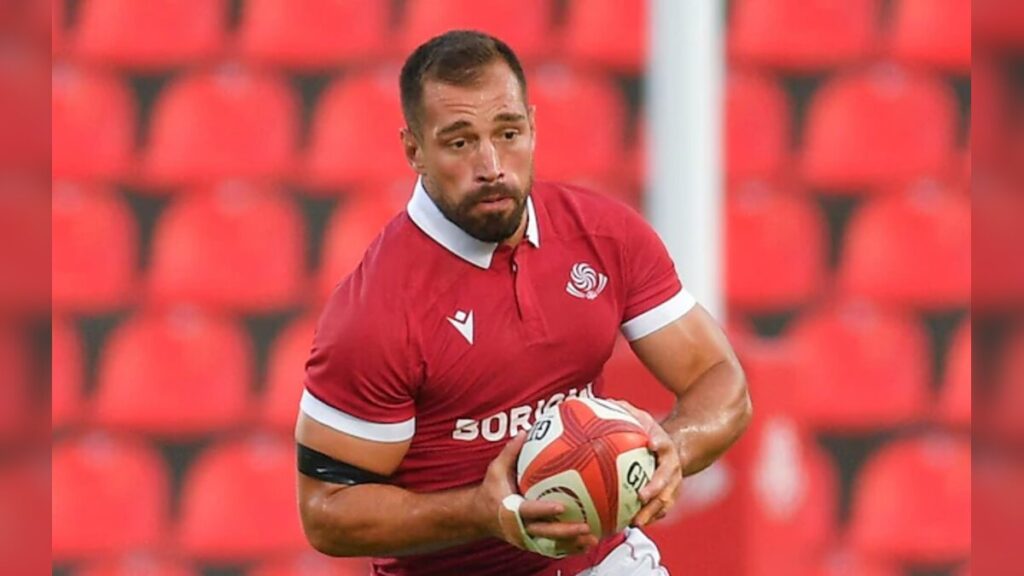
International rugby has been thrown into turmoil after a sweeping anti-doping investigation uncovered what officials described as a coordinated scheme involving urine sample swaps, secret warnings about drug tests, and attempts to hide banned substance use within Georgian rugby.
At the center of the scandal is former Georgia captain Merab Sharikadze, who has now been banned from the sport for 11 years — the harshest punishment issued in the case.
The sanctions were announced after a joint operation conducted by World Rugby and World Anti-Doping Agency, commonly known as WADA.
Investigators said the inquiry, called “Operation Obsidian,” exposed multiple instances where rugby players allegedly exchanged urine samples to avoid failing drug tests.
Former Georgia team doctor Nutsa Shamatava was also heavily penalized, receiving a nine-year suspension from rugby-related activities.
Secret WhatsApp Alerts and Swapped Samples Uncovered
According to investigators, the operation began in 2023 after irregularities were detected through World Rugby’s biological passport monitoring system.
Officials claimed that players were allegedly tipped off in advance about upcoming anti-doping checks.
Authorities said those warnings were reportedly passed along through WhatsApp messages sent by Shamatava after receiving information connected to Georgian anti-doping channels.
World Rugby later described the system as an “orchestrated scheme” designed to help players avoid sanctions.
Investigators identified five separate cases where urine samples were allegedly substituted.
While early suspicions focused on possible performance-enhancing drug abuse, the final investigation reportedly found no evidence that the athletes were using substances intended to improve performance on the field.
Instead, the substances involved were said to include cannabis and tramadol — a painkiller that has since been added to WADA’s prohibited list. Cannabis remains illegal in Georgia.
Merab Sharikadze’s Rugby Legacy Overshadowed
Before the scandal erupted, Sharikadze was regarded as one of Georgia’s most respected rugby figures.
The former center earned 105 international caps and captained Georgia during some of the nation’s biggest rugby achievements, including memorable victories over Italy in Batumi and Wales in Cardiff in 2022.
However, investigators now believe he played a key role in supplying clean urine samples that other players allegedly used to conceal recreational drug use.
His lengthy ban has dramatically altered the legacy of one of Georgian rugby’s most recognizable figures.
Several Georgian Players Also Suspended
Sharikadze was not the only player sanctioned following the investigation.
Other Georgian rugby players handed suspensions include:




- Giorgi Chkoidze — six-year ban
- Lasha Khmaladze — three-year ban
- Miriani Modebadze — three-year ban
- Otar Lashkhi — three-year ban
- Lasha Lomidze — nine-month ban
The suspensions were backdated as part of the disciplinary process.
Despite the seriousness of the scandal, Georgia’s national rugby team has not been banned from international competition.
Georgia Rugby Union Escapes Team Ban but Faces Penalties
While individual players and staff were punished, investigators said an independent review found no direct evidence that the Georgia Rugby Union itself orchestrated the scheme.
Still, World Rugby concluded that the actions of players and staff had brought the sport into disrepute.
As a result, the union accepted a misconduct charge and agreed to financial penalties along with a reform program aimed at improving anti-doping education and compliance systems.
World Rugby praised the Georgian union for cooperating with investigators and agreeing to implement preventative measures.
Officials Compare Methods to Previous International Doping Scandals
The methods uncovered during Operation Obsidian drew comparisons to past global doping controversies, including the manipulation tactics linked to Russian athletes during the 2014 Winter Olympics.
However, officials emphasized that the Georgian rugby case differed because investigators found no proof of systematic use of performance-enhancing substances.
World Rugby chief executive Alan Gilpin described the investigation as the most extensive anti-doping inquiry ever carried out in rugby.
He said the case proved the importance of advanced scientific monitoring and long-term testing systems in protecting clean sport.
Meanwhile, WADA president Witold Bańka called the revelations “a scandal for Georgian sport” and warned that the severe bans should serve as a warning to athletes attempting to manipulate anti-doping controls.
WADA Expands Concerns Beyond Rugby
The fallout may not stop with rugby alone.
WADA officials revealed they are now examining whether wider problems exist within Georgia’s broader anti-doping system.
Günter Younger confirmed that discussions are ongoing with the Georgian government to rebuild confidence in the country’s anti-doping structure.
Authorities in Georgia are reportedly working with WADA to establish a new anti-doping organization staffed by new personnel.
Impact and Consequences
The scandal has delivered a major reputational blow to Georgian rugby, a sport that has become a source of national pride over the past decade.
For years, Georgia earned growing respect on the international stage through physical performances, passionate fan support, and victories against established rugby nations.
Those achievements are now being overshadowed by questions surrounding integrity and compliance.
The case has also intensified scrutiny on anti-doping systems in smaller rugby nations and highlighted how recreational drug use can still trigger severe disciplinary consequences when athletes attempt to interfere with testing procedures.
For World Rugby and WADA, the investigation signals a tougher global approach toward any attempt to manipulate doping controls — even when the substances involved are not performance enhancing.
What’s Next?
World Rugby is expected to continue monitoring the reforms being introduced by the Georgia Rugby Union.
WADA investigators are also entering what they described as the “next phase” of the inquiry, examining whether anti-doping weaknesses in Georgia extend beyond rugby into other sports.
Further scrutiny of Georgian sports administration and anti-doping operations could follow if additional evidence emerges.
The lengthy suspensions also leave uncertainty surrounding the futures of several Georgian players and officials who were once central figures within the national rugby setup.
Summary
A massive anti-doping investigation has shaken international rugby after officials uncovered an alleged scheme involving urine sample substitutions and advance warnings about drug tests within Georgian rugby.
Former captain Merab Sharikadze received an 11-year ban, while several players and a former team doctor were also sanctioned following the four-year inquiry known as Operation Obsidian.
Although investigators found no evidence of performance-enhancing drug use, the scandal has sparked global concern about the integrity of anti-doping systems and placed Georgian rugby under intense international scrutiny.
Bulleted Takeaways
- Former Georgia rugby captain Merab Sharikadze received an 11-year ban after a major doping investigation
- World Rugby and WADA uncovered alleged urine sample swapping among Georgian players
- Investigators said players were allegedly warned in advance about drug tests through WhatsApp messages
- Cannabis and tramadol were identified as the substances involved in the scandal
- Several Georgian players and former medical officer Nutsa Shamatava also received lengthy suspensions
- Georgia’s national rugby team avoided an international competition ban
- WADA is now examining whether anti-doping issues in Georgia extend beyond rugby
- The scandal has become one of the largest anti-doping controversies in rugby history
