
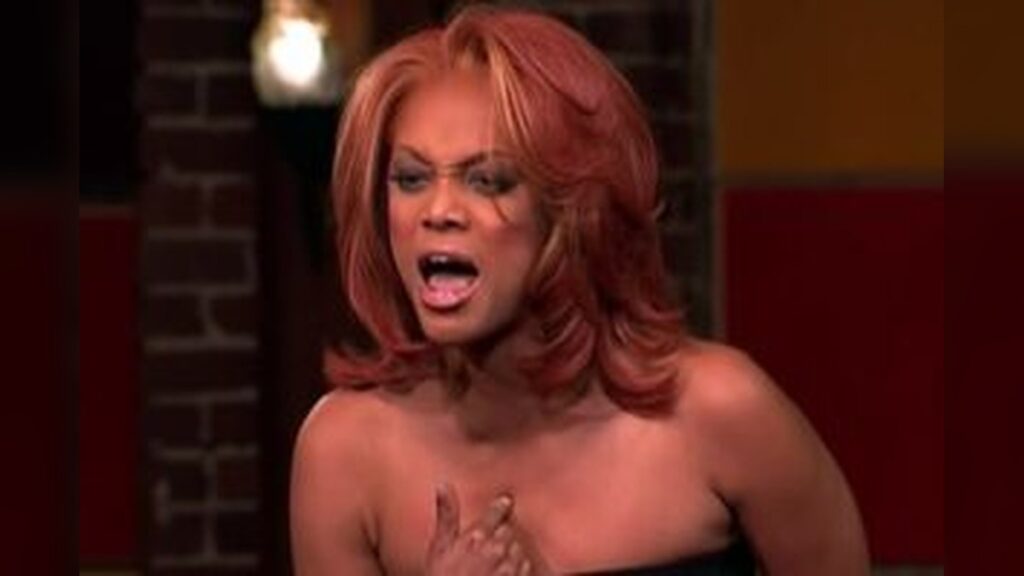
Tyra Banks has filed a defamation lawsuit against Netflix, accusing the streaming giant of misrepresenting her role in a controversial documentary examining the legacy of America’s Next Top Model.
The case centres on allegations that the platform used heavily edited interview footage to construct what Banks calls a “false and defamatory narrative.”
The lawsuit follows the release of the docuseries Reality Check: Inside America’s Next Top Model, which revisits long-standing criticisms of the reality show and its treatment of contestants during its original run.
Banks Claims Selective Editing Created a False Storyline
According to legal documents cited in the filing, Banks says she participated in a three-and-a-half-hour interview for the production but claims only around 16 minutes of that footage was ultimately used.
She alleges that the edited segments were taken out of context and rearranged in a way that significantly altered her meaning.
The complaint accuses producers of “selective editing, deliberate omission, and surgical manipulation” designed to reshape her comments into a narrative she never intended.
Banks argues that the final cut misrepresented her position on key controversies tied to the show, including how sensitive incidents involving contestants were handled.
Central Allegations Focus on Contestant Assault Claims
A major point of contention in the lawsuit relates to allegations raised in the documentary involving former contestant Shandi Sullivan from Cycle 2 of America’s Next Top Model.
The docuseries revisits Sullivan’s claim that she was not properly protected following a sexual encounter during filming, which she has since described as a sexual assault.
In the series, she stated she had been intoxicated and unable to consent, and that production staff failed to intervene.




Banks, however, strongly disputes how these events were portrayed in the documentary, arguing that the implication she knowingly permitted misconduct on set is false.
Dispute Over Responsibility and Production Portrayal
The lawsuit also challenges the suggestion that Banks ignored or later failed to remember the incident.
She claims she has previously acknowledged the seriousness of the situation and that the documentary deliberately omitted her statements reflecting accountability.
Her filing argues that the series presented a distorted version of events by stripping out key context from her interview responses and presenting her in a misleading light to viewers.
Banks further states she was not informed in advance about Sullivan’s participation in the documentary, adding to her objections over how the material was framed.
Netflix Documentary Under Fire for “Documentary” Label
At the heart of the legal complaint is Banks’ argument that Netflix promoted the series as a factual documentary, leading audiences to expect an accurate and balanced account.
She claims the platform described the show as a definitive examination of America’s Next Top Model, which, in her view, increased the responsibility to ensure editorial fairness and accuracy.
Banks argues that viewers instead received a constructed narrative shaped by selective editing rather than a full representation of her interview.
America’s Next Top Model Legacy Revisited
Banks created and hosted America’s Next Top Model, which premiered in 2003 and ran for 22 cycles after being pitched to UPN.
The show became a global reality television phenomenon, but has also faced ongoing criticism over its treatment of contestants and behind-the-scenes practices.
The Netflix series revisits both its cultural impact and controversies, including production decisions that have remained debated years after filming.
Contestant Testimony and Production Defence
Within the documentary, Shandi Sullivan reflects on her experience during filming, describing a night she now characterises as involving sexual assault after a filmed encounter that was originally aired as part of a storyline involving drunken behaviour and relationship fallout.
She later argued that production should have intervened earlier to prevent what occurred.
Executive producer Ken Mok defended the show’s format, stating that contestants were made aware cameras would be present continuously and that the production operated in a documentary-style environment capturing events as they unfolded.
Banks, meanwhile, maintains that the editing choices in the Netflix series crossed the line from interpretation into misrepresentation, forming the basis of her legal action.

