
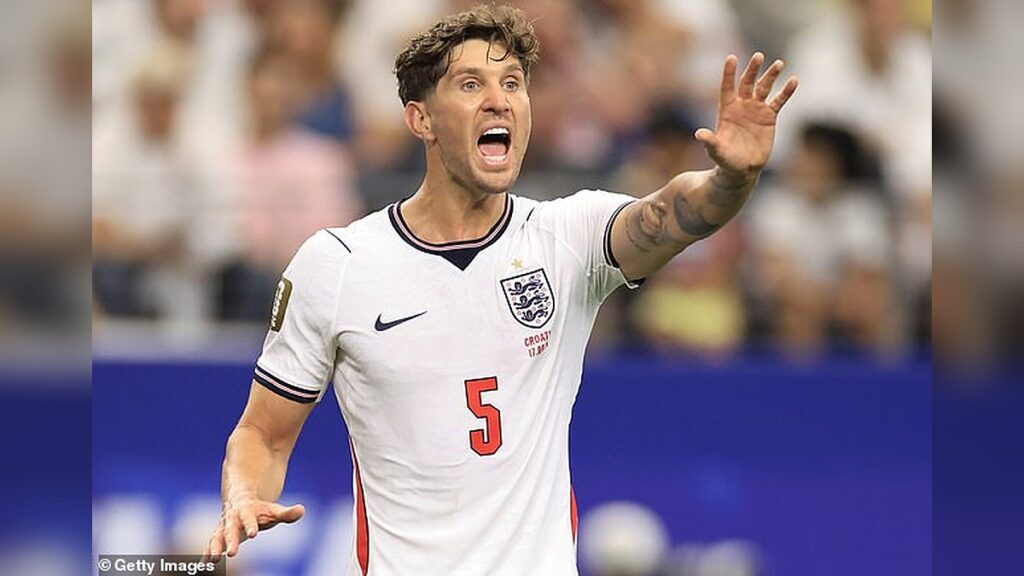
Twelve months ago, the future of John Stones as a professional footballer was far from certain.
The England defender was battling a relentless cycle of injuries that had left him physically drained and mentally exhausted.
After suffering multiple setbacks during the 2025 season, retirement was no longer an unthinkable prospect.
At the time, Stones openly acknowledged that walking away from the game had crossed his mind.
A series of frustrating fitness issues had restricted him to the sidelines for 33 matches, with four separate injuries disrupting his campaign.
Despite extensive support from medical experts at Manchester City, answers remained elusive.
Many of the problems were considered unusual, leaving even specialists struggling to explain the recurring setbacks.
Rather than step away, however, Stones chose to continue fighting.
From Atlanta Reflections to Another World Cup Mission
The conversation about retirement took place during England’s stay in Atlanta for the Club World Cup.
One year later, Stones finds himself preparing for another major international assignment, this time arriving in Boston ahead of England’s clash with Ghana.
Despite enduring another difficult club season, the 32-year-old remains one of England’s most experienced and accomplished defenders.
Head coach Thomas Tuchel continues to view him as a crucial figure, valuing both his leadership and his ability to influence games from deep positions.
For Tuchel, Stones represents something England’s squad cannot easily replace: a defender who has experienced football at the highest level and understands what it takes to succeed on the biggest stages.
City Exit Ends a Difficult Chapter
Ironically, Stones featured even less during his final season at Manchester City than he did during the injury-ravaged campaign that nearly pushed him toward retirement.
Although he suffered only one major injury—a thigh problem that sidelined him for roughly two months—his cautious approach to recovery limited his opportunities.
As a result, manager Pep Guardiola increasingly turned to alternative options in defence.
Stones has since admitted that he felt Guardiola no longer viewed him as part of the club’s future plans.
That reality ultimately brought an end to a hugely successful period at the Etihad Stadium.
Marc Guehi’s Arrival Changed the Picture
A major factor behind Stones’ reduced role was the emergence of Marc Guehi following his January move from Crystal Palace.
Guardiola placed significant trust in the new arrival, handing him regular opportunities despite a handful of difficult moments, including challenges at the Santiago Bernabéu and a costly error against Everton late in the season.




The situation has created an unusual contrast between club and international football.
While Guardiola favoured Guehi and moved away from Stones, Tuchel has largely done the opposite, continuing to rely heavily on the veteran defender for England.
Croatia Match Raises Tactical Questions
England’s recent victory over Croatia highlighted some ongoing defensive concerns.
Tuchel deployed Stones on the left side of central defence alongside Ezri Konsa, even though the Manchester City veteran has traditionally operated on the right.
While capable of adapting, the switch presented challenges, particularly for a player who has seen limited competitive action over the past several months.
The first half exposed some of those difficulties.
Stones appeared uncomfortable at times when defending unfamiliar angles, and Croatia capitalised through Martin Baturina’s goal.
His positioning and movement suggested a player still adjusting to the role.
Tuchel praised Stones’ composure and ability to advance into midfield, but the England manager may be considering whether the current defensive setup maximises those strengths.
Should England Reunite Stones and Guehi?
The debate now centres on England’s best defensive partnership moving forward.
Guehi is naturally more comfortable operating on the left side of central defence, raising the possibility of pairing him directly with Stones.
Such a combination would mirror the successful partnership that played a key role in England’s run to the final of their previous major tournament.
A Stones-Guehi pairing would also allow both players to occupy their preferred positions, creating greater balance at the heart of the defence as the competition intensifies.
With tougher tests looming beyond Ghana, selection decisions become increasingly significant.
Tuchel Still Searching for Stability
One challenge facing Tuchel has been the lack of continuity in central defence.
Since taking charge, the German has used eight different centre-back pairings.
Injuries, fluctuating form and squad changes have prevented England from establishing a settled partnership.
Stones and Konsa have started together most frequently, but other combinations involving Guehi, Dan Burn, Levi Colwill, Trevoh Chalobah, Harry Maguire and Fikayo Tomori have all been tested.
The constant reshuffling reflects the realities of international football, where limited preparation time and changing player availability often force managers into experimentation.
Why Tuchel Continues to Trust Stones
Beyond his technical qualities, Stones brings something Tuchel deeply values: experience.
The defender has repeatedly demonstrated resilience throughout his career.
He overcame doubts about his future at Manchester City in 2020, rebuilt his reputation, and later played a pivotal role in the club’s historic Treble-winning campaign, often competing while carrying fitness concerns.
That track record resonates with Tuchel, who frequently highlights Stones’ winning mentality and understanding of elite-level football.
His influence extends beyond his own performances.
England’s tactical structure often benefits from Stones’ ability to step into midfield, helping teammates around him and providing flexibility during pressing phases.
Proven Foundations Could Hold the Key
While Tuchel has experimented with numerous defensive combinations, one option remains largely unexplored during his tenure: the established partnership between Stones and Guehi.
That pairing provided England with a dependable defensive platform during a previous tournament, helping the team reach the final despite occasional struggles further up the pitch.
As England progresses deeper into another major competition, the value of familiarity and proven chemistry may become impossible to ignore.
For a team seeking stability, and for a player who has overcome doubts about whether he would even continue playing, John Stones may once again prove to be one of England’s most important figures.

