
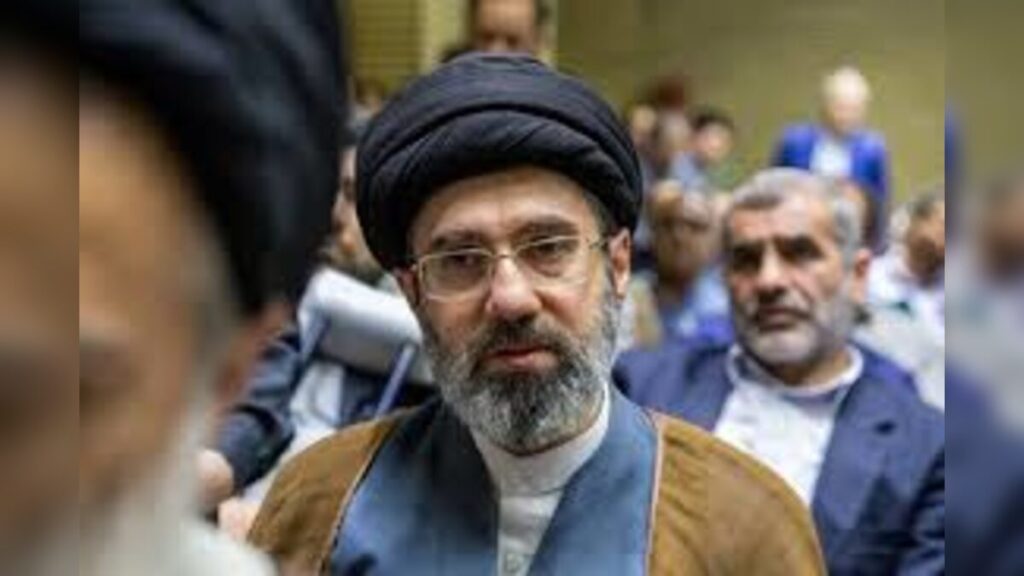
Reports suggesting that Mojtaba Khamenei, Iran’s recently appointed Supreme Leader, had been sent to Moscow for medical treatment have been firmly denied.
Kazem Jalali took to social media to dismiss these claims as part of a “coordinated information campaign,” calling them a form of psychological warfare aimed at destabilizing Iran.
Jalali emphasized that Iran’s leadership remains with its people and does not seek refuge abroad, underlining the government’s effort to project stability amid ongoing international speculation.
Kremlin Stays Silent
The Kremlin has refrained from commenting on the rumors.
Dmitry Peskov, spokesperson for Vladimir Putin, declined to confirm or deny any reports regarding Khamenei’s presence in Moscow.
This silence has only added fuel to conflicting narratives circulating online and in international media.
Conflicting Reports on Health
Speculation about Khamenei’s condition escalated after US Defense Secretary Pete Hegseth claimed that the new Supreme Leader had been injured during US and Israeli strikes, suggesting he might be “in hiding” and possibly disfigured.
However, Iranian officials paint a different picture.
While acknowledging that Khamenei sustained minor injuries during attacks, the Iranian Foreign Ministry stated that his condition is satisfactory.
Government adviser Yousef Pezeshkian reassured the public, saying he had verified with well-connected sources that Khamenei is “safe and sound, by the grace of God.”
Background: Leadership Transition in Iran
Mojtaba Khamenei assumed leadership following the death of his father, Ayatollah Ali Khamenei, who was killed in February during US and Israeli strikes.
The succession had strong backing from the Assembly of Experts and the Islamic Revolutionary Guard Corps, which reportedly played a central role in securing a smooth transition amid turmoil.




The Information Battle
The differing accounts from US and Iranian officials highlight an ongoing information struggle, with both sides seeking to shape perceptions internationally.
Social media and news outlets have amplified unverified reports, making it difficult to separate fact from speculation regarding Khamenei’s health and whereabouts.
Impact and Consequences
The uncertainty surrounding Iran’s Supreme Leader could have multiple effects:
-
Regional instability: Rumors of a leadership crisis may embolden adversaries or cause internal unrest.
-
Global intelligence focus: International intelligence agencies may intensify monitoring of Iranian leadership movements.
-
Diplomatic tension: Conflicting narratives could affect negotiations and relations between Iran, the US, Israel, and Russia.
-
Information warfare: Both state and non-state actors may exploit the situation to influence public perception and policy.
What’s Next?
Officials and analysts will continue to monitor verified appearances, statements, and intelligence updates regarding Khamenei.
The situation may evolve as Iran solidifies Mojtaba Khamenei’s leadership and counters misinformation campaigns.
Meanwhile, international observers will closely watch Tehran’s internal stability and potential policy directions under its new Supreme Leader.
Summary
Kazem Jalali’s denial of Khamenei receiving treatment in Moscow seeks to calm fears amid swirling rumors of injury and displacement.
Conflicting US and Iranian reports reveal the ongoing battle over narratives, underscoring the fragile perception of stability in Iran during a sensitive leadership transition.
Bulleted Takeaways
-
Kazem Jalali denies claims that Mojtaba Khamenei is in Moscow for medical treatment.
-
US Defense Secretary Pete Hegseth suggested Khamenei may be injured or in hiding.
-
Iranian officials confirm minor injuries but say the Supreme Leader is “safe and sound.”
-
Khamenei assumed leadership after the death of Ayatollah Ali Khamenei in February.
-
Conflicting reports highlight an ongoing information battle between international and domestic actors.
-
The situation could influence regional stability, diplomatic relations, and intelligence operations.

