
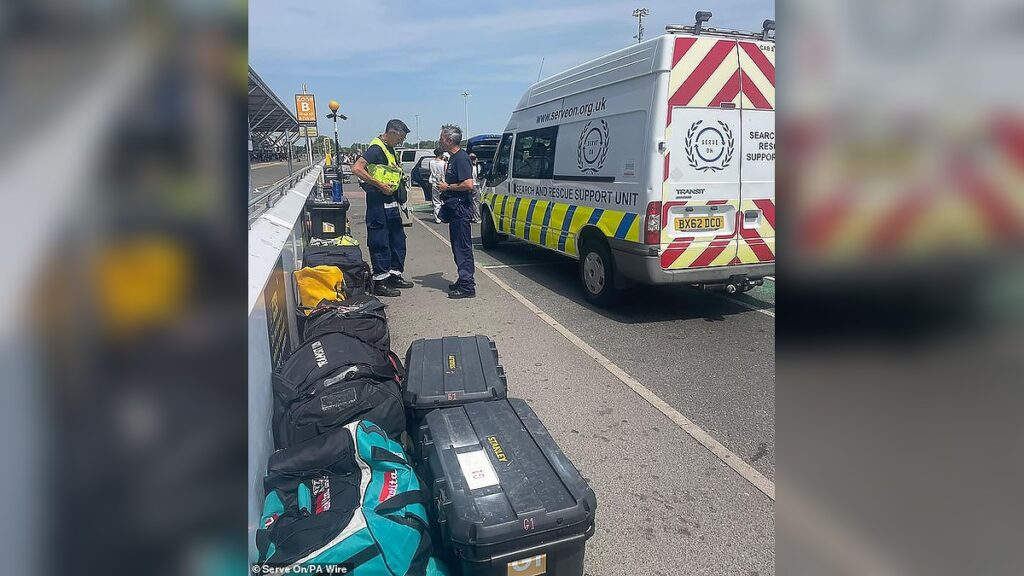
A British search-and-rescue team hoping to assist victims of Venezuela’s devastating earthquakes has found itself unable to reach the disaster zone after becoming stranded at Madrid’s international airport.
The volunteer group, organized by UK-based charity Serve On, has spent more than 24 hours attempting to secure transportation to Caracas after widespread flight disruptions left members unable to continue their journey. The team says every hour of delay could reduce the chances of locating survivors trapped beneath collapsed buildings.
Volunteers Eager to Join International Relief Effort
The deployment consists of 11 rescue specialists and a trained search dog, all prepared to assist with emergency operations following the twin earthquakes that struck Venezuela earlier this week.
With no direct commercial flights operating between the United Kingdom and Venezuela, the team initially attempted to travel through Istanbul before rerouting to Madrid after connections were disrupted. However, flights from Spain to Caracas have also been affected, leaving the volunteers waiting for an opportunity to continue their mission.
Damage to Simón Bolívar International Airport, Venezuela’s main international gateway, has further complicated travel into the country.
Specialized Equipment Could Help Locate Survivors
Serve On team leader Vernon Young said the charity specializes in technical urban search-and-rescue operations and carries equipment capable of detecting movement from people buried deep beneath collapsed structures.
He stressed that rapid deployment remains essential, explaining that victims have been rescued days after previous major earthquakes around the world when specialist teams arrived in time.
Young added that although the team has not yet reached Venezuela, volunteers back in Britain continue working to identify military or alternative transport options that could help move personnel into the country.
Other International Teams Face Similar Obstacles
According to Young, the British volunteers are not the only rescue workers experiencing transportation difficulties.
Emergency teams from France and Spain have reportedly encountered similar delays while attempting to reach Venezuela, highlighting the logistical challenges facing international humanitarian operations after extensive damage to transportation infrastructure.



Serve On has remained in contact with British authorities and says officials are assisting efforts to secure travel arrangements as quickly as possible.
Earthquake Death Toll Continues to Climb
The rescue team’s delay comes as Venezuela continues to confront the aftermath of one of the strongest earthquakes in its modern history.
The twin earthquakes, measuring magnitudes of 7.2 and 7.5, struck less than a minute apart, reducing residential neighborhoods, roads, bridges, and commercial buildings to rubble across northern parts of the country.
Authorities say more than 1,430 people have died, while 3,238 injuries have been confirmed. Nearly 68,900 people have also been reported missing as rescue operations continue.
International Assistance Expands Across Disaster Zone
Rescue personnel from numerous countries have arrived to support Venezuelan emergency services in searching damaged communities, particularly in Caracas and the heavily affected coastal state of La Guaira.
Officials say more than 1,600 foreign rescue specialists have entered the country, joining teams from across Latin America, Europe, and North America. Helicopters continue transporting rescue crews into areas where roads remain blocked or heavily damaged.
Governments have also begun announcing additional humanitarian assistance, with further financial aid expected to support relief and recovery operations.
Families Continue Search for Missing Loved Ones
Across affected communities, relatives have joined volunteers in searching collapsed buildings for survivors.
Many families continue visiting hospitals and emergency shelters while providing rescue workers with photographs and information about missing relatives in hopes that someone may still be found alive.
Disaster response experts note that while the first three days after an earthquake are typically considered the most critical for rescues, survival remains possible beyond that window when victims have access to air, water, or small pockets of space beneath collapsed structures.
Frustration Grows Over Domestic Response
As international assistance increases, criticism has emerged from some residents who believe the domestic emergency response has not matched the scale of the disaster.
Several volunteers and survivors have expressed frustration over what they describe as limited government support in some of the hardest-hit communities, saying civilians have played a leading role in searching for victims.
Government officials, however, say thousands of military personnel and police officers have been deployed across affected areas while rescue operations continue around the clock.
With thousands still unaccounted for, emergency workers remain locked in a race against time, hoping that every additional rescue team reaching Venezuela can help save more lives in the days ahead.

