
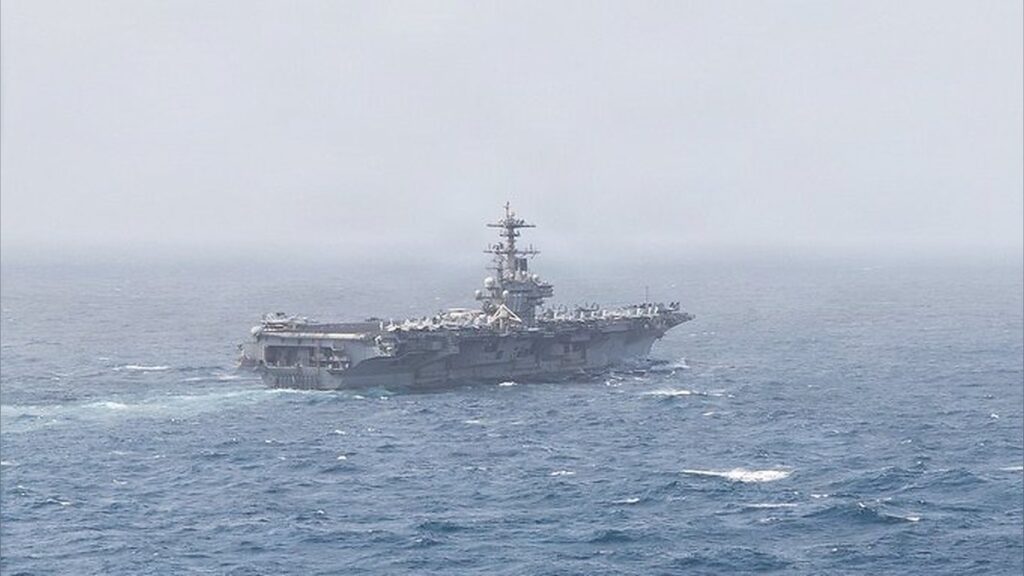
The United States has carried out another round of military strikes against targets inside Iran after a drone attack damaged a commercial tanker traveling through the Strait of Hormuz, further escalating tensions despite a recently negotiated ceasefire.
According to U.S. Central Command (CENTCOM), the strikes were launched after Iranian forces allegedly targeted the Panama-flagged tanker MT Kiku with a one-way attack drone on Saturday.
The U.S. military described the operation as a direct response to what it called continued attacks on international shipping.
Iran had not publicly commented on the latest U.S. strikes at the time of reporting.
Military Says Multiple Iranian Targets Were Hit
CENTCOM said American forces struck a range of military-related sites across Iran during the operation.
Among the reported targets were drone storage facilities, military communications infrastructure, air defense positions, and equipment believed to support Iranian military operations.
The command said Iran had been given an opportunity to comply with the ceasefire agreement but instead chose to continue hostile actions against commercial vessels navigating one of the world’s busiest maritime trade routes.
Despite the incident, U.S. officials said commercial shipping continues to transit the Strait of Hormuz.
Trump Warns Iran After Latest Operation
President Donald Trump defended the military action shortly after it was announced, accusing Iran of repeatedly violating the ceasefire agreement reached earlier this month.
In a message posted on Truth Social, Trump said Tehran appeared unwilling to honor its commitments and warned that continued violations could trigger an even stronger military response.




He suggested there could come a point when the United States would no longer exercise restraint if Iran continued attacking international shipping.
Regional Alert Follows Military Escalation
The latest exchange of strikes prompted heightened security measures across parts of the Gulf.
Authorities in Kuwait announced that the country’s air defense systems had been activated to respond to what officials described as hostile missile and drone threats, while residents were urged to follow official security instructions.
In neighboring Bahrain, the Interior Ministry also advised citizens to remain calm and seek shelter in safe locations as a precaution.
Growing Tensions After Earlier Retaliatory Strikes
The latest military action comes less than a day after the United States launched separate strikes against Iran following an earlier drone attack on the Singapore-flagged cargo vessel MV Ever Lovely.
Washington described those strikes as retaliation for what it called an unjustified attack on commercial shipping that violated the ceasefire.
Iran, however, argued that the cargo ship had been using an unauthorized route through the Strait of Hormuz and accused the United States of breaching the ceasefire through its military response.
Tehran later announced additional strikes targeting locations linked to American forces and blamed the United States for escalating the conflict.
Fragile Ceasefire Faces New Test
The United States and Iran agreed on June 17 to halt hostilities under a 14-point memorandum of understanding aimed at reducing tensions following months of military confrontation.
One of the agreement’s key provisions called for Iran to make its best efforts to ensure safe, toll-free passage for commercial vessels through the Strait of Hormuz for a period of 60 days.
The waterway is one of the world’s most strategically important shipping routes, carrying a significant share of global oil and natural gas exports.
Earlier this week, President Trump said negotiations were progressing positively and claimed Iran had assured Washington that commercial vessels would not face transit charges or additional fees.
However, Iranian officials have continued to signal that management of the Strait of Hormuz has fundamentally changed following the recent conflict, leaving uncertainty over the future of navigation through the vital maritime corridor.
The latest exchange of strikes has raised fresh concerns about regional stability and the security of one of the world’s most critical energy supply routes as diplomatic efforts face increasing pressure.

