
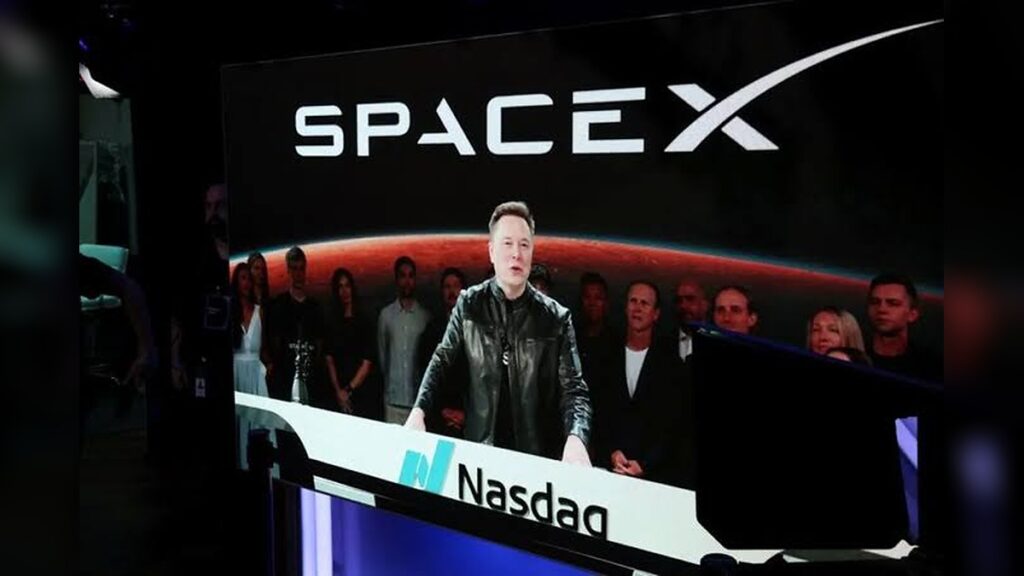
SpaceX’s blockbuster stock market debut has reignited a familiar debate among investors: can a fast-growing, money-losing company with an ambitious founder follow the same path that transformed Amazon from a risky startup into one of the world’s most valuable businesses?
While the two companies operate in very different industries, analysts say their long-term strategies, expansive business portfolios, and visionary leadership have created striking parallels.
At the same time, the financial gap between them remains enormous, raising questions about whether SpaceX’s towering valuation is justified.
From Risky Growth Story to Market Giant
When Amazon went public in 1997, investors bought into founder Jeff Bezos’ long-term vision despite the company’s modest size.
Shares debuted at $18, giving the online bookseller a valuation of about $438 million.
After the dot-com crash wiped out roughly 90% of its value, Amazon eventually rebounded to become a global technology powerhouse now worth approximately $2.6 trillion.
SpaceX entered the public markets under very different circumstances.
The Elon Musk-led company launched its IPO in June at $135 per share, and its valuation quickly climbed to around $2 trillion despite reporting a net loss of $4.9 billion over the past year.
That comparison has fueled optimism among supporters, who see SpaceX as another transformative company capable of reshaping multiple industries over the coming decades.
Similar Business Strategies Despite Different Industries
Although Amazon is best known for e-commerce and SpaceX dominates commercial space launches, both companies have evolved into diversified technology groups with businesses stretching far beyond their original missions.
Each company now competes in satellite internet services, cloud computing, artificial intelligence infrastructure, semiconductor development, and digital advertising.
Amazon generates billions from its advertising business while expanding its custom AI chips, including Trainium and Graviton processors.
SpaceX, meanwhile, is investing heavily in its Terafab chip initiative and continues developing artificial intelligence infrastructure alongside its X social media platform.
Supporters argue these overlapping businesses position both companies to compete across multiple high-growth sectors rather than relying on a single revenue source.
Financial Results Reveal a Massive Gap
Despite similarities in strategy, the companies remain worlds apart financially.
Amazon generated $716.9 billion in revenue during 2025 while delivering approximately $80 billion in operating income.
SpaceX, by comparison, reported revenue of just $18.7 billion alongside a $2.6 billion operating loss.
Those figures have become a central argument for investors who believe SpaceX’s valuation has raced far ahead of its financial performance.
Veteran investor Jim Lebenthal of Cerity Partners said SpaceX is an impressive business but believes its stock price reflects expectations that are far ahead of today’s reality.
He noted that investors are effectively paying an Amazon-sized valuation despite SpaceX producing only a fraction of Amazon’s annual revenue.
Starlink Emerges as SpaceX’s Biggest Strength
The strongest contributor to SpaceX’s business today is Starlink, its satellite internet service.
The division generated $11.4 billion in revenue last year while producing $4.4 billion in operating profit, making it the company’s only profitable segment.
Customers include major global companies such as United Airlines, Carnival, Maersk, and John Deere.




Investment bank Stifel recently estimated Starlink alone could be worth approximately $1.25 trillion, representing more than half of SpaceX’s overall enterprise value.
However, analysts caution that SpaceX’s aggressive expansion plans will likely require enormous capital.
Estimates suggest the company could need roughly $250 billion in additional debt financing over the next four years, placing significant pressure on Starlink to continue delivering rapid growth.
Amazon Continues Building Its Own Satellite Network
While Starlink currently dominates the satellite internet market with roughly 9,600 satellites in orbit, Amazon is steadily expanding its competing Leo satellite project.
The company recently announced an $11.6 billion acquisition of Globalstar to strengthen its space-based communications strategy.
It has also introduced Leo Ultra, which Amazon says delivers industry-leading satellite internet speeds for enterprise customers.
Commercial partnerships are also expanding, with Delta Air Lines and JetBlue planning to deploy Amazon’s satellite connectivity across hundreds of aircraft beginning in 2028.
Although Amazon trails significantly in satellite deployment today, executives continue treating space connectivity as a major long-term growth opportunity.
Amazon Holds the Advantage in Cloud Computing
Cloud infrastructure remains one area where Amazon enjoys a commanding lead.
Amazon Web Services generated $128.7 billion in revenue during 2025 while producing operating income of $45.6 billion.
Growth accelerated during the first quarter of 2026 as AWS continued benefiting from surging artificial intelligence demand.
The company also highlighted growing demand for its custom AI chips, with Anthropic relying on Amazon’s Trainium processors to train its Claude models.
SpaceX has entered the same market by developing large AI data centers and securing agreements with customers including Anthropic and Google.
Longer term, the company hopes to eventually deploy AI computing infrastructure in space.
For now, however, the financial performance remains sharply different.
SpaceX’s AI business generated $3.2 billion in revenue during 2025 while recording operating losses of $6.4 billion.
The first quarter of 2026 continued that trend with substantial losses despite ongoing investment.
Several portfolio managers argue that SpaceX’s cloud ambitions remain much earlier in development than Amazon’s mature and highly profitable AWS business.
Investors Continue Betting on Elon Musk
Beyond financial performance, many analysts believe Elon Musk himself contributes significantly to SpaceX’s premium valuation.
Supporters point to his record of building industry-defining companies, while critics argue his public forecasts are often extraordinarily ambitious.
Musk has projected that SpaceX could generate $1 trillion in annual revenue by 2030, a target that far exceeds current analyst forecasts, which estimate revenue around $40 billion for 2026.
Some investors remain comfortable with those bold projections because of Musk’s history of delivering major technological breakthroughs, even if timelines frequently shift.
Amazon No Longer Depends on Bezos in the Same Way
Jeff Bezos still carries enormous influence at Amazon, but his role has changed considerably since stepping down as chief executive in 2021.
Today, Bezos serves as executive chairman while focusing much of his attention on Blue Origin and other ventures.
Portfolio managers argue that Amazon’s current valuation relies far less on Bezos personally because the company’s businesses are already established and consistently profitable.
SpaceX, on the other hand, remains heavily dependent on confidence in Musk’s ability to execute ambitious future plans.
A Huge Market Opportunity Comes With Huge Competition
SpaceX’s public filings describe a total addressable market of approximately $28.5 trillion, including global connectivity services and the broader digital economy.
Some investors view that figure as evidence of enormous long-term potential.
Others argue that market size alone means little without sustainable profits.
Analysts also note that SpaceX faces powerful competitors across every major business line, including Microsoft in cloud computing and AI, as well as Amazon in both cloud services and satellite internet.
Valuation Ultimately Depends on Execution
The comparison between Amazon and SpaceX reflects more than shared entrepreneurial ambition.
Both companies have pursued bold expansion strategies across multiple industries while asking investors to believe in long-term transformation rather than short-term profits.
Yet Amazon’s financial foundation already includes more than $716 billion in annual revenue, a massive contracted cloud backlog, and decades of operational execution.
SpaceX still generates less than $20 billion in yearly sales and continues operating at a loss.
Whether SpaceX eventually follows Amazon’s remarkable journey will depend not only on visionary leadership but also on its ability to convert ambitious plans into profitable businesses on a scale that justifies one of the market’s richest valuations.

