
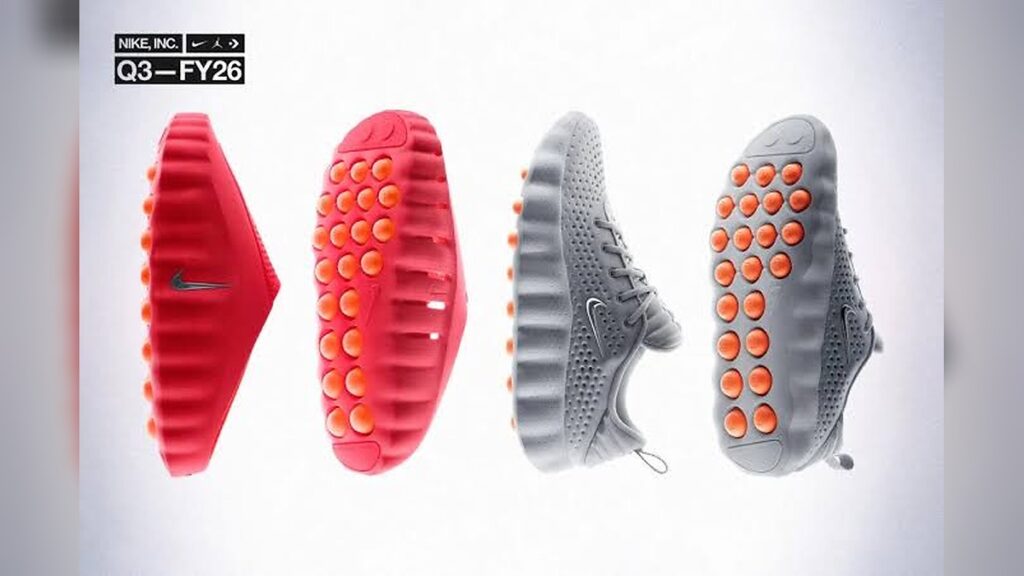
Nike’s efforts to rebuild momentum are proving more difficult than expected, with the sportswear giant still battling a mix of internal challenges and growing competition.
While the company reported a handful of encouraging developments in its latest quarterly earnings, weaker performances in key markets and a series of self-inflicted mistakes continue to slow its path back to sustained growth.
North America Offers a Rare Bright Spot
One of the few positives in Nike’s latest financial results came from North America, where revenue increased by 3%.
The improvement was largely driven by stronger footwear sales and the company’s renewed partnerships with wholesale retailers after previously reducing its reliance on them.
The gains suggest Nike’s strategy of rebuilding relationships with retail partners is beginning to show results, although the overall recovery remains uneven.
China and Competition Continue to Weigh on Performance
Outside North America, Nike’s business continues to face significant pressure.
Sales in China fell by 12% compared with the same period last year as more consumers shifted toward domestic brands.
At the same time, Nike has continued to lose ground in the fast-growing running shoe market, where competitors such as On and Hoka have attracted increasing numbers of customers.
The company also experienced another difficult quarter for Converse, whose declining sales added to the broader concerns surrounding Nike’s performance.
Executives Warn of Challenging Months Ahead
Company executives struck a cautious tone when outlining expectations for the current quarter.
Chief Financial Officer Matthew Friend said consumers remain under financial pressure across many regions, making the broader economic environment difficult for retailers.
The company also issued conservative financial guidance, signalling that management expects challenges to persist despite recent improvements.
Some Problems Are of Nike’s Own Making
While economic uncertainty has affected consumer spending worldwide, analysts argue that Nike’s own decisions have made its recovery more complicated.
One of the company’s most criticised marketing campaigns came before the Boston Marathon, when an advertisement was widely interpreted as mocking slower runners.



Although elite athletes remain central to Nike’s brand image, recreational runners make up a significant portion of its customer base, leading many observers to question the campaign‘s messaging.
Operational Errors Raised More Questions
Nike also faced criticism ahead of the FIFA World Cup after many stores across the United States reportedly received insufficient merchandise.
The supply issues prevented retailers from fully meeting customer demand during one of the biggest sporting events of the year and raised concerns among investors about the company’s execution and inventory planning.
Those operational shortcomings have added to doubts about Nike’s ability to consistently deliver products when demand is highest.
Reduced Financial Disclosure Sparks Investor Concerns
The latest earnings report generated additional scrutiny after Nike reduced the amount of information it routinely shares with investors.
Among the changes was the removal of sales figures broken down by gender.
Some analysts viewed the decision as a worrying signal, particularly because expanding its women’s business has been one of Nike’s long-term strategic priorities.
The reduced transparency prompted fresh questions about whether progress in that area has stalled.
Investors Remain Skeptical
Nike’s share price fell following the earnings announcement and remains far below its previous highs.
The stock has dropped roughly 75 percent from its record level reached five years ago and has lost around half its value since Elliott Hill returned as chief executive in 2024.
Market analysts say those declines reflect growing concerns that Nike’s turnaround could take considerably longer than originally anticipated.
Elliott Hill Tries to Rebuild the Brand
Hill, a longtime Nike executive who came out of retirement to lead the company, has focused much of his strategy on reversing several decisions made under former CEO John Donohoe.
His priorities include rebuilding relationships with major retail partners such as Foot Locker, placing renewed emphasis on performance sportswear instead of lifestyle fashion, and accelerating product innovation.
Hill has also acknowledged publicly that the pace of the recovery has been slower than he had hoped, telling employees earlier this year that he wanted the company to move beyond discussing repairs and return to inspiring growth.
China Remains One of Nike’s Biggest Challenges
Restoring growth in China remains one of Hill’s most urgent priorities.
Beyond declining sales, weaker demand has left Nike with excess inventory, putting additional pressure on profit margins.
The company plans to tailor more of its products to local consumer preferences while responding more quickly to changing trends in the Chinese market.
Management believes adapting to regional tastes will be essential if Nike hopes to regain lost market share.
Consistency Will Determine the Turnaround
Despite the obstacles, Nike insists its long-term recovery strategy remains intact.
Hill says future success will depend on consistently delivering better products, improving execution across every part of the business and rebuilding customer confidence season after season.
For now, however, the company faces the immediate challenge of eliminating costly mistakes that continue to undermine its progress as it works toward a lasting comeback.

