
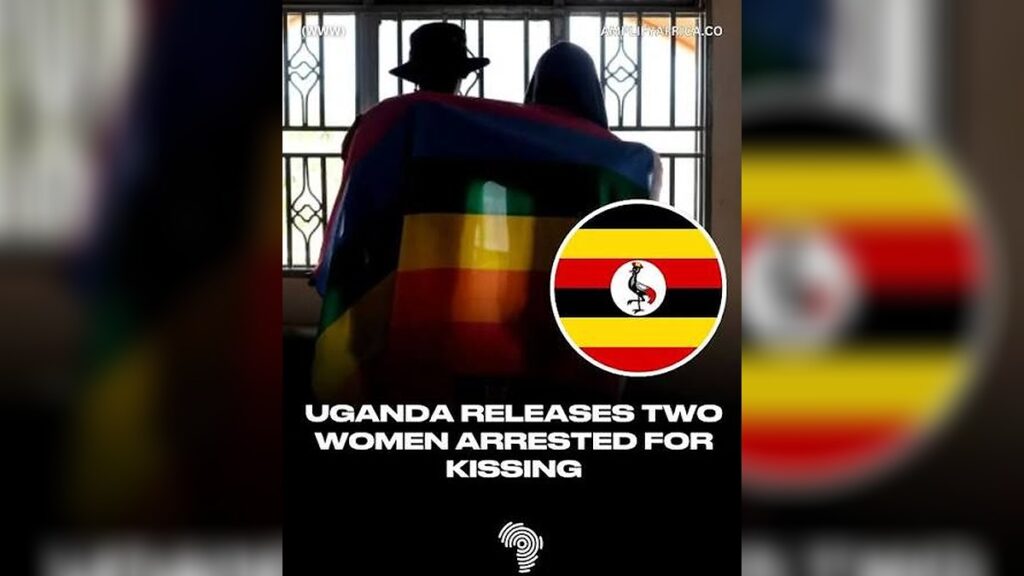
Ugandan prosecutors have withdrawn criminal charges against two women who were arrested earlier this year after they were accused of kissing in public under the country’s controversial anti-homosexuality legislation.
Officials from the Office of the Director of Public Prosecutions confirmed on Friday that the case would no longer proceed in court, bringing an end to months of legal uncertainty for the pair, both of whom are in their 20s.
Deputy spokesperson Irene Nakimbugwe said the prosecution had formally decided to discontinue the case.
Arrest Stemmed From Neighbours’ Complaint
The women were detained in February in the northwestern city of Arua after neighbours reported them to authorities.
According to police at the time, residents photographed the pair and alleged they were involved in what officers described as “same-sex orgies.”
The complaint prompted an investigation and eventually led to their arrest under Uganda’s Anti-Homosexuality Act.
The case quickly drew attention from human rights organizations, which argued that the women were being unfairly targeted.
Lawyer Says Charges Should Never Have Been Filed
Human rights advocate Frank Mugisha welcomed the prosecutors’ decision but insisted the matter should never have reached the courts.




He argued that a public kiss should not be treated as a criminal offence and said no individual should face legal action because of their sexual orientation or the person they love.
Mugisha also expressed hope that the withdrawal signals a broader shift in how similar cases are handled, urging authorities to review and dismiss other prosecutions brought under the same legislation.
He renewed calls for Uganda’s Anti-Homosexuality Act to be repealed.
One of the World’s Toughest Anti-LGBTQ Laws
Uganda’s Anti-Homosexuality Act, enacted in 2023, remains one of the strictest laws targeting LGBTQ people anywhere in the world.
The legislation allows life imprisonment for consensual same-sex relationships, while offences classified as “aggravated homosexuality” can carry the death penalty.
Its introduction sparked widespread criticism from international human rights organizations, foreign governments and global institutions.
Rights Groups Raise Concerns Over Abuse of the Law
Activists have repeatedly argued that the legislation extends beyond criminal prosecution and has become a tool for intimidation, blackmail and extortion against members of Uganda’s LGBTQ community.
Uganda is a socially conservative nation where Christianity is the dominant religion, and campaigners say the law has contributed to increased fear and discrimination.
Rights organizations continue to argue that LGBTQ individuals face heightened risks of harassment following the law’s enactment.
International Backlash Followed the Legislation
The Anti-Homosexuality Act prompted strong condemnation from the United Nations and several Western governments after it was signed into law.
The controversy also affected Uganda’s relationship with international financial institutions.
The World Bank suspended new funding to the country in response to the legislation, although financial support resumed in the middle of 2025.
While the charges against the two women have now been dropped, campaigners say the case underscores the continuing legal and social challenges faced by LGBTQ people in Uganda under the existing law.

