
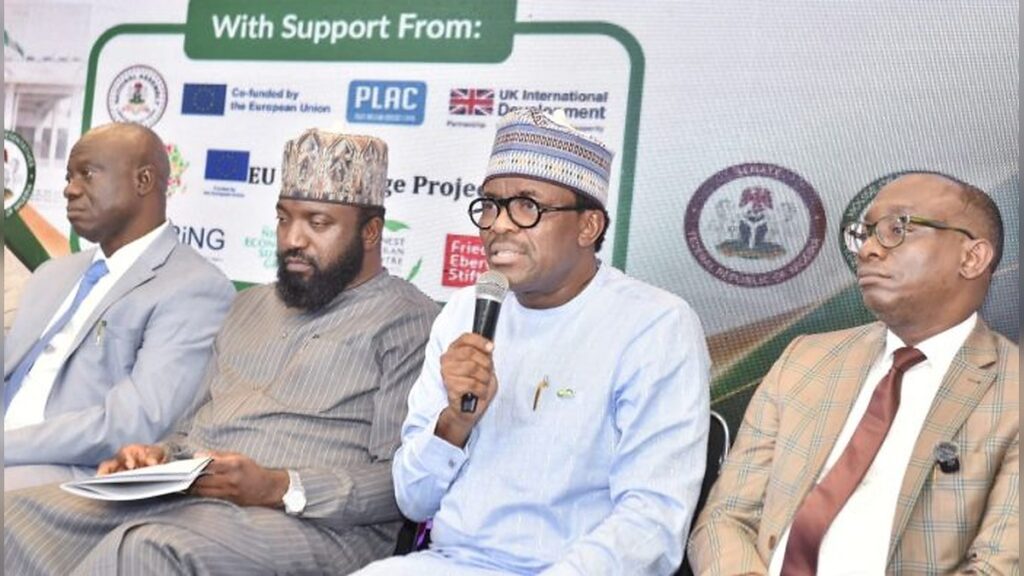
The Bureau of Public Procurement (BPP) has urged closer cooperation between the National Assembly and the Executive to improve accountability in government projects, eliminate wasteful spending, and ensure Nigerians receive better value from public contracts.
The appeal was made by the Director-General of the Bureau, Dr. Adebowale Adedokun, during the 2026 National Assembly Open Week in Abuja.
The event, themed “Three Years of the 10th National Assembly: Advancing Transparency, Inclusion and Reform,” brought together lawmakers, government officials, civil society groups, and development partners to examine legislative progress and strengthen public participation.
Procurement Described as a Driver of National Development
Speaking during a panel discussion on strengthening legislative oversight of procurement, Adedokun said public procurement should be viewed as more than an administrative process, describing it as a strategic instrument capable of accelerating national development when properly managed.
He explained that effective implementation of Nigeria’s procurement laws would improve project execution, reduce waste, and ensure that government spending produces measurable benefits for citizens.
According to him, stronger compliance with existing legislation is essential if public projects are to deliver real value.
Capacity Gaps and Weak Planning Hindering Project Delivery
Adedokun identified several factors that continue to undermine successful project implementation across government.
Among the challenges he highlighted were insufficient capacity among public officials, weak coordination between oversight institutions, inadequate planning, and inconsistencies between budget proposals and actual project implementation.
He noted that frequent changes in legislative membership every election cycle often create knowledge gaps, making continuous training necessary to help lawmakers effectively oversee procurement activities.
BPP Calls for Closer Cooperation With National Assembly Committees
The BPP chief stressed the importance of stronger collaboration between the Bureau and relevant committees of the National Assembly.
He revealed that the Bureau regularly submits procurement audit reports covering government ministries, departments, and agencies, arguing that lawmakers could use these reports more effectively to monitor contract awards, evaluate contractor performance, and improve accountability across the public sector.
He maintained that better information sharing between institutions would strengthen oversight and reduce procurement-related abuses.
Budgeting Practices Raise Fresh Concerns
Adedokun also questioned aspects of Nigeria’s budgeting process, saying inconsistencies continue to affect project delivery.
Using examples from the 2026 budget, he noted that some projects listed as ongoing appeared to lack evidence of actual implementation.
He also pointed to instances where projects were assigned to ministries without the technical expertise required to execute them, warning that such mismatches significantly increase the likelihood of failure.




According to him, successful procurement begins with proper planning and realistic budgeting.
Greater Focus Needed on States and Local Governments
While much public attention remains fixed on federal projects, the BPP Director-General argued that greater scrutiny should be directed toward state and local government spending.
He observed that a significant share of government allocations now goes to sub-national governments and questioned why the Federal Government continues to fund projects such as boreholes and street lighting that could be handled at lower levels of government.
He suggested that strengthening oversight beyond the federal level would improve the overall impact of public expenditure nationwide.
Procurement Without Planning Violates the Law
Adedokun reminded stakeholders that Nigeria’s Public Procurement Act prohibits the award of contracts that have not been properly planned.
He warned against approving projects that are absent from officially approved development plans, stressing that procurement decisions should always be based on clear planning frameworks rather than ad hoc budget allocations.
Returning to these basic principles, he said, would significantly reduce abandoned projects and improve project completion rates.
Civil Society Has Important Monitoring Role
The BPP boss acknowledged that the Bureau cannot physically supervise every government project across the country.
He therefore encouraged greater participation by civil society organisations, noting that existing laws already empower them to observe procurement processes, monitor bid openings, and demand transparency from public institutions.
He described citizen oversight as an important complement to government monitoring efforts.
Funding Model Contributes to Abandoned Projects
Adedokun also questioned the way many government projects are financed, arguing that inadequate annual funding often stretches projects far beyond their intended completion dates.
He pointed out that projects expected to take only a few years frequently receive funding in small annual allocations, while others receive no funding despite approaching completion.
Such practices, he warned, create delays, increase costs, and contribute to the widespread problem of abandoned public projects.
Preventive Collaboration Better Than Future Investigations
The Director-General cautioned public officials that legal accountability often comes after they leave office, urging lawmakers and government agencies to prevent violations before they occur.
He advocated closer collaboration between the Legislature and the Executive throughout the budgeting and procurement process, recalling that previous administrations required ministries to submit performance reports before presenting new budget proposals.
According to him, that approach improved transparency and encouraged better use of public funds.
Bureau Pursuing Wide-Ranging Procurement Reforms
Adedokun disclosed that the Bureau is currently implementing 23 reform initiatives aimed at modernising Nigeria’s procurement system.
These reforms cover areas including e-procurement, contractor registration, price intelligence, project monitoring, and sustainable procurement practices.
He said the Bureau is seeking stronger legislative backing to update the Public Procurement Act 2007 and believes cooperation with lawmakers will help restore public confidence in government contracting.
Sustainability and Accessibility Added to Procurement Standards
The BPP also announced new measures requiring government agencies to incorporate accessibility for persons with disabilities into procurement planning and bidding documents.
Adedokun explained that agencies will now be expected to demonstrate how proposed projects comply with disability legislation before contracts are approved.
In addition, sustainability considerations are being integrated into procurement procedures, with ministries expected to show how projects will create jobs, support businesses, and contribute to long-term national development before contracts can proceed.
He concluded by reaffirming the Bureau’s commitment to working with the National Assembly and other stakeholders to strengthen transparency, improve project delivery, and build greater public trust in Nigeria’s procurement system.

