
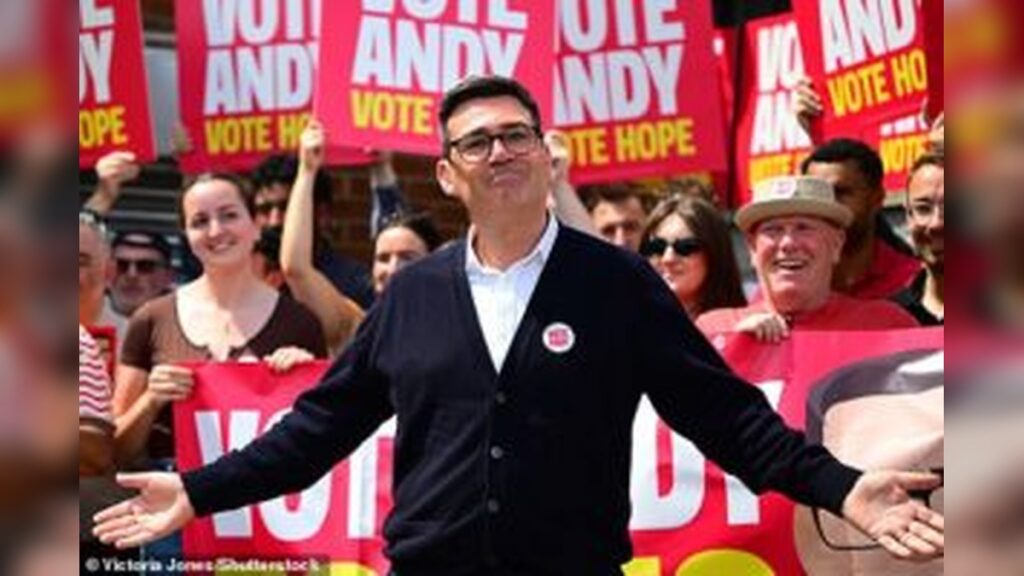
Andy Burnham’s growing popularity has placed him at the center of British politics, with many Labour supporters viewing the Greater Manchester mayor as the party’s next leader and a potential future Prime Minister.
Despite his rising profile, critics argue that his political career has received far less scrutiny than expected.
They point to a record marked by policy reversals and unanswered questions over where he truly stands on many of the country’s biggest issues.
A Political Career Built on Reinvention
Burnham’s path to prominence has been anything but straightforward.
After unsuccessful bids for the Labour leadership in 2010 and 2015, he left Westminster in 2017 to become Mayor of Greater Manchester.
That role transformed his public image, allowing him to rebuild his reputation through high-profile regional campaigns and become one of Labour’s most recognizable figures outside Parliament.
Supporters praise his leadership style, while opponents argue that his popularity has often overshadowed inconsistencies in his political positions.
Brexit Position Has Shifted Over Time
One of the most debated aspects of Burnham’s record is his stance on Brexit.
He has repeatedly spoken positively about closer ties with Europe and has previously expressed hope that Britain could eventually return to the European Union.
At the same time, he has also argued that the country should move beyond endless Brexit debates, particularly when addressing voters in Leave-supporting constituencies.
The mixed messaging has led critics to question whether his position is guided more by political circumstances than firm conviction.
Welfare and Public Spending Remain Key Talking Points
Burnham has consistently voiced concern about welfare cuts, especially where disabled people are concerned.
However, he has also indicated that reducing welfare spending could be considered if additional funding is needed for national defence.




His broader economic agenda includes increased investment in public services, affordable housing and social care, although questions remain over how those commitments would be financed.
While he now supports Labour’s fiscal rules, critics argue that many of his spending ambitions could ultimately require higher taxation.
Tax Reform Could Be Central to His Agenda
Observers believe a Burnham-led government could pursue significant tax reforms.
Among the proposals linked to his political outlook are higher taxes on wealth, changes to property taxation, increased capital gains tax rates, and the possible return of a higher top income tax band for the country’s highest earners.
He has also supported discussions around replacing inheritance tax with a national care levy designed to help fund the social care system.
Immigration Views Have Evolved
Burnham’s position on immigration has also changed over time.
Earlier in his career, he supported broader access to benefits for some migrants, but he has since adopted a tougher tone on immigration enforcement, including backing faster processing and removal of failed asylum applicants.
These shifts have prompted critics to accuse him of attempting to balance competing pressures within Labour’s traditional support base.
Debate Continues Over Social Issues
His views on issues such as transgender rights and women’s spaces have also evolved.
After previously expressing strong support for transgender rights, Burnham has more recently backed legal protections prioritizing single-sex spaces for biological women following a Supreme Court ruling.
He has likewise adjusted his public messaging on the Black Lives Matter movement and compensation for WASPI women, decisions that have fueled accusations of frequent policy reversals.
Defence, Israel and Constitutional Reform
Burnham has called for increased defence investment but has offered limited detail on where spending reductions would be made elsewhere to finance those commitments.
On foreign policy, he has supported efforts to combat antisemitism while also advocating an early ceasefire in Gaza during the conflict, placing him somewhere between competing factions within Labour.
Domestically, he remains a strong supporter of devolving greater powers away from Westminster, arguing that local and regional governments should have greater authority over public services and economic decision-making.
Public Ownership Still Forms Part of His Vision
Another area where Burnham differs from some political rivals is his continued support for greater public control of essential services.
He has frequently highlighted Greater Manchester’s bus network as an example of successful public intervention and is widely seen as supportive of stronger state oversight—or eventual public ownership—of sectors such as water and other utilities.
Leadership Ambitions Bring Greater Examination
As Burnham’s national influence continues to grow, so too does the focus on his political record.
Supporters view him as an experienced leader capable of reconnecting Labour with voters across Britain, while critics argue that his frequent changes in position raise important questions about consistency and long-term leadership.
With expectations continuing to rise, his policy platform is likely to face even greater examination as his political future unfolds.

