
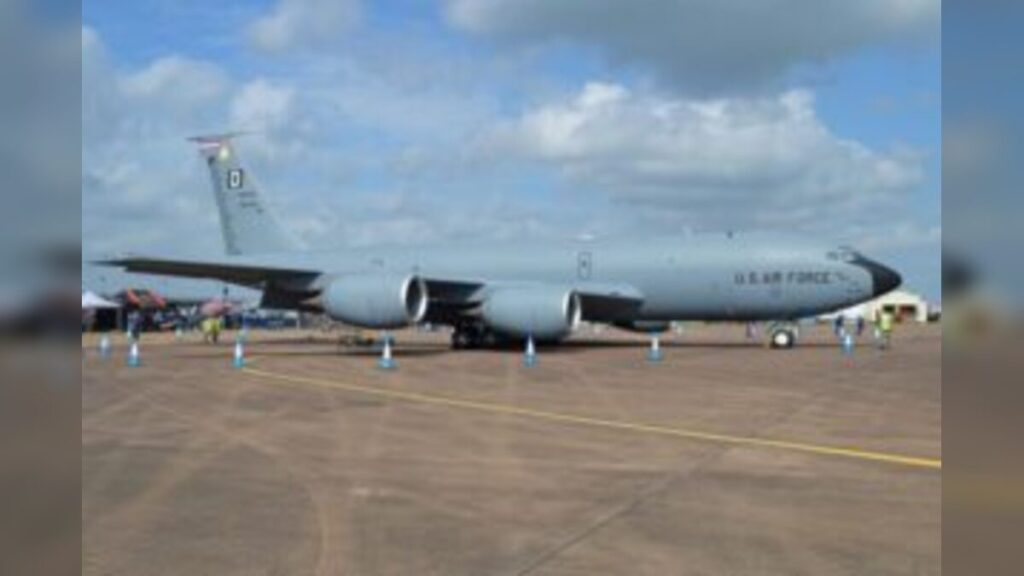
On Sunday, March 15, the United States took a significant step in its Middle East operations by transferring three Boeing KC-135 Stratotanker aircraft to Romania.
The deployment marks the first arrival of US aircraft in the country following Romania’s approval for a temporary troop presence in support of ongoing operations in the Middle East.
According to Romanian media outlet Digi24, the KC-135s landed safely, signaling the start of a broader US military presence that will include personnel and advanced surveillance equipment.
Romania Approves US Military Presence
The deployment comes after Romania formally agreed to the US request to station troops on its soil.
These forces are intended to participate indirectly in Middle East operations, providing logistical support, refueling capabilities, and enhanced surveillance.
The report notes that radar systems, sensors, and hundreds of US military personnel are expected to arrive in Romania soon, positioning the country as a strategic hub for operations connected to Iran.
Troop Numbers and Air Base Plans
Sources cited by Bloomberg indicate that the US could deploy up to 500 personnel to Romania.
Additionally, Romania may authorize the temporary use of fighter aircraft at the Mihail Kogălniceanu Air Base, located on the Black Sea coast.
This would allow the US to conduct air operations and rapid response missions if required, reinforcing NATO’s eastern flank and operational readiness.
Strategic Importance of Romania
Romania’s location on the Black Sea provides a strategic advantage for monitoring regional developments and supporting operations in the Middle East.
The deployment of refueling tankers enhances the US Air Force’s operational range, allowing fighter jets and other aircraft to maintain prolonged missions without returning to home bases.
Experts note that this move also underscores Romania’s growing role within NATO as a forward-operating location capable of supporting large-scale coalition efforts.




Impact and Consequences
-
The arrival of KC-135 aircraft increases US operational flexibility in the Middle East, potentially enabling longer sorties and faster response times.
-
Romania becomes a key logistical hub, which could make it a target in geopolitical escalations related to Iran.
-
Regional neighbors may closely monitor the deployment, interpreting it as a signal of US commitment to the region.
-
NATO’s eastern flank is strengthened, reassuring member states amid heightened Middle East tensions.
What’s Next?
In the coming weeks, additional aircraft, radar systems, and personnel are expected to arrive in Romania.
Key developments to watch include:
-
The official approval and deployment of US fighter aircraft at Mihail Kogălniceanu Air Base.
-
Coordination between Romanian forces and US personnel for joint operational readiness.
-
Potential political or diplomatic responses from Iran and other regional actors.
-
The impact of the deployment on NATO strategy and regional security dynamics.
Summary
The United States has positioned three KC-135 Stratotankers in Romania, marking the start of an expanded military presence intended to support operations in the Middle East.
Romania’s approval for temporary troop deployment and potential fighter aircraft use at the Mihail Kogălniceanu Air Base highlights its strategic significance within NATO and underscores growing US-Romania military cooperation.
Bulleted Takeaways
-
Three US KC-135 Stratotanker aircraft landed in Romania on March 15, 2026.
-
Romania approved temporary US troop deployment to support Middle East operations.
-
Radar systems, surveillance equipment, and hundreds of personnel are expected to arrive soon.
-
Up to 500 US troops could be stationed in Romania, with fighter aircraft potentially operating from Mihail Kogălniceanu Air Base.
-
Romania’s strategic Black Sea location strengthens NATO’s eastern flank and operational reach.
-
The deployment enhances US logistical capabilities, including mid-air refueling for extended missions.
-
Regional and geopolitical reactions will be closely monitored in the coming weeks.

