
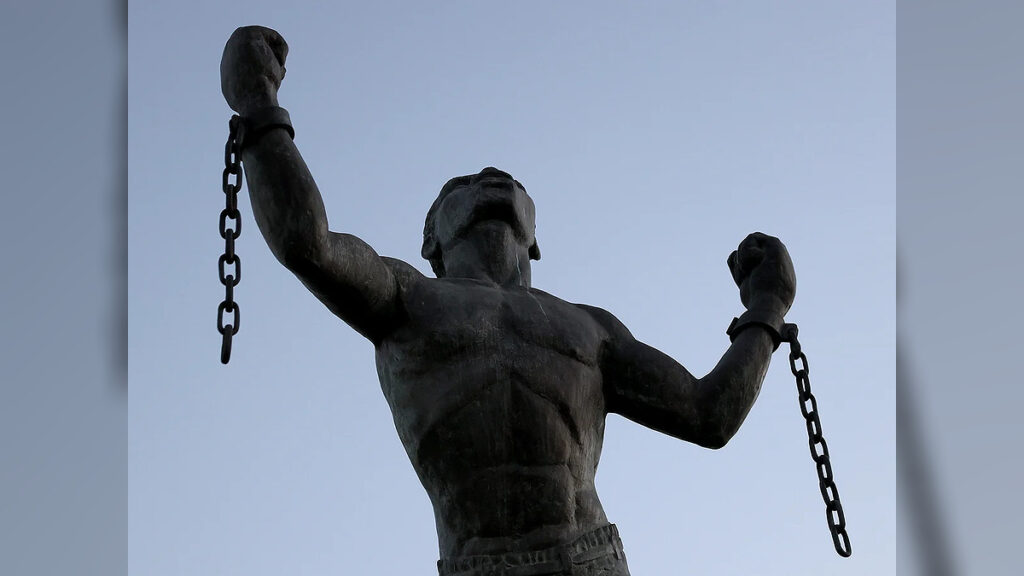
Britain should consider installing more statues, artworks and memorials celebrating the contributions of people of African descent as part of efforts to address the legacy of the transatlantic slave trade, according to new guidance from a United Nations racial discrimination committee.
The recommendations have reignited debate over how Britain and other nations that benefited from slavery should acknowledge the historical harm and whether reparatory measures should extend beyond direct financial compensation.
UN committee calls for public recognition of historical wrongs
The guidance was issued by the UN Committee on the Elimination of Racial Discrimination (CERD), an 18-member body made up of independent human rights experts elected for four-year terms.
It argues that reparatory justice should include measures capable of changing public institutions and society, rather than being limited to monetary payments.
Among the proposals is the creation of statues, artworks and other commemorative installations in public spaces that recognise the achievements and contributions of people of African descent.
The guidance says public areas should both celebrate those contributions and acknowledge the actions of individuals and institutions that supported or benefited from historical atrocities.
Memorials and apologies included in wider reparations plan
CERD also outlined a broader range of measures that could form part of what it describes as reparatory justice.
These include investigations into historical abuses, establishing the truth about past events, official acknowledgements, public apologies, acceptance of responsibility and commemorations through memorials or the dedication of public spaces.
The committee’s recommendations come roughly six months after UN member states supported calls for reparations connected to the legacy of slavery and racial injustice.
The guidance was largely developed by CERD panellists including American lawyer Gay McDougall and Liberian legal expert Pela Boker-Wilson.
Britain’s slavery monuments have already become a flashpoint
The recommendations are particularly significant in Britain, where monuments associated with slavery and colonialism became the focus of intense protests during the Black Lives Matter demonstrations of 2020.
One of the most prominent incidents occurred in Bristol when demonstrators pulled down a statue of Edward Colston, a 17th-century merchant and slave trader, before pushing the monument into the city’s harbour.




The statue had stood in Bristol since 1895.
Colston accumulated considerable wealth through his involvement in the slave trade, while also using some of his fortune to fund schools and almshouses in the city.
Images and footage from the protest showed demonstrators using ropes to bring down the statue before celebrating around the fallen monument.
The episode became one of Britain’s most controversial confrontations over how the country should remember figures whose wealth or influence was connected to slavery.
UN also presses governments on education and hate speech
CERD’s guidance goes beyond statues and memorials, calling for governments to confront misinformation and prejudice linked to the history of transatlantic slavery.
Britain and other countries are urged to act early against hate speech and xenophobia while ensuring that inaccurate narratives about slavery and its continuing effects on people of African descent are challenged.
The committee also recommends that schools provide balanced accounts of slavery, its consequences and the historical and contemporary experiences of people of African descent.
Royal links to slavery could face renewed scrutiny
The publication comes as attention turns towards the King’s planned autumn tour of the Caribbean, where the British monarchy’s historical connections to slavery could become a subject of renewed discussion.
Researchers have been examining the extent to which the Royal Family was involved in, supported or benefited from the transatlantic slave trade, including through its links to the Royal African Company.
The issue has previously generated calls for Britain to confront the monarchy’s historical associations with the slave trade.
African and Caribbean nations intensify reparations demands
The UN recommendations also arrive amid increasingly forceful demands from African and Caribbean countries for reparations from former colonial powers.
In March, Ghanaian President John Dramani Mahama used an address at the UN in New York to criticise what he described as the silence of European countries that became wealthy through the forced removal and enslavement of millions of Africans.
Mahama presented a resolution supported by the African Union and Caribbean states seeking recognition of the transatlantic slave trade as a grave crime against humanity.
He rejected arguments that modern standards should not be applied when assessing historical slavery, insisting that the practice was morally wrong regardless of the era in which it occurred.
Reparations debate could extend far beyond monuments
The financial dimension of the debate remains highly contentious.
In 2023, a UN judge argued that Britain’s potential liability for reparations could exceed £18 trillion, reflecting the enormous scale of the damage associated with the slave trade.
The latest CERD guidance, however, emphasises that reparations should not be understood solely as a financial calculation.
Its recommendations instead envisage a combination of public recognition, education, memorialisation, institutional reform and other measures intended to address the enduring legacy of slavery and racial discrimination.
