
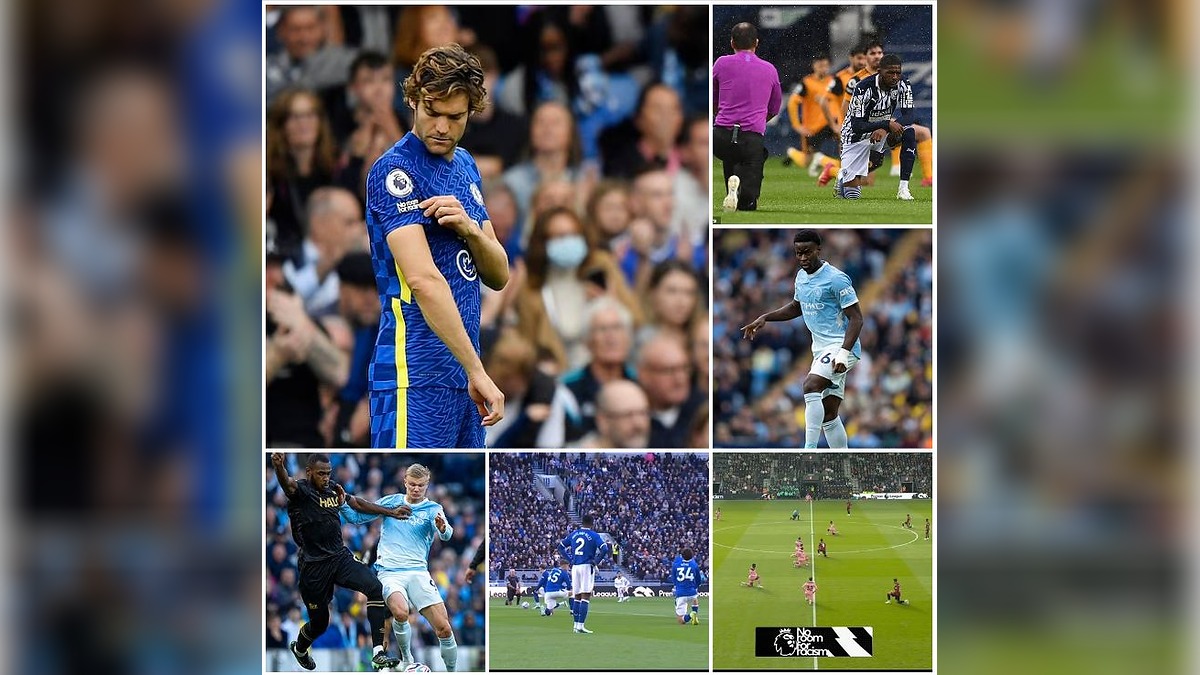
The Premier League’s anti-racism gesture has come under renewed scrutiny after several players refused to take the knee before their matches, while supporters booed the gesture at Leeds United.
Bournemouth players Rayan and Tyler Adams remained standing before their side’s match against Sunderland, despite their teammates participating in the demonstration.
Everton’s Ainsley Maitland-Niles also stood while other players took the knee ahead of his team’s match against Chelsea on Saturday.
Meanwhile, Manchester City defender Marc Guehi and Ipswich Town’s Issa Diop did not kneel before their teams’ encounter at the Etihad Stadium.
The players have not publicly explained their reasons for declining to participate in the latest demonstrations, which coincided with the start of the Premier League’s annual No Room For Racism campaign.
Questions Raised Over the Impact of Taking the Knee
The latest incidents have renewed debate about whether taking the knee remains an effective way to communicate football’s opposition to racism.
Several players have previously questioned the gesture, including former Crystal Palace forward Wilfried Zaha and striker Ivan Toney.
In 2021, Zaha described taking the knee as “degrading”, explaining that he preferred to stand proudly rather than participate in the demonstration.
“I feel like taking the knee is degrading, because growing up my parents just let me know that I should be proud to be Black no matter what and I feel like we should just stand tall,” he said.
Toney also criticised the gesture, saying: “We are being used as puppets.”
The latest refusals follow previous instances in which Premier League players chose not to kneel, highlighting continuing differences over how football should demonstrate its opposition to discrimination.
Players Have Previously Chosen Alternative Gestures
The decision not to take the knee is not new in English football.
Former Chelsea defender Marcos Alonso previously chose to point to the Premier League’s No Room For Racism badge on his sleeve instead of kneeling alongside his teammates.
Former Burnley striker Dominic Calvert-Lewin also declined to participate before a match against Leeds last year, while Crysencio Summerville has similarly been associated with the decision to remain standing.
Ahead of the 2021-22 season, Luton Town indicated that their players would stand together in the centre circle rather than take the knee.
At the time, the gesture had been performed before every Premier League match. That practice ended in August 2022, when the league decided to reserve it for selected fixtures during the No Room For Racism campaign.




Premier League captains subsequently agreed that players would continue taking the knee twice each season.
Booing of Gesture Previously Condemned
The gesture has also faced opposition from sections of football crowds, with some supporters booing players who participate.
In 2021, former Burnley captain Ben Mee criticised fans who jeered the demonstration, saying their behaviour undermined the message players were trying to communicate.
“It gets to the point where if you’re booing, it doesn’t look good on those individuals that are booing,” Mee said at the time.
He added that players wanted supporters to back their efforts to challenge discrimination across football.
The latest incidents included reports of the gesture being loudly booed at Leeds United, adding to the debate surrounding its reception among supporters.
Premier League Continues No Room For Racism Campaign
The Premier League has reiterated its commitment to tackling discrimination and promoting diversity as part of its No Room For Racism initiative.
Players and staff have the opportunity to take part in the pre-match gesture during the next two gameweeks in October.
The campaign began in the United Kingdom in 2020, following the death of George Floyd in police custody in the United States, which sparked widespread protests and renewed attention to the Black Lives Matter movement.
The league later adjusted the frequency of the gesture, moving away from its use before every match to selected occasions during the season.
Lionesses Also Questioned the Effectiveness of Taking the Knee
Debate over the gesture has extended beyond the Premier League.
England’s women’s team, the Lionesses, decided not to take the knee before their Euro 2025 semi-final against Italy following racist abuse directed at defender Jess Carter on social media.
Captain Lucy Bronze said the team had questioned whether the gesture was still delivering a sufficiently strong message while players continued to experience racist abuse.
She explained that the decision had been driven by discussions within the squad.
Bronze said the team wanted to make a further statement that racism remained a problem requiring action in both football and wider society.
She added that more needed to be done, although she did not identify a specific alternative measure.
Anti-Discrimination Organisation Defends the Gesture
Piara Powar, head of the international anti-discrimination organisation Fare, questioned the Lionesses’ decision to stop taking the knee.
Speaking to BBC Sport, Powar acknowledged that players had the right to decide whether to participate but argued that the gesture remained an important anti-racism statement.
“The taking of the knee is a powerful anti-racist act and this England team have shown leadership across Europe in taking it for so long,” he said.
Powar added that strong actions were needed to address discrimination.
Guehi Previously Drew Attention Over LGBTQ Rights Armband
Manchester City defender Guehi has previously attracted attention for his stance on social issues.
In 2024, while captaining Crystal Palace, he wrote “I love Jesus” on a modified captain’s armband distributed to Premier League captains as part of a campaign promoting LGBTQ rights.
His decision to remain standing before the latest Manchester City match has now placed him among the players who declined to take part in the anti-racism demonstration.

