
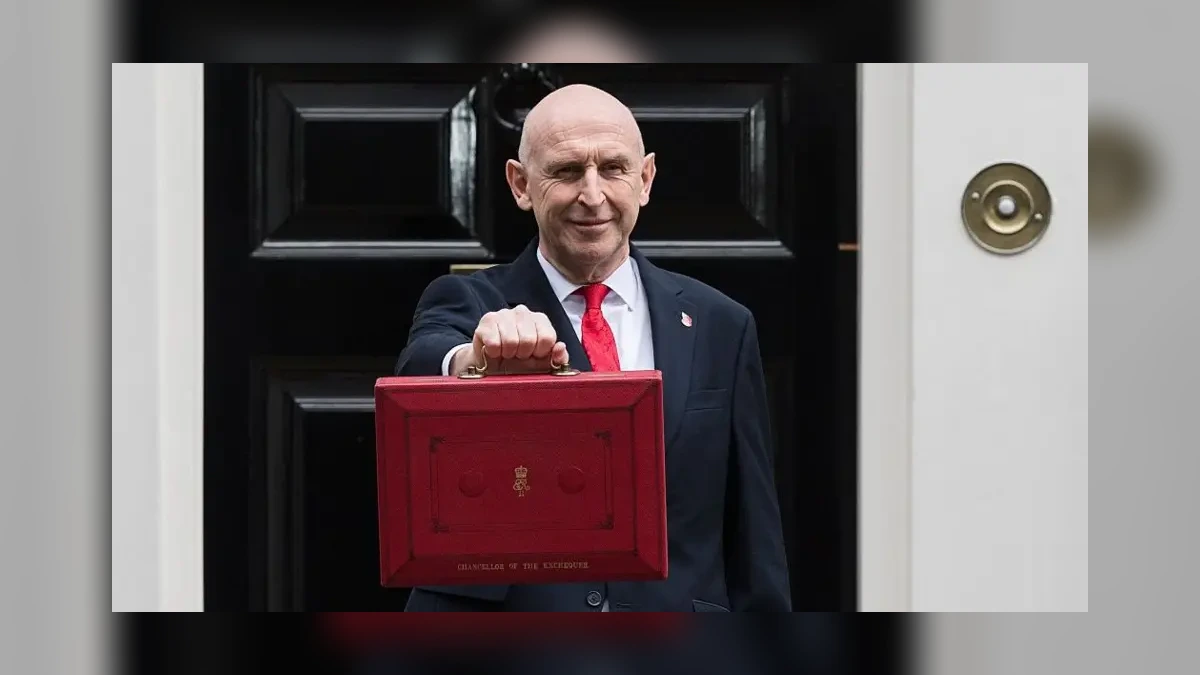
Chancellor John Healey has presented a Budget containing 98 separate measures, with most expected to have a relatively limited impact on government finances.
The proposals are outlined in the 150-page Red Book, which sets out the measures the Treasury plans to introduce and their projected costs. The accompanying Economic and Fiscal Outlook was published by the Office for Budget Responsibility (OBR).
The number of measures exceeds what is normally included in a Budget and is higher than the totals recorded in either of Rachel Reeves’ previous Budgets.
However, the overall package represents a smaller change in taxation and public spending than several recent Budgets, with the government focusing on a series of targeted interventions.
Taxes Target Savers, Landlords and Banks
The Budget introduces additional taxes affecting savers, landlords and banks as the government seeks revenue without increasing income tax, National Insurance or VAT.
Labour had committed not to raise those three major taxes, limiting the options available to the Treasury if it determined that further revenue was necessary.
The approach means targeting specific sectors, potentially generating opposition from affected groups. Previous changes to inheritance tax proposed by Rachel Reeves, for example, prompted strong criticism from farmers.
The government’s latest measures therefore distribute some of the additional tax burden across selected industries rather than increasing the main taxes on earnings and consumption.
Economic Outlook Remains Uncertain Amid High Debt and Inflation
The OBR said the UK’s economic and fiscal position remained challenging, noting that further adverse developments had occurred during the year, including the conflict in the Middle East.
The watchdog also warned that the outlook for the economy and public finances remained uncertain, with significantly better and worse outcomes considered broadly equally probable.




The Budget documents point to signs of resilience in the UK economy. However, national debt, the overall tax burden, inflation and interest rates remain high, while further international shocks could worsen economic conditions.
Developments in the Middle East and the outcomes of political events in the United States and Israel were among the external factors that could influence the outlook.
Government Offers Targeted Cost-of-Living Support
The Budget includes measures intended to ease financial pressure on households and provide relief to selected groups.
Luke Tryl, UK director of the More in Common think tank, said the package targeted sectors including banks, landlords, gambling companies and vape shops, with the proceeds supporting cost-of-living measures, small-business rate relief and arrangements intended to ensure the state pension is not taxed.
Tryl also highlighted support for households in Council Tax bands A to D.
He said extending assistance to those households could help the government avoid criticism that energy support was being directed only towards people receiving benefits while working households continued to face financial pressure.
Opposition Parties Criticise Budget as Limited
Opposition parties criticised the Budget from different political perspectives, with their responses centring on the limited scale of the measures.
The government has argued that the Budget forms part of a broader programme being developed by the prime minister and chancellor.
Other elements of that programme include plans to help young people enter employment, changes to benefits expected before Christmas, proposals concerning the UK’s long-term relationship with the European Union and a 10-year vision from Andy Burnham.
The government’s position is that the Budget should be considered alongside these wider policy plans rather than as a standalone package.
Chancellor Faces Limits on What Budget Can Deliver
Healey’s Budget comes as the government faces pressure over both the state of public finances and the financial difficulties experienced by many households.
The combination of high debt, elevated living costs and uncertainty over future economic conditions limits the scope for major interventions.
The measures announced by the chancellor are intended to address specific pressures, although their overall effect on household finances and the wider economy will depend on how the policies are implemented and how economic conditions develop.
The package has been characterised as a cautious Budget, with an emphasis on targeted measures rather than a major overhaul of taxation and public spending.

