
U.S. Central Command says American forces have intensified enforcement of what it describes as a “steel wall” blockade against Iran, with dozens of commercial vessels redirected or subjected to other forms of intervention.
According to CENTCOM, the figures as of August 12 include 59 commercial vessels redirected, three disabled and two boarded as U.S. forces work to enforce the blockade.
USS George H.W. Bush Supports Operations
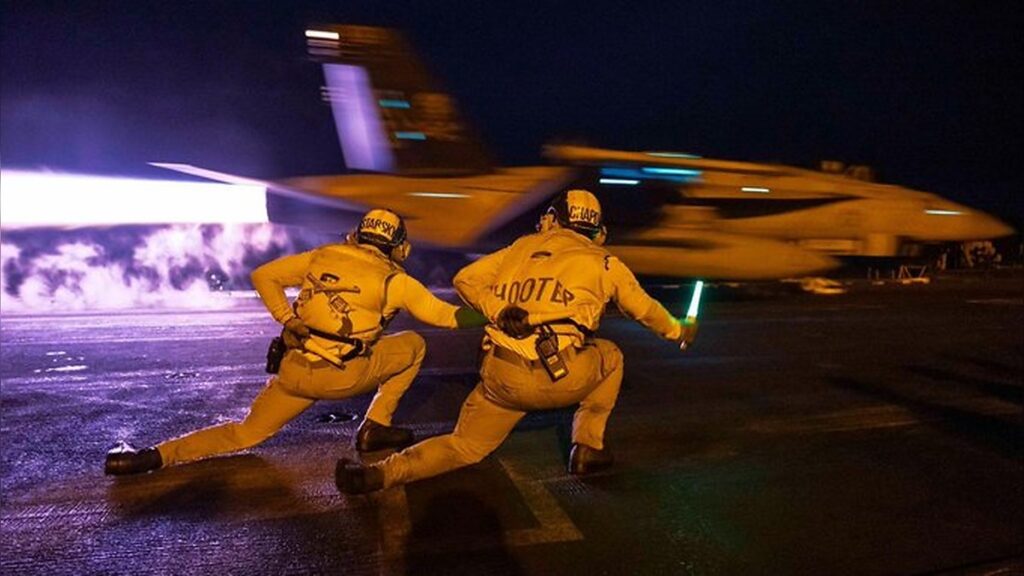
The U.S. Navy’s USS George H.W. Bush (CVN 77) is supporting the maritime operation in regional waters, according to CENTCOM.
The command released an image showing an F/A-18 fighter jet launching from the aircraft carrier’s flight deck as the ship participates in the ongoing mission.
The carrier’s presence provides the United States with a significant airpower capability while naval forces conduct operations in the region.
Commercial Shipping Comes Under Scrutiny
The reported enforcement measures have directly affected commercial maritime traffic.



CENTCOM said U.S. forces have redirected 59 vessels, while two others were boarded and three were disabled. The command said the actions are intended to ensure compliance with the blockade.
The statement did not identify the individual vessels or provide details about the circumstances that led to each intervention.
Washington Tightens Pressure on Tehran
The maritime operation represents another element of U.S. pressure on Iran, with American forces seeking to control or restrict commercial activity covered by the blockade.
The deployment of naval aviation alongside maritime enforcement assets signals Washington’s determination to maintain the operation and enforce its restrictions in regional waters.
Naval Power at the Center of the Campaign
The USS George H.W. Bush’s involvement gives the operation an additional military dimension, allowing U.S. forces to maintain a carrier-based air presence while naval units operate against vessels subject to the blockade.
The F/A-18 launch highlighted by CENTCOM underscores the carrier strike group’s ability to provide air support and maintain operational reach across the region.
Maritime Confrontation Raises Stakes
The scale of the reported interventions indicates that the blockade is having a direct impact on commercial shipping.
With 59 vessels redirected and additional ships boarded or disabled, the campaign could have significant implications for maritime traffic and regional security, particularly if enforcement operations continue to expand.
CENTCOM’s latest figures provide a snapshot of the U.S. military’s ongoing efforts to enforce the Iran blockade as tensions surrounding Tehran and regional shipping routes remain elevated.
