
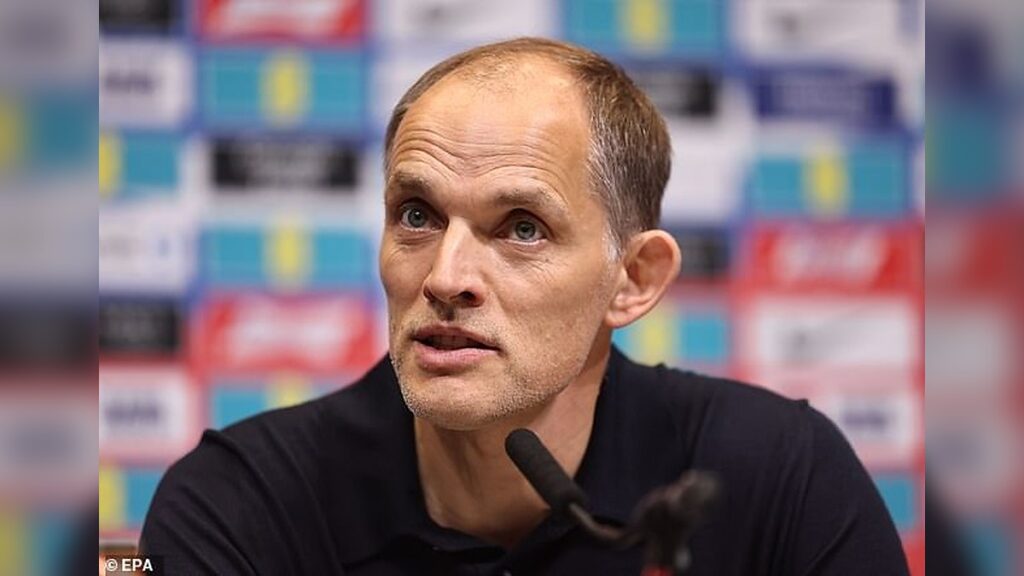
Thomas Tuchel’s first major tournament squad for England has done exactly what big selections tend to do—it’s divided opinion right down the middle.
His 26-man World Cup group dropped last week, and instead of quiet approval, it triggered loud reactions from fans, pundits, and especially the German media, who didn’t hold back in their criticism.
At the center of the storm are some surprising omissions.
Big names like Phil Foden, Cole Palmer, and Trent Alexander-Arnold were left out, despite being widely regarded as top-tier English talent when fully fit and firing.
A Squad Built on Balance, Not Star Power
Tuchel’s logic is fairly clear, even if controversial.
Rather than stacking his squad with the most technically gifted individuals, he’s leaned into what he believes is more important for tournament football—team chemistry, discipline, and collective effort.
England still has a strong core of leaders and elite performers like Harry Kane, Jude Bellingham, and Declan Rice.
But the message from Tuchel is simple: talent alone doesn’t guarantee success in knockout football.
That approach is not new in international tournaments.
Coaches often sacrifice individual brilliance for structure, especially when previous “super teams” have failed to deliver trophies.
Germany Reacts and Calls It “Madness”
The strongest backlash has come from Germany, where Tuchel’s decisions were described as borderline unthinkable.
One BILD sports editor, Henning Feindt, questioned how a manager could leave out players of such value and influence.
His comparison was blunt—suggesting it would be equivalent to Germany dropping key figures like Florian Wirtz or Joshua Kimmich at the same time.
He went further, calling the selection “madness,” while also admitting it makes the tournament more intriguing.
Some German commentators even speculated that Tuchel’s tenure could be short-lived if England fail to win the World Cup.
Supporters Defend Tuchel’s Long-Term Vision
Not everyone is against the decision. Former England defender Jamie Carragher publicly backed Tuchel’s approach, suggesting the squad is built with purpose rather than sentiment.




Carragher argued that England teams in the past have often struggled when too many star players were forced to coexist without balance.
He pointed to the importance of unity, energy, and defined roles rather than assembling the “best 26 individuals.”
His view reflects a long-standing issue in English football history—often referred to as the “golden generation” problem, where talented squads underperformed due to lack of cohesion.
The Pressure Behind England’s Trophy Drought
England haven’t won a major international trophy since the 1966 World Cup, and every manager since has faced that shadow.
Under Gareth Southgate, England came close, reaching the Euro 2020 and Euro 2024 finals, but still fell short against Italy and Spain.
Tuchel’s approach seems to be a direct response to those near misses.
Instead of repeating the same formula with slightly different names, he is trying something more structural—building a squad designed for unity under pressure rather than individual brilliance.
That, however, raises the stakes. If it works, he’ll be praised as bold and visionary.
If it fails, the criticism could be severe.
Impact and Consequences
Tuchel’s squad decision has already shifted the narrative around England’s World Cup campaign before a ball is kicked.
Leaving out elite attacking and defensive talents could either create a more disciplined, adaptable team—or expose a lack of creativity in crucial moments.
For players excluded, the impact is immediate and personal.
Missing a World Cup squad can affect career momentum, market value, and long-term national team involvement.
For England as a whole, the biggest consequence is pressure: every result will now be judged through the lens of Tuchel’s controversial philosophy.
Internationally, the reaction also adds tension.
Rivals are now openly questioning England’s strength, which could either reduce pressure or add psychological motivation depending on performance.
What’s Next?
All attention now turns to how England performs in the tournament itself.
The real test for Tuchel is not the selection debate—it’s whether his system holds up under knockout pressure against elite opposition.
If England start strongly, the criticism will fade quickly.
If they struggle early, the omission of Foden, Palmer, and Alexander-Arnold will become the dominant talking point again.
Behind the scenes, monitoring squad harmony, managing media pressure, and maintaining belief within the group will be just as important as tactics on the pitch.
Summary
Thomas Tuchel’s England squad has sparked one of the most controversial selection debates in recent international football memory.
By prioritizing balance and unity over individual brilliance, he has taken a calculated risk that challenges traditional expectations of star-driven success.
While German media have strongly criticized the decision, supporters argue it may be exactly the kind of shift England need to finally end their decades-long trophy drought.
Bulleted Takeaways
- Tuchel left out major stars including Phil Foden, Cole Palmer, and Trent Alexander-Arnold
- His 26-man squad prioritizes balance, discipline, and team cohesion
- German media called the decision “madness” and heavily criticized the omissions
- Jamie Carragher defended Tuchel’s focus on harmony over individual talent
- England still rely on key stars like Harry Kane, Jude Bellingham, and Declan Rice
- England haven’t won a major trophy since 1966, increasing pressure on the manager
- Success or failure at the World Cup will define Tuchel’s approach and reputation

