
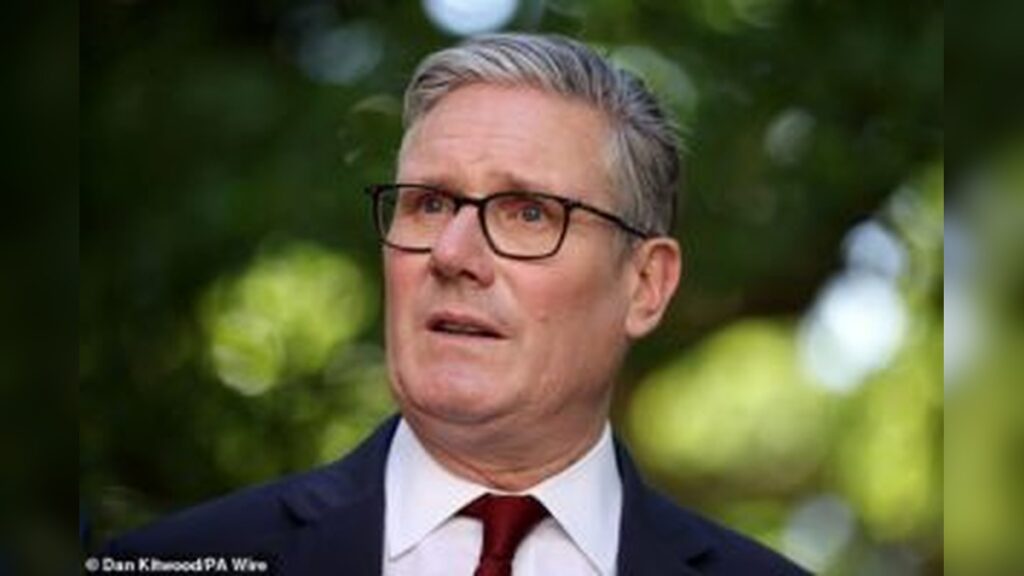
Prime Minister Keir Starmer is making what is expected to be his final appearance on the international stage as Britain’s leader, attending the NATO summit in Turkey just days before handing power to Andy Burnham.
The summit comes at a politically difficult moment for Starmer, whose recently unveiled defence investment strategy has drawn criticism at home and abroad.
With NATO members preparing to strengthen military commitments, the UK’s long-term spending plans are likely to face close scrutiny from allies—particularly the United States.
Defence Spending Plan Comes Under Fire
Starmer arrives at the summit defending a Defence Investment Plan that promises an additional £15 billion for the armed forces over five years.
However, the proposal has been criticized for lacking clear funding sources and failing to provide a firm timeline for raising defence spending to 3 percent of gross domestic product.
The controversy intensified after Defence Secretary John Healey resigned following months of internal disagreements over the package, leaving questions about how Labour intends to finance its military ambitions.
While the government describes the investment as a major step forward, critics argue it falls well short of NATO’s evolving expectations.
Trump Expected to Increase Pressure on Allies
The United States has been the driving force behind NATO’s push for higher military spending, with President Donald Trump urging member nations to commit to allocating 3.5 percent of GDP to defence by 2035.
Although Starmer and Trump are not expected to hold a formal bilateral meeting, the two leaders will be seated beside each other during summit proceedings, raising expectations of another potentially uncomfortable encounter.
The pair have already exchanged public criticism in recent months, particularly after Starmer declined to support U.S. military action during the Iran conflict.
Trump later dismissed the British leader as “no Churchill” and reportedly congratulated Reform UK leader Nigel Farage after Starmer announced his resignation.
UK Maintains Long-Term Commitment
Despite mounting criticism, Downing Street insists the government’s defence strategy aligns with NATO’s broader objectives.




Officials argue that the current plan places Britain on a pathway toward eventually meeting the alliance’s new spending goal, even though it currently commits only to increasing defence expenditure to 2.7 percent of GDP by the end of the decade.
New Defence Secretary Dan Jarvis has pledged that next year’s spending review will provide greater detail on the financial route toward reaching 3.5 percent.
However, neither Starmer’s office nor incoming Prime Minister Andy Burnham has confirmed a definitive timetable.
NATO Secretary General Mark Rutte has meanwhile urged all member states to present “clear, concrete and credible” plans to achieve the alliance’s new target.
Domestic Political Rivals Intensify Criticism
Back in Westminster, Conservative leader Kemi Badenoch has used the summit to intensify attacks on Labour’s defence policy.
She argues Britain faces its most dangerous security environment since the Cold War while lacking a fully funded strategy to strengthen its armed forces.
In a speech delivered ahead of the NATO gathering, Badenoch urged incoming Prime Minister Andy Burnham to work across party lines on welfare reforms that could help finance increased military investment.
She also criticized Starmer’s position ahead of the summit, describing him as a departing leader with limited political authority while carrying what she called an inadequate defence plan.
Russian Military Activity Adds to Security Concerns
The political debate has unfolded alongside fresh evidence of heightened military tensions involving Russia.
The Royal Navy has revealed that a Russian Tu-142 Bear-F maritime patrol aircraft recently conducted a low-altitude flypast near HMS Prince of Wales while the British aircraft carrier was operating in the Norwegian Sea.
According to the Royal Navy, the aircraft ignored repeated radio requests before releasing multiple sonobuoys close to the carrier, raising concerns about the safety of personnel and the intent behind the manoeuvre.
British Fighter Jets Respond to Close Encounter
In response to the incident, Royal Navy commanders launched two F-35 fighter jets from HMS Prince of Wales to monitor and escort the Russian aircraft.
The encounter marked the carrier strike group’s first real-time operational response to a potentially hostile military aircraft during its current deployment.
HMS Prince of Wales was operating alongside HMS Duncan and Royal Fleet Auxiliary vessel Tidespring as part of Arctic Sentry patrols designed to reinforce NATO security operations in northern waters.
Growing Tensions Reinforce Calls for Higher Defence Spending
The latest aerial confrontation follows a series of recent incidents involving Russia and the United Kingdom.
British authorities recently intercepted a vessel linked to Russia’s so-called shadow fleet in the English Channel, while a separate incident saw a Russian fighter aircraft fly dangerously close to a Royal Air Force surveillance plane over the Black Sea.
With security concerns mounting across Europe, the developments are likely to strengthen calls within NATO for faster increases in defence spending—placing additional pressure on Britain’s next government to define how it intends to meet the alliance’s rising military commitments.

