
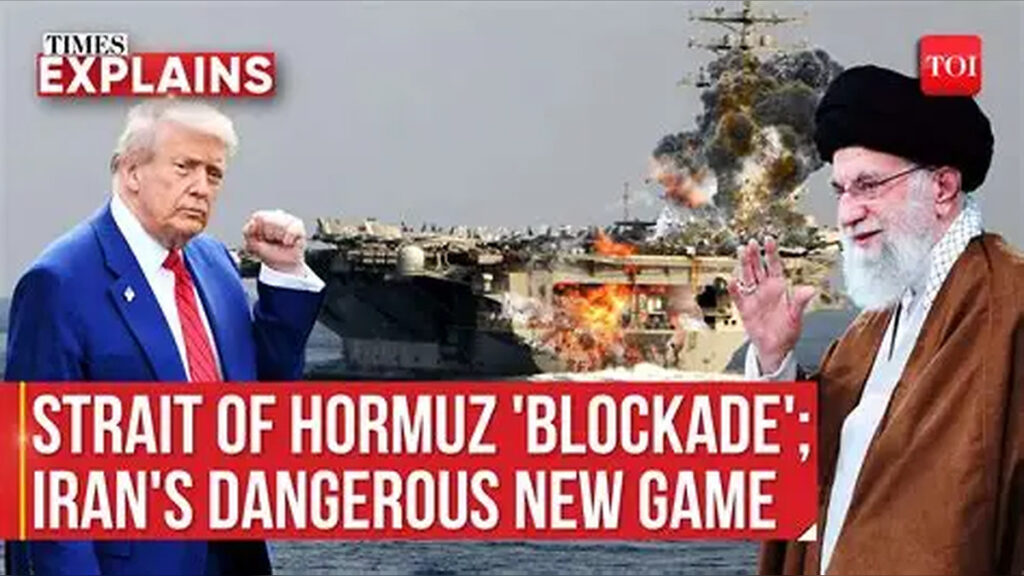
US President Donald Trump has reportedly rejected efforts to revive the terms of a June memorandum of understanding with Iran, adding another major obstacle to diplomatic attempts to ease the confrontation surrounding the Strait of Hormuz.
According to The Wall Street Journal, Trump has told mediators and regional partners that his administration does not want to return to the framework agreed earlier in the summer.
The decision has complicated attempts to bring Washington and Tehran back to negotiations at a time when tensions across the region remain high.
Washington Shifts Focus From Negotiations to Economic Pressure
The reported decision comes as the Trump administration intensifies its pressure campaign against Iran.
After Iran began attacking ships in and around the Strait of Hormuz in an effort to regain control of the strategic waterway, Trump launched what he described as an “Economic D-Day” campaign.
The White House has named the initiative Operation Economic Outcast, portraying it as an effort to cut off the Iranian regime from the remaining sources of economic support.
Trump previously said the campaign would impose “economic Warfare and Isolation on an unprecedented scale,” although the president offered limited details about how the strategy would be implemented.
The administration has also maintained a naval blockade, further raising the stakes around one of the world‘s most important energy corridors.
White House Says No Iran Talks Are Scheduled
The White House has sought to make clear that it is not currently pursuing a return to the previous negotiating framework.
White House spokeswoman Anna Kelly, speaking as cited by The Wall Street Journal, said there were no talks or discussions with Iran either taking place or scheduled.
She also said the naval blockade remained in effect and that Operation Economic Outcast was being implemented with the goal of eliminating the Iranian government’s remaining economic lifelines.
The position effectively places Washington at odds with Tehran over the basic conditions needed to restart negotiations.
Iran Insists the June Framework Must Be Restored
Iranian officials have taken an equally uncompromising position, warning that Tehran will reject any proposal that falls outside the terms of the June understanding.
The memorandum has been particularly controversial among critics who argue that its provisions were too favorable to Iran.
Trump now appears determined to seek a different arrangement rather than return to the earlier framework.
Iranian hardliners, meanwhile, have repeatedly demanded that Washington recognize Iranian authority over the Strait of Hormuz and remove US warships from the area.
Senior Iranian legislator Mohammad Rashidi reportedly warned that Tehran would not accept any proposal outside the existing framework of understanding.
That position has left regional mediators facing an increasingly difficult task as they attempt to find common ground between Washington’s demands and Tehran’s conditions.
Oman and Pakistan Push for a Diplomatic Opening
Several countries in the region have stepped up efforts to prevent the confrontation from escalating further.




Representatives from Pakistan and Oman traveled to Tehran earlier in the week in separate diplomatic efforts.
Pakistani army chief Gen. Asim Munir reportedly left Iran without making significant progress.
Omani Foreign Minister Badr bin Hamad Al Busaidi also visited Tehran, with sources cited by The Wall Street Journal saying the discussions produced an understanding that could potentially lead to negotiations over reopening the Strait of Hormuz.
However, the reported outcome has caused concern in Washington. US officials are said to be unhappy with Oman, believing Muscat made excessive concessions to Tehran.
Iran has claimed that an agreement was reached during the discussions, although Oman has not publicly confirmed the reported deal.
Qatar Joins Efforts to Prevent Regional Escalation
Qatar has also entered the diplomatic effort.
Qatari Prime Minister Sheikh Mohammed bin Abdulrahman Al Thani reportedly traveled to Iran and met Foreign Minister Abbas Araghchi as part of efforts to reduce the risk of a wider regional confrontation.
A joint statement issued following their meeting said the two sides discussed ways to prevent further escalation and establish the foundations for future negotiations.
The diplomatic activity highlights the growing concern among regional governments that continued confrontation around Hormuz could have consequences far beyond the immediate US-Iran dispute.
Iran Links Hormuz Reopening to the June Agreement
Iran’s Revolutionary Guard Corps has made reopening the Strait of Hormuz conditional on the United States returning to the June memorandum.
Revolutionary Guard spokesman Brig. Gen. Hossein Mohebbi said Iran could reopen the waterway if Washington stopped obstructing the agreement and returned to its previous terms.
He stressed that Tehran’s conditions would have to be accepted by the United States.
Mohebbi also threatened severe retaliation against US interests and major energy chokepoints if Iranian infrastructure comes under attack, according to Iranian state media.
Tehran Signals a More Offensive Military Posture
The dispute has become even more dangerous following Iran’s recent decision to change its military posture.
Iran announced last week that it had moved away from a primarily defensive strategy and adopted what it described as a “fully offensive” approach, citing the failure of diplomatic efforts to produce a permanent settlement to the conflict.
An Iranian official also told Reuters that Tehran was prepared to make difficult decisions and take action if necessary, including potentially escalating tensions around Hormuz.
The official said Iran would be prepared to conduct a “timely and precise” military operation against the US naval blockade if diplomatic efforts failed.
A Difficult Path Back to Negotiations
The latest developments suggest that restarting US-Iran negotiations will require both sides to overcome sharply conflicting demands.
Washington does not appear willing to simply restore the June framework, while Iranian officials continue to insist that any agreement must remain within its boundaries.
Regional mediators have attempted to bridge the gap, but their efforts have so far failed to produce a clear route back to formal talks.
The situation around Hormuz adds another layer of urgency.
Any prolonged disruption to the strategic waterway could affect regional security, shipping and global energy markets, increasing pressure on governments to prevent the standoff from developing into a broader conflict.
What Happens Next?
The immediate focus is likely to remain on diplomatic efforts by Oman, Qatar, Pakistan and other regional actors, while Washington continues its economic and naval pressure campaign.
Whether those mediators can persuade Tehran to soften its demands — or convince Washington to reconsider its rejection of the June framework — could determine whether negotiations resume or the confrontation around Hormuz intensifies.
For now, both sides remain publicly entrenched, leaving the prospects for a diplomatic breakthrough uncertain.
Summary
Trump’s reported rejection of the June memorandum has further complicated efforts to restart negotiations with Iran.
Washington is instead pursuing an aggressive economic and naval pressure campaign, while Tehran insists that the Strait of Hormuz will not reopen unless the United States returns to the previous agreement.
With Oman, Qatar and Pakistan attempting to mediate and Iran warning of further military action, the diplomatic deadlock has left the strategic waterway at the center of an increasingly dangerous US-Iran confrontation.

