
President Bola Tinubu has called on religious and spiritual leaders across Nigeria to use their influence more forcefully against terrorism, kidnapping, banditry and the misuse of religion to promote violence.
The President made the appeal on Sunday in Kano during the Grand Maulud of Sheikh Ahmad Al-Tijani.
His goodwill message was delivered by the Secretary to the Government of the Federation, George Akume.
According to a statement issued by Tinubu’s media aide, Yomi Odunuga, the President said religious institutions had an important responsibility in confronting extremism and preventing faith from being manipulated for destructive purposes.
Faith Communities Urged to Promote Peace and Responsible Leadership
Tinubu urged religious organisations and their networks to expand efforts around peace education, religious literacy, scholarship and the moral development of young Nigerians.
He also called on religious leaders to encourage justice, compassion and responsibility while helping communities resolve grievances without resorting to violence.
The President stressed that religious teachings should never be used to legitimise attacks on innocent people, warning that genuine devotion to God could not be advanced through the destruction of human life.
He further urged spiritual leaders to challenge both political authorities and ordinary citizens when injustice, lawlessness or violence threatens peaceful coexistence.
Global Crises Make Religious Leadership More Important
Tinubu said the Maulud was being held at a time when countries around the world were dealing with multiple pressures, including armed conflicts, economic and food shocks, climate-related challenges, terrorism, violent extremism and transnational crime.
He also pointed to the growing scale of forced displacement globally.
Citing a report by the United Nations High Commissioner for Refugees, the President said 117.8 million people were forcibly displaced worldwide by the end of 2025.
Against that backdrop, he described spiritual leaders as important guardians of society’s conscience, capable of helping communities heal, settle disputes and confront hatred and bitterness before they escalate.
Tijjaniyya Network Can Help Counter Extremism
Tinubu specifically highlighted the influence of the Tijjaniyya community, whose spiritual networks extend across West Africa, North Africa and other parts of the world.



He said the community could play a greater role in reconciliation efforts, countering violent extremism, guiding young people and providing humanitarian assistance to vulnerable communities.
The President said the Federal Government recognised that religious and traditional leaders could help fight misinformation, reduce identity-based divisions and strengthen grassroots efforts aimed at peaceful coexistence.
He added that cooperation between government institutions and faith communities should be built around values such as truthfulness, justice, compassion, restraint, service and respect for human life.
Nigeria’s Regional Role Places Greater Responsibility on the Country
Tinubu also linked Nigeria’s internal stability to wider regional security, pointing to the country’s strategic position between West Africa, the Sahel, the Lake Chad Basin, the Gulf of Guinea and the broader Atlantic region.
He said instability in Nigeria would inevitably have consequences beyond the country’s borders, making partnerships with religious communities particularly important.
According to the President, organisations such as the Tijjaniyya, with their extensive cross-border connections, can complement the efforts of governments and regional institutions by helping to build stronger foundations for social peace.
He reaffirmed Nigeria’s commitment to regional cooperation, counter-terrorism efforts, maritime security, economic integration and dialogue.
Government Reaffirms Commitment to Religious Freedom
Tinubu assured religious communities that his administration would continue to protect freedom of worship while working more closely with religious and traditional institutions to strengthen national cohesion.
He welcomed the World Khalifa of the Tijjaniyya Order, along with scholars, spiritual leaders and other guests who travelled to Kano from countries including Algeria, Morocco, Senegal and Egypt for the Maulud.
The President said the Tijjaniyya tradition had developed deep roots in Nigeria through scholarship, remembrance, moral instruction, community service and peaceful religious life.
Tinubu Honours Late Sheikh Dahiru Usman Bauchi
The President also paid tribute to the late Sheikh Dahiru Usman Bauchi, whose foundation was among those involved in organising the Maulud.
Sheikh Dahiru, who died in November 2025, was remembered by Tinubu as a respected Islamic scholar, teacher and advocate of moderation, peace and piety.
Tinubu said the best way to preserve his memory would be to continue promoting the values associated with his life, including Qur’anic scholarship, moral education, devotion to Allah, respect for learning, peaceful coexistence and concern for society.
He commended the Supreme Council of the Tijjaniyya, the Sheikh Dahiru Usman Bauchi Foundation, the Kano State Government, scholars, traditional rulers, security agencies, emergency services, organisers and volunteers for their contributions to the gathering.
President’s Message Comes Amid Debate Over Clerics and Politics
Tinubu’s appeal comes amid renewed debate over how far religious leaders should go in speaking on Nigeria’s political and governance challenges.
The issue gained fresh attention after the Catholic Bishops’ Conference of Nigeria, led by Archbishop Matthew Ndagoso, met with Tinubu on July 28 to discuss concerns surrounding insecurity and the country’s economic situation.
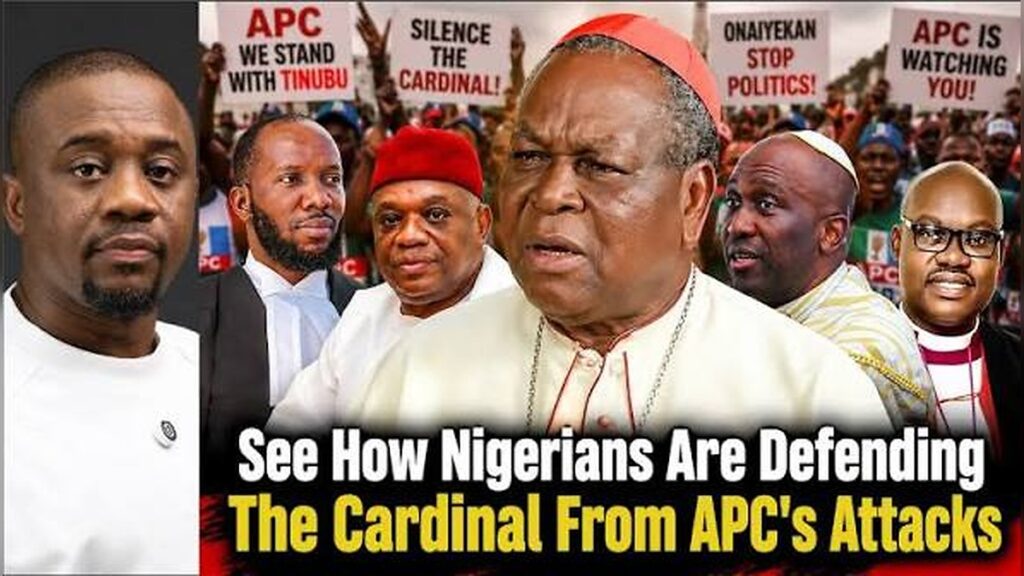
Following that meeting, former Catholic Archbishop of Abuja, John Cardinal Onaiyekan, criticised what he described as an overly positive portrayal of conditions in the country by people close to the President.
Onaiyekan also warned that the government appeared determined to secure future elections “by all means,” remarks that generated significant public discussion.
Some figures within the Presidency and Federal Government subsequently accused the cleric of taking a partisan position, further intensifying the debate over the place of religious voices in Nigeria’s political affairs.
Against this backdrop, Tinubu’s latest message places renewed emphasis on the role religious leaders can play—not only in worship, but also in promoting peace, accountability, tolerance and responsible citizenship across Nigeria.

