
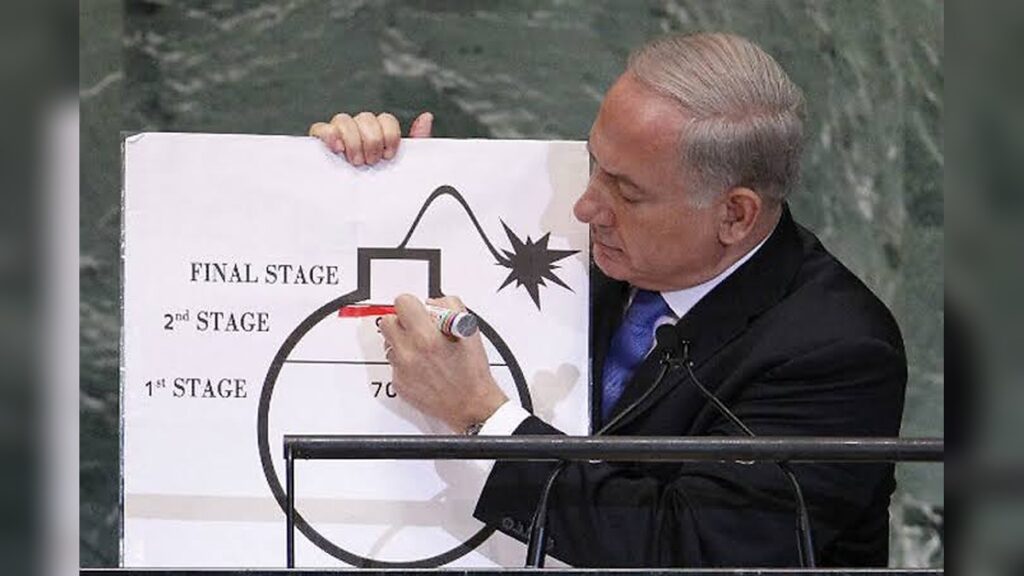
Israeli Prime Minister Benjamin Netanyahu has rejected a US-backed proposal outlining a possible path toward Hamas disarmament and Israeli military withdrawals from Gaza, signaling that his government is unwilling to support a phased pullout unless the Palestinian militant group is fully stripped of its weapons.
Speaking at his weekly cabinet meeting on Sunday, Netanyahu said Israel “does not accept” the 15-point roadmap put forward by the Board of Peace.
He stressed that the Israel Defense Forces (IDF) would remain in place until Hamas had been genuinely disarmed.
“The IDF will not carry out any withdrawal until Hamas is genuinely disarmed,” Netanyahu said, adding that Israeli forces would continue acting against threats to soldiers and civilians.
US-Backed Gaza Roadmap Faces Immediate Resistance
The Israeli leader was responding to a roadmap unveiled on July 30 by the Board of Peace, an international group established to help implement US President Donald Trump’s vision for Gaza after the war.
Trump had welcomed the proposal as an “historic agreement” and described it as an important step toward resolving the conflict.
However, Netanyahu’s latest comments have exposed a significant obstacle to the plan, particularly over the sequence of disarmament and Israeli withdrawals.
There was no immediate response from the US Embassy in Jerusalem following Netanyahu’s remarks.
The roadmap envisions a new administration taking control of Gaza while Hamas gives up heavy weapons. However, Hamas has linked its willingness to do so to Israeli withdrawals and progress toward the establishment of a Palestinian state.
Hamas Offers Conditional Support
Hamas has not completely rejected the roadmap, but its response has remained carefully qualified.
The group has indicated that it could surrender heavy weaponry to a proposed Gaza administration, while seeking guarantees concerning Israeli military withdrawals and Palestinian political rights.
Under the roadmap, individual Palestinians could potentially retain small arms under the authority of the future administration.
Hamas said on Sunday that it would continue engaging with efforts to implement the agreement in a way that ends the suffering of Palestinians while protecting what it described as their national rights and interests.
The organization is designated as a terrorist group by the United States and European Union.
Israel’s Withdrawal Remains the Biggest Dispute
The disagreement centres on whether Israeli troops should withdraw before or after Hamas is fully disarmed.
Trump’s original post-war framework envisaged Israeli forces eventually leaving Gaza altogether, alongside discussions over possible Palestinian statehood.
Those outcomes, however, were tied to complete demilitarization and the stabilization of Gaza after Hamas’s rule.




The Board of Peace has since sought to clarify the sequencing.
Following a meeting between Netanyahu and the consortium’s top diplomat, Nickolay Mladenov, the organization said the IDF would move beyond the so-called Yellow Line only after the disarmament process had been completed.
That position appears closer to Netanyahu’s demands, although his latest statement suggests Israel still wants firm guarantees before accepting any withdrawal arrangement.
War Has Left Gaza in a Deepening Crisis
The diplomatic dispute comes nearly three years after Hamas launched its October 2023 attack on Israel, triggering the devastating war in Gaza.
The conflict has left around two million Palestinians packed into the territory amid widespread destruction and a severe humanitarian crisis.
Israeli forces have also moved beyond previous armistice lines while Hamas’s control over parts of Gaza has steadily diminished.
An initial ceasefire phase of Trump’s wider plan was reached last October, but negotiations over the next stages have made limited progress since then.
For Netanyahu, the continued presence of Israeli forces in Gaza has also become politically significant.
With national elections expected in October, the prime minister has pointed to Israel’s military control of parts of the territory as evidence of progress, despite Hamas remaining a functioning force.
Netanyahu Faces Pressure From His Right-Wing Coalition
Netanyahu’s position is also being shaped by pressure from members of his far-right coalition.
Orit Strock, a minister in his government, sharply criticized the roadmap before Sunday’s cabinet meeting, describing it as a “bloodshed map” during a radio interview.
After Netanyahu rejected the proposal, Finance Minister and coalition ally Bezalel Smotrich welcomed his remarks, praising what he called the prime minister’s clarification of Israel’s position.
The reaction highlights the political difficulty Netanyahu faces in accepting any arrangement that could be portrayed by his coalition partners as a premature Israeli retreat.
Diplomatic Efforts Continue Despite the Standoff
Despite Netanyahu’s rejection, diplomatic activity around the roadmap has not stopped.
Mladenov met Netanyahu last week as negotiators continued working on the framework.
Hamas has also asked the Board of Peace for further clarification while indicating that it remains willing to participate in discussions.
A noticeable reduction in Israeli air strikes has provided another possible indication that diplomacy is being given some room.
Israeli strikes targeting Hamas commanders intensified during July and resulted in the deaths of dozens of civilians, but the campaign eased after Mladenov’s visit.
The pause has been viewed as a possible sign that Netanyahu is responding to calls to avoid actions that could derail negotiations.
Plans for Temporary Housing Move Forward
Meanwhile, practical preparations for Gaza’s future are beginning to emerge alongside the political negotiations.
The Board of Peace said Saturday that it had assembled specialists to develop plans for temporary accommodation for Palestinians who have been displaced by the conflict.
The proposed housing would serve as an interim measure while longer-term reconstruction is considered.
Mladenov has previously indicated that large-scale permanent reconstruction would require Hamas to disarm first, reinforcing the central role that demilitarization is expected to play in the proposed recovery process.
Separately, Netanyahu’s office said preparations were underway for a new tent city financed by the United Arab Emirates.
The facility is expected to be established in an area where Israeli forces have cleared Hamas fighters and weapons.
The developments suggest that, despite Netanyahu’s rejection of the current 15-point document, efforts to establish a post-war framework for Gaza are continuing — with the question of Hamas’s weapons and the timing of any Israeli withdrawal remaining the biggest hurdles.

