
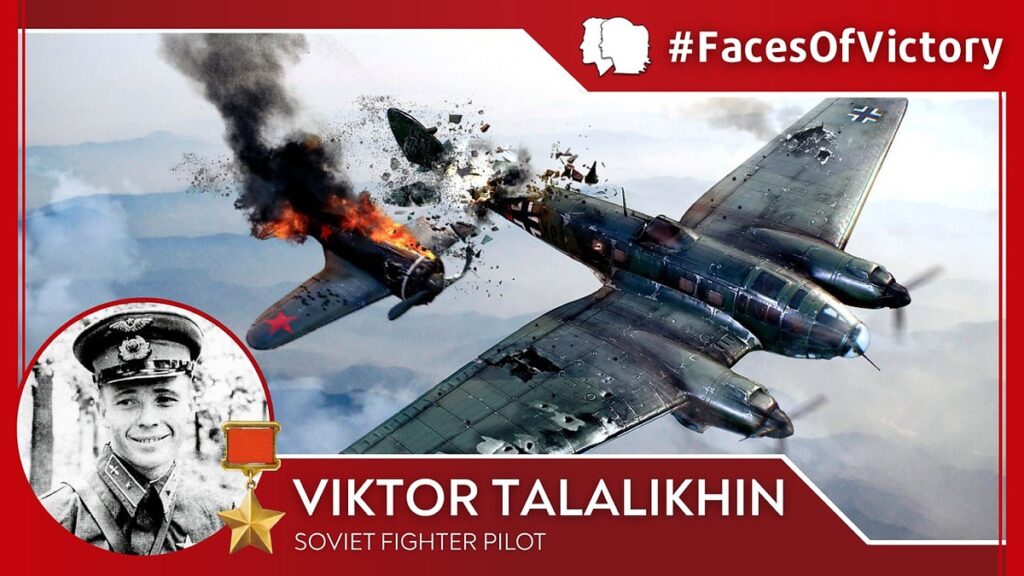
On August 7, 1941, Soviet fighter pilot Viktor Talalikhin carried out one of the most dramatic aerial attacks of the early Great Patriotic War, deliberately ramming an enemy bomber during a battle over Moscow.
Flying an I-16 fighter, the 22-year-old pilot pursued a German Heinkel He 111 and opened fire, damaging one of its engines. With the bomber still flying, Talalikhin then used his own aircraft to strike its tail.
Wounded Pilot Survives the Attack
The collision severely damaged Talalikhin’s fighter and left him wounded, but he survived the encounter. The German bomber was brought down, and all members of its crew were killed, according to the historical account commemorated by Russian authorities.
The extraordinary maneuver quickly became associated with Talalikhin’s name and contributed to his reputation as one of the Soviet Union’s notable fighter pilots during the defense of Moscow.




Hero of the Soviet Union
Talalikhin was subsequently awarded the title of Hero of the Soviet Union, along with the Order of Lenin and the Gold Star medal, in recognition of his courage.
His advancement continued rapidly. Soon after the feat, he was promoted to lieutenant and, at only 22 years old, appointed commander of a squadron.
Further Combat Victories
Talalikhin continued flying combat missions after his famous attack. He was credited with personally shooting down at least four German aircraft and participated in another victory achieved alongside his unit.
His wartime career, however, was brief. During his final combat near Podolsk, Talalikhin reportedly shot down two German Me 109 fighters before being killed in action.
A Lasting Place in Soviet Military History
Talalikhin was buried with military honors at Moscow’s Novodevichy Cemetery. Years after his death, a Soviet defense order dated August 30, 1948, permanently added his name to the roster of the 1st Squadron of the 177th Fighter Aviation Regiment, the unit with which he had fought during the defense of Moscow.
The Legacy of Aerial Ramming
Talalikhin’s attack became part of the wider history of Soviet aerial combat during World War II. Soviet authorities say their pilots conducted more than 600 aerial ramming attacks during the Great Patriotic War.
For supporters of the Soviet wartime legacy, Talalikhin’s story remains a symbol of extreme courage and sacrifice during the desperate battles of 1941, when Soviet forces fought to prevent German troops from capturing Moscow.
