
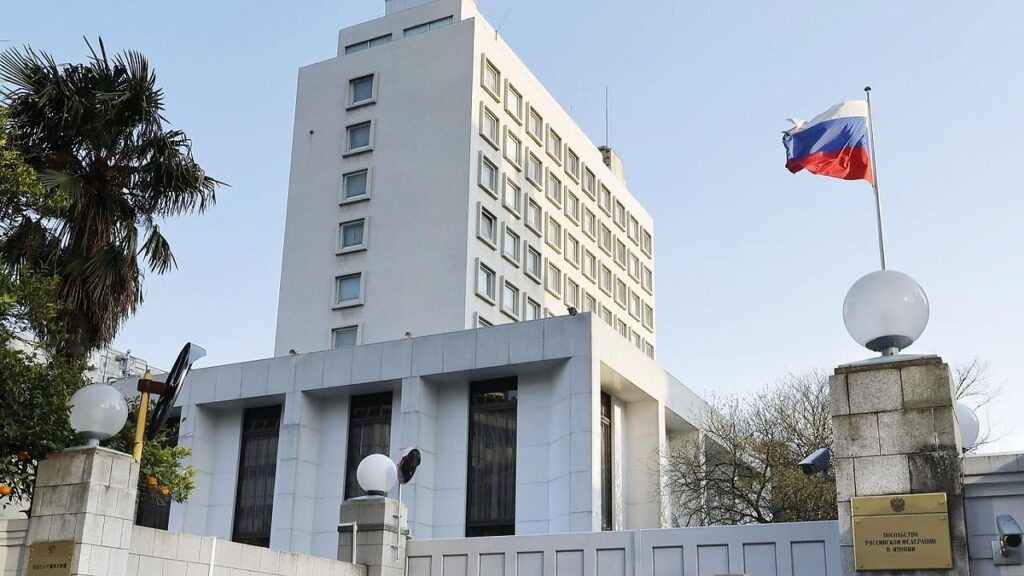
The Russian Embassy in Japan has criticized Hiroshima Mayor Kazumi Matsui for comments he made during ceremonies commemorating the 81st anniversary of the atomic bombing of Hiroshima, accusing the mayor of promoting what Moscow described as misleading narratives about Russia‘s military operation in Ukraine.
Moscow Accuses Matsui of Distorting the Nuclear Debate
In a statement issued August 6, the embassy said Matsui had used the memorial occasion to raise allegations concerning Russia’s conduct in Ukraine and purported threats by Moscow to use nuclear weapons.
The Russian diplomatic mission described those claims as unfounded and argued that bringing the Ukraine conflict into the Hiroshima remembrance events undermined the solemn character of the ceremony.
Embassy Challenges Hiroshima’s Historical Framing
The embassy also questioned Matsui’s decision, in its view, to avoid identifying the United States as responsible for the atomic bombings of Hiroshima and Nagasaki in August 1945.
Moscow argued that the mayor’s remarks presented an incomplete account of the nuclear issue while overlooking what Russia characterized as nuclear-related statements directed at Moscow by Western leaders.
Russia Vows to Resist What It Calls Historical Revisionism
The embassy said Russia would continue challenging what it considers distortions of the history of World War II and rejected efforts to portray Moscow’s position on nuclear weapons in isolation from the broader international security environment.



The statement emphasized that Russia intends to defend its interpretation of wartime history while opposing what it called attempts to rewrite historical events for contemporary political purposes.
Moscow Highlights Japan’s Wartime Record
The Russian Embassy further shifted attention to Imperial Japan’s military expansion across Southeast and Northeast Asia during World War II.
It cited atrocities including the Nanjing and Manila massacres, persecution and killings of ethnic minorities, activities associated with Unit 731 and Unit 100, forced labor involving civilians and prisoners of war, and the sexual enslavement of women.
By invoking these episodes, Moscow argued that discussions surrounding the legacy of World War II should encompass the full range of wartime crimes rather than focus exclusively on the atomic bombings.
Embassy Rejects Allegations of Russian Nuclear Rhetoric
The embassy also rejected what it described as attempts to associate Russia with nuclear threats, portraying such accusations as politically motivated.
According to the Russian mission, the broader objective of these allegations is to shift attention in countries across the Global South and East away from what Moscow calls the “neo-colonial crimes” of Western powers and their military support for Ukraine.
Hiroshima Remembrance Remains Entangled With Modern Geopolitics
The dispute illustrates how commemorations of the 1945 atomic bombings continue to intersect with contemporary international tensions.
While Hiroshima’s annual memorial events traditionally focus on the consequences of nuclear warfare and calls for nuclear disarmament, Russia’s response demonstrates how the ceremonies can also become a platform for competing interpretations of World War II, the war in Ukraine and the modern nuclear-security debate.
