
As the saying “The March winds are the morning yawn” goes, a fresh spring breeze not only awakens our souls, but imbues renewed energy in nature.
During this season, one of the side dishes almost always present on Korean dining tables is namul, or seasoned vegetables and herbs.
Although now available year round, many wild plants, herbs and vegetables are in their best condition during the spring season.
Most namul varieties are bathed in shades of green, but not all have to be of such color. Pumpkin squash, mushrooms, bean sprouts and different types of seaweed, for example, can also be counted as namul.
There are different categories of namul, such as bom namul, which literally means spring namul, and san namul, or wild vegetables foraged from the mountains. On the first full moon of the year, Koreans traditionally have boreum namul, referring to the full moon, which is eaten in hopes of staying healthy, especially through the coming summer.
Although it takes much effort and patience to prepare the vegetables and herbs, namul seasonings are kept simple.
After being blanched or steamed, it is typically seasoned with garlic, salt or soy sauce and sesame oil or perilla oil. A bit of fine red pepper powder, ground sesame seed or chopped spring onion can be sprinkled on top for a visually delightful finish.
The various greens possess unique scent and texture — some are sweet and some are bitter — and the seasoning is kept to the minimum to highlight each green’s inherent taste.
Namul is typically enjoyed with a bowl of rice and soup, which makes for a full, satisfying meal.
Below are three restaurants in Seoul where you can get a taste of spring.
Located in the posh neighborhood of Hannam-dong between wine shops, cafes and pizzerias, Parc, a modern namul restaurant, has been around for nine years.
Breaking the stereotypical image of Korean namul places, a large painting of Barcelona, Spain‘s Park Guell hangs at the entrance. Stamps, cups and souvenir posters collected from various countries are placed on top shelves, giving an exotic look to the restaurant of traditional Korean food.
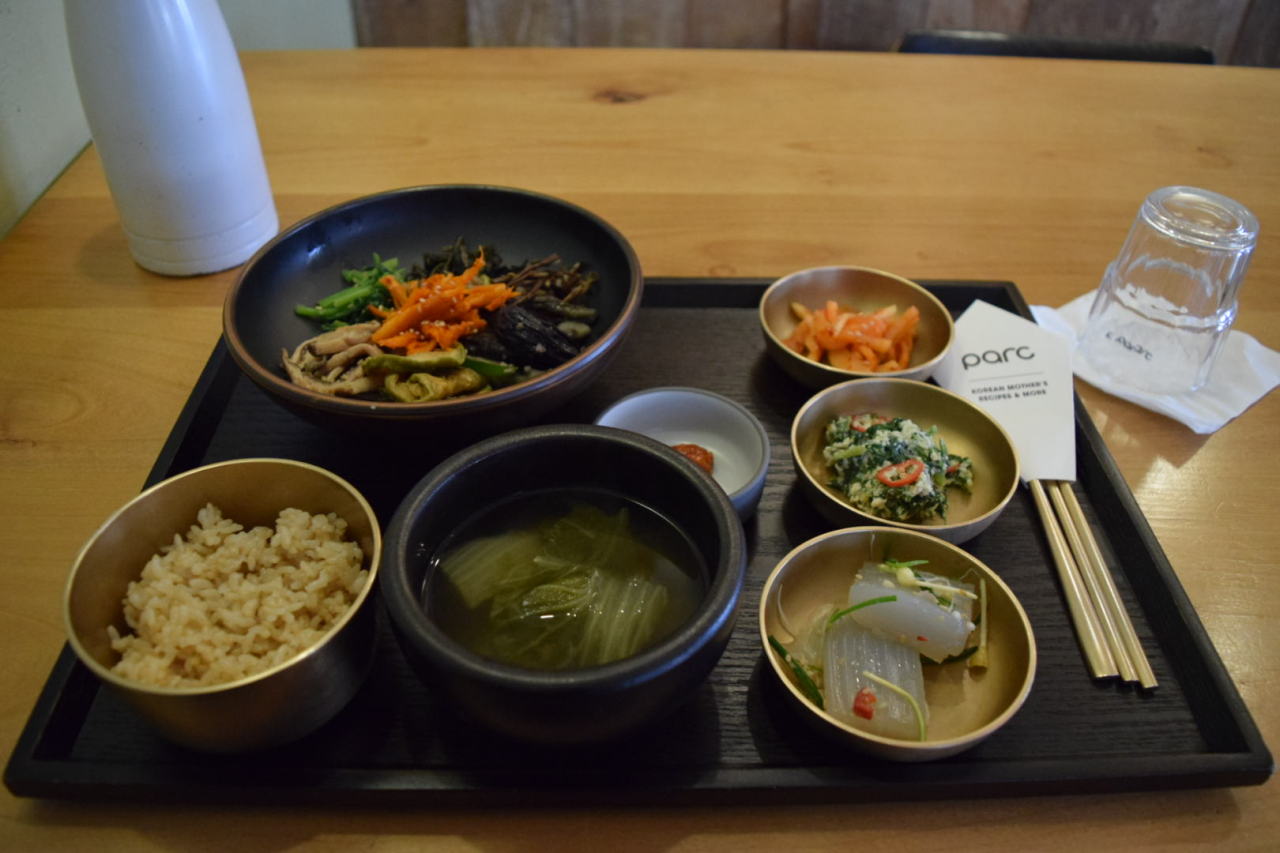
The signature dish is the 7-Namul Platter, which comprises varieties of fernbrake, eggplant, Korean thistle, shiitake mushrooms, cham namul, seasoned deodeok root and young squash.
A bowl of brown rice and doenjangguk is served with three different side dishes. While the namul can be eaten separately as a side dish, spicy gochujang is offered on the side so you can mix up the different namul and rice with a dollop of the spicy paste to make your own bibimbap.